


From budget-friendly builds to museum-grade masterpieces, we’ve evaluated the top P-51 Mustang kits across all scales to help you avoid costly mistakes and find the perfect match for your skill level and budget.
The North American P-51 Mustang stands as a benchmark subject in scale modeling, combining historical significance with aerodynamic elegance that challenges even experienced builders. The Mustang’s laminar flow wing and natural metal finish demand advanced techniques, while its multiple variants—from Allison-powered early models to Merlin-equipped bubbletop fighters—offer distinct engineering puzzles. Dozens of manufacturers have tackled this subject, flooding the market with options that range from simple weekend builds to 550-part engineering marvels requiring hundreds of hours.
For modelers shopping for their next Mustang kit, the sheer volume of choices creates a real problem: distinguishing between genuinely superior toolings and marketing hype becomes nearly impossible without hands-on experience or access to community expertise. Modelers who’ve already worked through our guide to the best model airplane kits will recognize how that same challenge intensifies when a single legendary subject attracts dozens of competing toolings across four scales. A wrong choice means wasted money, frustration during assembly, and compromised results—especially painful when tackling the notoriously difficult natural metal finish that defines late-war P-51s.
This roundup cuts through the confusion with objective evaluations based on five critical criteria: historical accuracy, engineering quality, buildability, scale advantages, and aftermarket support. We’ve assessed current market offerings from Tamiya, Eduard, Airfix, Meng, Revell, and Italeri across 1/72, 1/48, 1/32, and 1/24 scales. Whether you’re a beginner seeking a forgiving first Mustang or an advanced modeler pursuing competition-grade results, you’ll find expert guidance matched to your specific needs and budget.
HOW WE EVALUATED THESE P-51 MUSTANG KITS
Selecting the “best” P-51 kit requires balancing multiple factors that directly impact the building experience and final result. Our evaluation framework prioritizes practical concerns that matter to U.S. modelers at every skill level, from accurate representation to real-world assembly challenges.
Historical Accuracy and Variant Specifics
The P-51 evolved through multiple iterations—the Allison-powered P-51A, the Merlin-equipped P-51D with its distinctive bubble canopy, and specialized variants like the P-51K and F-6D. Top-tier kits capture variant-specific features: razorback versus bubble-top fuselage decking, the fabric-covered rudder contrasting with metal elevators and ailerons, and correct anti-dazzle panels. The laminar flow wing presents a particular accuracy challenge. Factory P-51s had wing rivets filled with putty and sanded flush to maintain smooth airflow, creating surfaces that looked nearly seamless under silver lacquer. Kits featuring heavy, deep wing rivets contradict this historical reality, though some modelers accept this compromise for enhanced visual texture.
Engineering and Detail Level
Advanced kits separate themselves through detail in high-visibility areas. Complex cockpit assemblies with multi-part instrument panels and control columns beat simplified single-piece interiors. Wheel wells often reveal a kit’s ambition—superior offerings include deep, accurately boxed structures with visible ribbing rather than shallow depressions. Surface texture matters critically for finishing: crisply recessed panel lines enable modern weathering techniques like panel washes, while raised detail limits finishing options and looks dated.
Buildability and Fit
Even perfectly detailed kits fail if parts don’t align properly. Natural metal finishes amplify surface imperfections, making poor fit a deal-breaker for Mustang projects. Flash (excess plastic on part edges) and sink marks (cooling depressions) indicate aging or low-quality molds. Superior engineering includes well-placed locating pins and parts that snap together along longitudinal axes without gaps, minimizing filler that destroys surface detail. Instruction clarity also impacts buildability—comprehensive guides with paint references for multiple historical schemes reduce research time and prevent errors.
Scale and Material Choice
Scale selection shapes the entire building experience. The compact 1/72 scale suits collectors with limited display space, while 1/48 and 1/32 scales provide volume for super-detailing like scratchbuilt cockpit enhancements and operating control surfaces. Premium kits often bundle injection-molded plastic with photo-etched brass (for scale-appropriate thinness in cockpit walls and grilles) and polyurethane resin (for three-dimensional engine detail). These multimedia components push realism but demand specialized adhesives and safety precautions during sanding.
Aftermarket Support
The strongest kits attract robust aftermarket ecosystems. Companies like Eduard and Aires produce replacement cockpits, detailed Packard Merlin engines, and brass gun barrels specifically designed for popular Mustang toolings. Extensive aftermarket availability lets builders customize models into unique configurations and correct kit deficiencies without scratchbuilding from raw materials.
These criteria ensure our selections represent genuine quality across price points and skill requirements, not just brand recognition or marketing claims.
THE TOP 10 P-51 MUSTANG MODEL KITS
1. Tamiya 1/32 P-51D Mustang (Kit No. 60322) — Best P-51 Mustang Model Kit Overall
Scale: 1/32 | Manufacturer: Tamiya | Skill Level: Advanced | Price Range: Premium
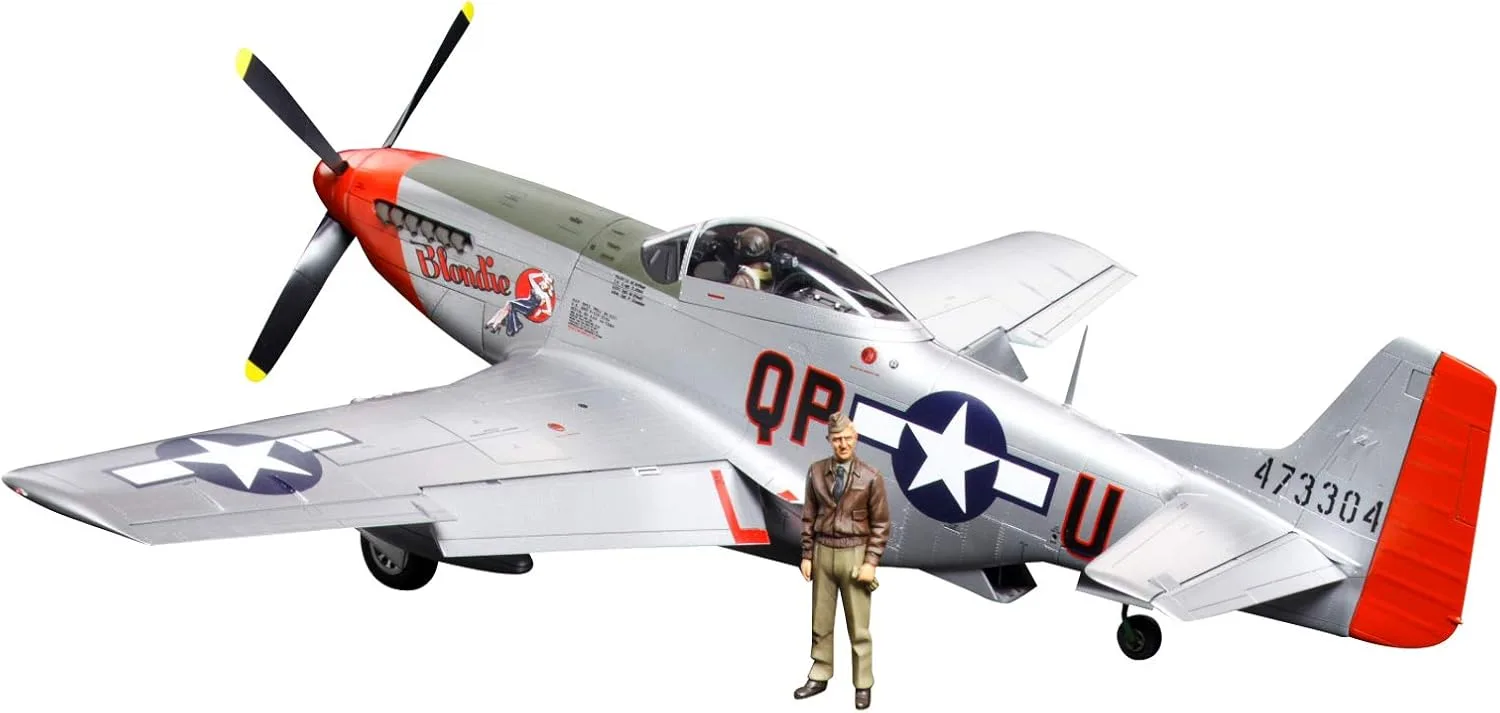
Tamiya’s 1/32 P-51D represents the ultimate achievement in Mustang kit engineering. This 550-part signature release features magnetic engine cowlings that snap into place after assembly, revealing a highly detailed Packard Merlin engine underneath. The modularity extends to a switchable undercarriage design that allows builders to exchange between raised and lowered landing gear positions even after construction.
The kit delivers museum-quality surface detail with restrained riveting and recessed panel lines that capture the real aircraft’s finish. Tamiya’s legendary fit quality shines here—major fuselage and wing components align precisely with minimal putty or sanding required. The clear parts include separate greenhouse sections for the bubble canopy, though a mold line down the canopy center requires careful sanding and polishing for optical clarity.
The engineering does present some challenges. Historical purists debate the inclusion of wing rivets, though they’re fine enough to be easily filled using standard techniques if a perfectly smooth surface is desired. Some ejection pin marks appear in difficult-to-reach wheel well areas. Despite these minor points, the kit’s fit quality dramatically reduces frustration during assembly—an important factor when tackling the complex natural metal finishing that P-51s demand.
This kit suits advanced modelers who want maximum internal detail for display purposes, particularly those planning maintenance dioramas showcasing the opened cowlings and Merlin engine. The significant parts count and premium price reflect Tamiya’s target audience: experienced builders willing to invest substantial time for competition-grade results.
2. Eduard 1/48 P-51D ProfiPack (Kit No. 82102) — Best Value P-51 Mustang Model Kit
Scale: 1/48 | Manufacturer: Eduard | Skill Level: Intermediate to Advanced | Price Range: Mid-Range
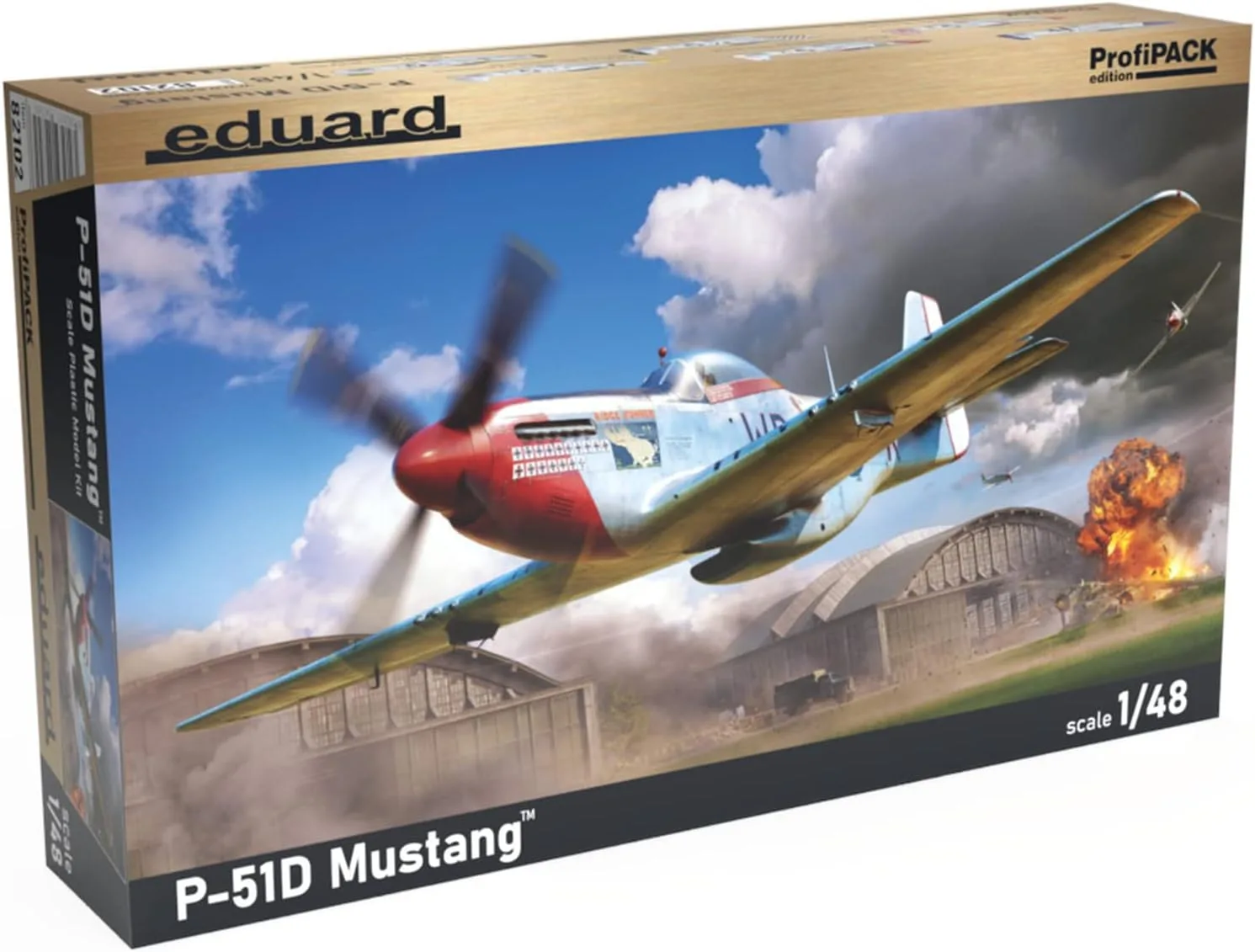
Eduard’s ProfiPack offering delivers exceptional value by bundling high-quality photo-etched brass parts and canopy masks directly in the box. This eliminates the need for separate aftermarket purchases. The surface detail is intensive and refined, with wings provided without rivets—a historically accurate choice reflecting the puttied wing surfaces found on factory-fresh Mustangs.
The kit includes comprehensive PE for cockpit sidewalls, instrument panels, and seat belts, achieving scale-appropriate thinness impossible with injection-molded plastic. The engineering shows Eduard’s Czech precision, though builders should note a known small step at the wing root-to-fuselage join. This can be mitigated by gluing upper wings to the fuselage sides before attaching the lower wing span—a sequencing adjustment that prevents the alignment issue.
Eduard’s ProfiPack format targets modelers who want premium results without paying for features they’ll replace anyway. The included masks simplify the notoriously difficult multi-tone natural metal finish by protecting previously painted panels during subsequent color applications. This kit represents the sweet spot for intermediate builders developing advanced skills: enough complexity to challenge and improve technique without overwhelming newer modelers.
The primary limitation is that success requires familiarity with photo-etched brass handling—specifically cyanoacrylate adhesive application and the precision folding techniques needed for cockpit components. Modelers comfortable with these materials will find Eduard’s engineering delivers results comparable to kits costing significantly more.
3. Airfix 1/72 P-51D Mustang (Kit No. A01004A) — Best Budget-Friendly P-51 Mustang Model Kit
Scale: 1/72 | Manufacturer: Airfix | Skill Level: Beginner to Intermediate | Price Range: Budget
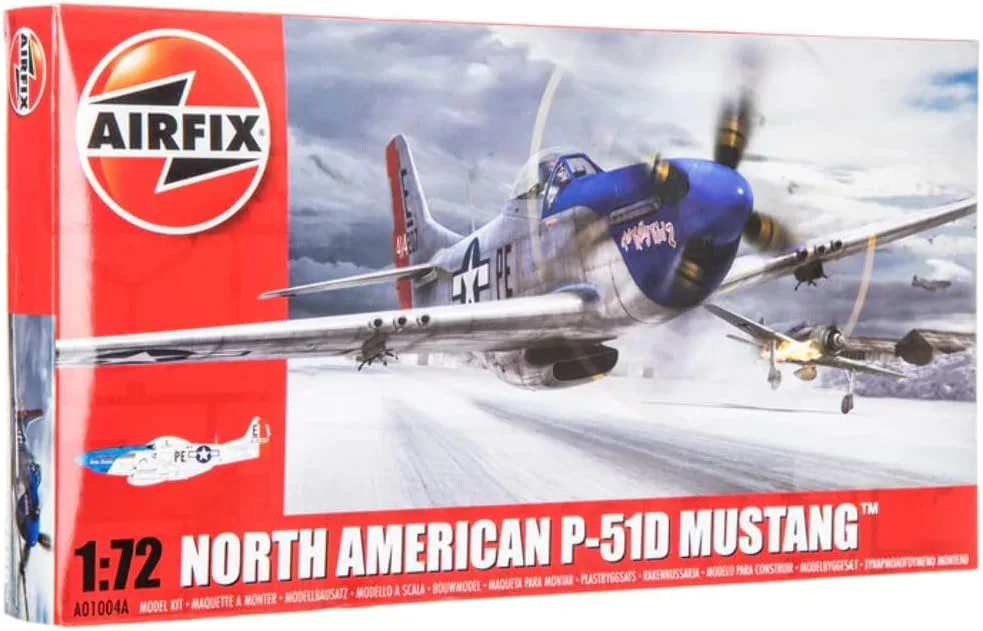
Airfix’s 1/72 P-51D offers the best value proposition in small-scale Mustang kits, combining exemplary fit with world-class decal sheets. This kit proves that budget pricing doesn’t require compromising on engineering quality. Parts snap together cleanly with minimal seam work required—a critical advantage for newer modelers who haven’t yet mastered advanced filling and sanding techniques.
The compact 1/72 scale makes this an ideal choice for collectors building multiple aircraft for display comparison or those with limited shelf space. Despite the small size, Airfix includes respectable cockpit detail and recessed panel lines suitable for weathering techniques. The decal sheet provides multiple marking options with thin, conforming film that settles into surface detail without the silvering problems common to budget kits.
The kit’s forgiving nature makes it perfect for modelers attempting their first natural metal finish in a less intimidating scale. Mistakes cost less in both materials and time investment compared to larger scales. The straightforward assembly also lets builders focus on developing finishing skills rather than wrestling with fit problems.
This kit’s limitations reflect its scale and price point rather than engineering deficiencies. Cockpit detail remains basic compared to 1/48 or 1/32 offerings, and the small size limits scratchbuilding enhancements. However, for beginners seeking an entry point into P-51 modeling or experienced builders wanting a quick weekend project, this Airfix release delivers exactly what’s needed without unnecessary complexity.
4. Tamiya 1/48 P-51D Mustang (Kit No. 61040) — Best for Rapid, High-Quality Assembly
Scale: 1/48 | Manufacturer: Tamiya | Skill Level: Beginner to Intermediate | Price Range: Mid-Range | Amazon Link
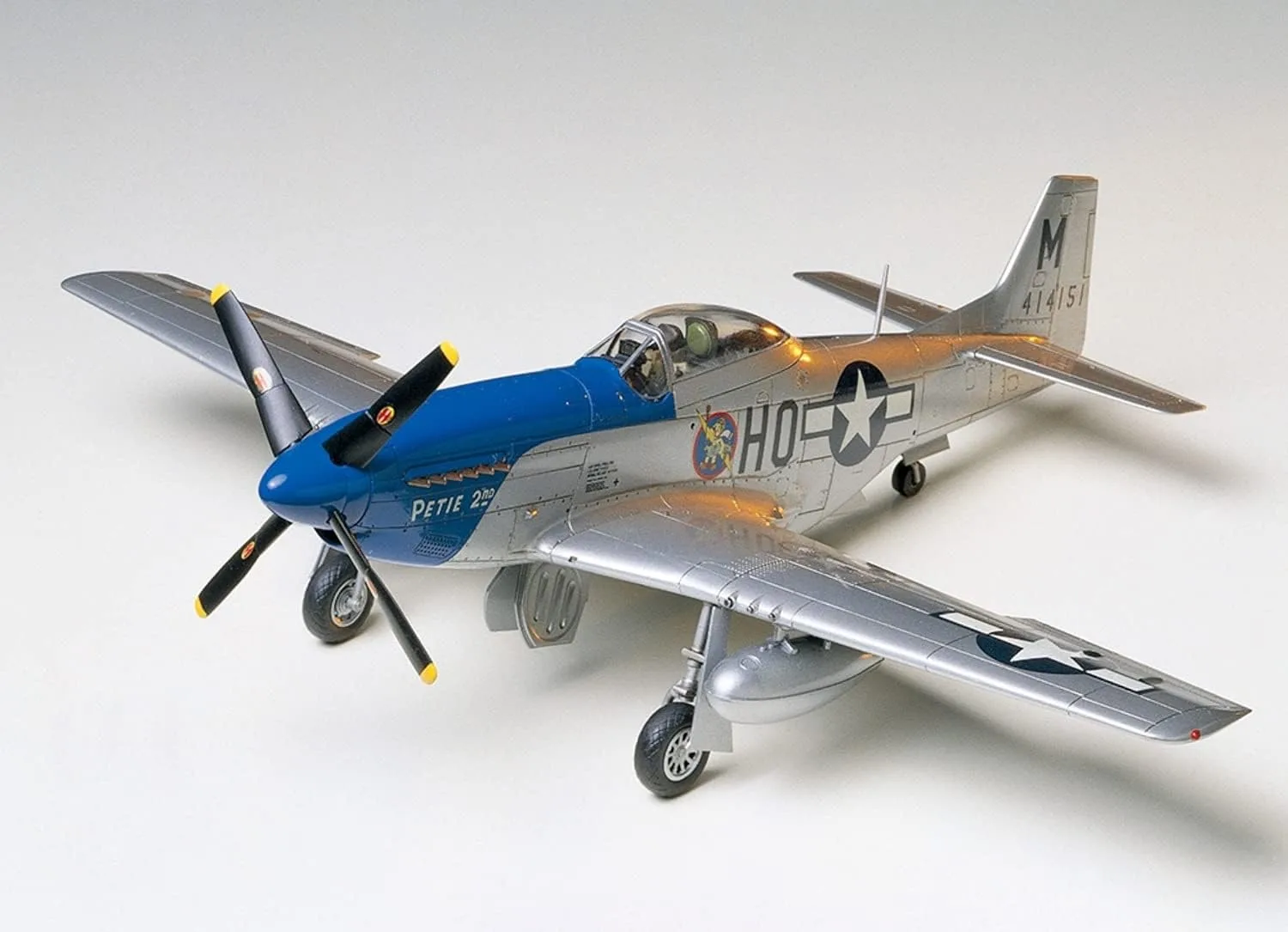
First released in 1995, Tamiya’s 1/48 P-51D remains a favorite three decades later due to its legendary fit quality and straightforward assembly. While newer kits offer more surface detail and advanced engineering, this tooling’s simplicity makes it the most forgiving kit for modelers attempting their first natural metal finish. The parts align so precisely that seam filling is minimal, preserving the smooth surfaces critical for metallic paint application.
The kit’s engineering prioritizes buildability over ultimate detail. The cockpit includes adequate representation without overwhelming novice builders, and the straightforward construction sequence reduces opportunities for errors. Instructions are clear and logical, moving through assembly without the complex sub-assemblies that characterize more recent releases.
This kit particularly suits modelers who want to focus on finishing techniques rather than construction challenges. The reduced parts count means less time cementing and more time perfecting the multi-stage metallic painting that defines quality P-51 builds. Experienced modelers often choose this kit specifically for experimenting with advanced weathering techniques or new paint products, knowing the reliable foundation won’t introduce variables.
The trade-off is that detail enthusiasts will find the cockpit and wheel wells basic compared to newer toolings from Eduard or Meng. Surface detail, while adequate, doesn’t match the crispness of modern releases. However, for builders prioritizing a stress-free construction experience and excellent base for natural metal finishing, this 1995 Tamiya kit continues delivering results that justify its enduring popularity.
5. Airfix 1/24 P-51D Mustang (Kit No. A14001V) — Best for Large-Scale Vintage Presence and Super-Detailing
Scale: 1/24 | Manufacturer: Airfix | Skill Level: Advanced | Price Range: Mid-Range
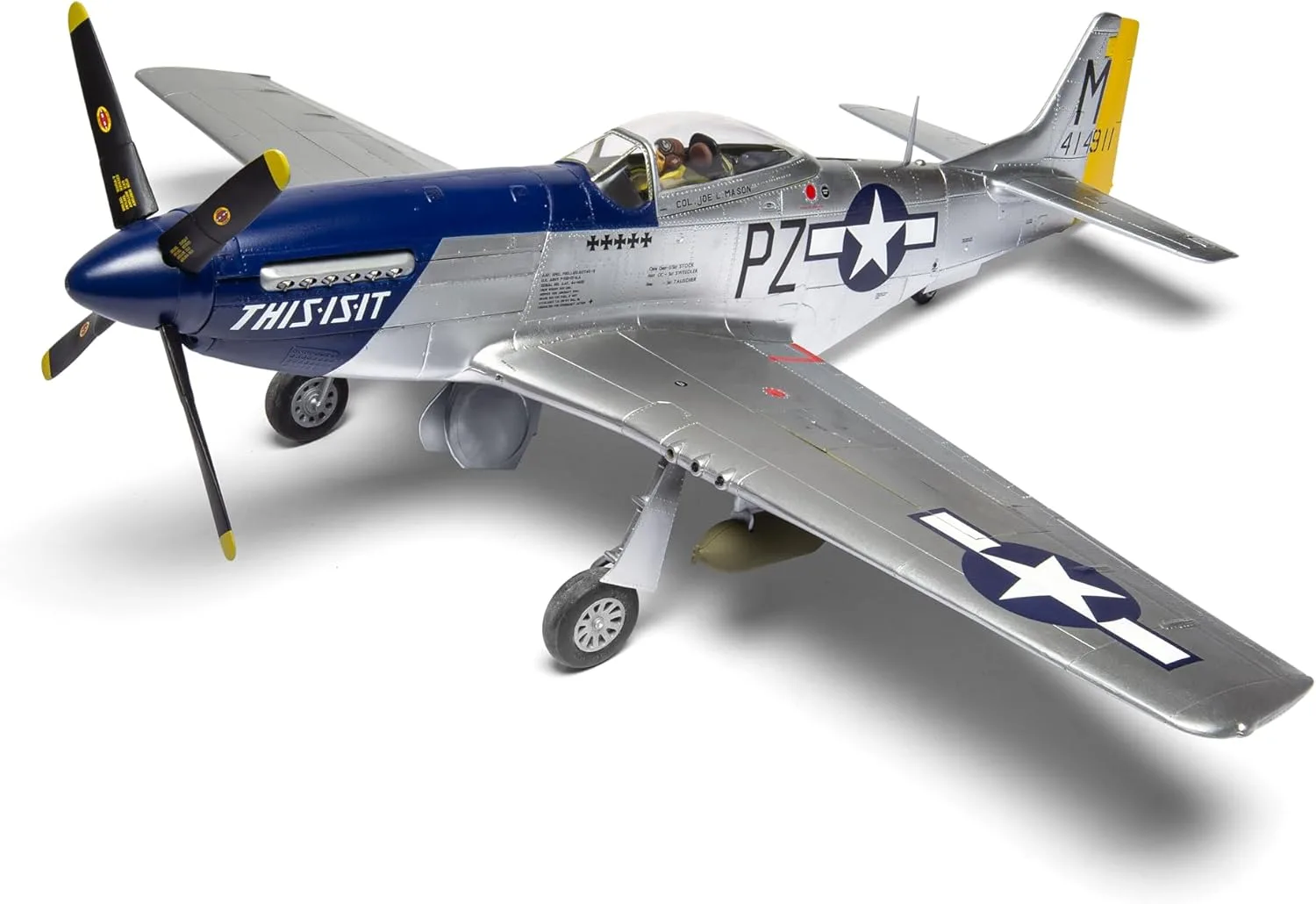
Airfix’s vintage 1/24 P-51D serves a specialized niche: large-scale presence for modelers willing to undertake structural improvements. This aging tooling requires significant work to achieve contemporary standards, making it unsuitable for beginners but attractive to experienced builders seeking a super-detailing canvas. The massive scale provides volume for scratchbuilt enhancements impossible in smaller formats.
The kit’s primary structural challenge involves wing droop. The original design lacked adequate internal bracing, requiring builders to install a wing spar—typically fabricated from brass rod or styrene—to correct dihedral geometry. The landing gear extends too far, a design compromise from the kit’s original toy-like retraction feature. Correcting this demands either aftermarket resin struts or careful modification of the kit parts.
Wheel well detail is minimal, essentially empty boxes that need scratchbuilt structural ribbing for authenticity. This extensive remediation work transforms the build from simple assembly into an advanced modeling project demanding skills in styrene fabrication, brass working, and structural engineering. However, the payoff is a display piece with physical presence unmatched by smaller scales.
This kit targets veteran modelers who view the base kit as raw material rather than a finished product. The appeal lies in transforming dated tooling into a showpiece through intensive super-detailing work. Those willing to invest dozens of additional hours in structural corrections and scratchbuilding will achieve a unique model that dominates display cases. Modelers seeking straightforward assembly should choose more modern toolings.
6. Meng 1/48 P-51D Mustang (Kit No. LS-006) — Best for Beginners and Stress-Free Building
Scale: 1/48 | Manufacturer: Meng | Skill Level: Beginner to Intermediate | Price Range: Mid-Range
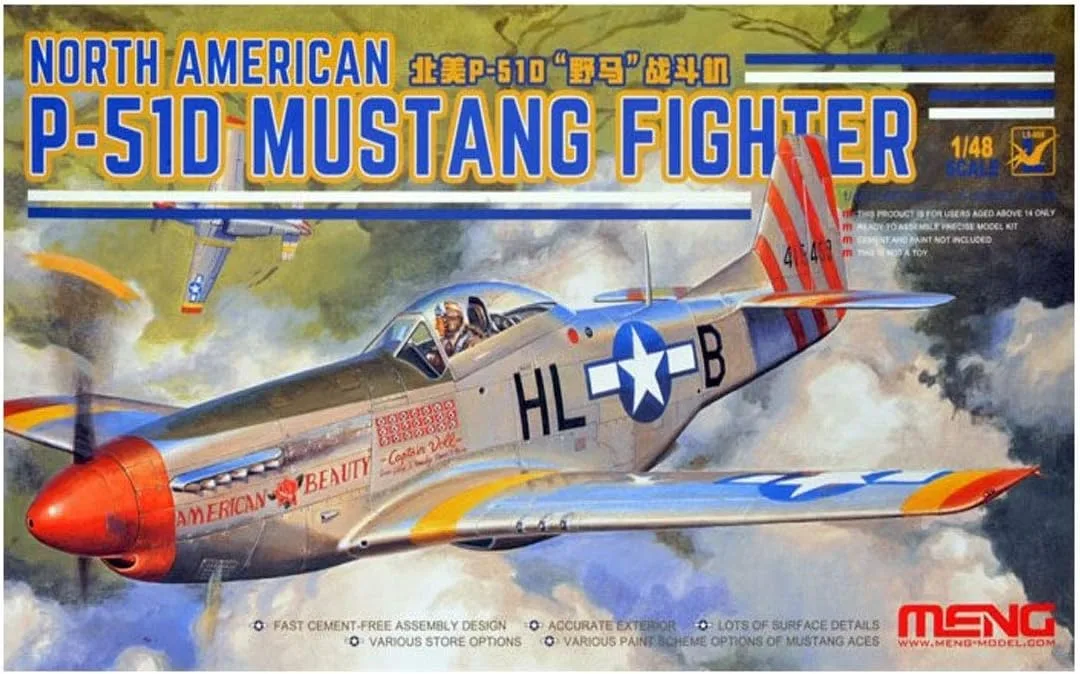
Meng’s innovative cement-free design maintains expert-level detail while eliminating adhesive-related frustrations. The parts fit so tightly that structural stability is assured through friction alone—a breakthrough that removes common beginner pitfalls like insufficient glue application or excessive cement melting plastic details. This kit is the first 1/48 Mustang to accurately portray the gear bay as open back to the wing spar, reflecting the real aircraft’s internal structure.
The engineering precision required for snap-fit assembly means every part has been designed with exceptional tolerances. Fuselage halves, wing joins, and cockpit components interlock with mechanical precision. The tight fit does create one challenge during dry-fitting: parts can be difficult to separate when checking alignment before final assembly. Modelers should exercise patience during test fits to avoid damaging delicate details.
The kit’s beginner-friendly nature extends beyond the snap-fit design. Instructions are comprehensive and clearly illustrated, reducing ambiguity during assembly. Surface detail is sharp and modern, with recessed panel lines suitable for weathering. The cockpit includes adequate detail for the scale without requiring advanced photo-etch skills, though experienced modelers can easily enhance it with aftermarket sets.
This Meng kit is ideal for modelers intimidated by adhesive work or those who’ve experienced frustration with warped parts and poor fit in other kits. The cement-free design also appeals to younger builders or situations where solvent cements aren’t practical. While advanced modelers may prefer the flexibility traditional assembly offers for modifications, the Meng P-51D proves that innovation in basic kit engineering can dramatically improve the building experience.
7. Revell 1/32 P-51D-5NA Early Version (Kit No. 03944) — Best Large Scale on a Budget
Scale: 1/32 | Manufacturer: Revell | Skill Level: Intermediate to Advanced | Price Range: Budget to Mid-Range
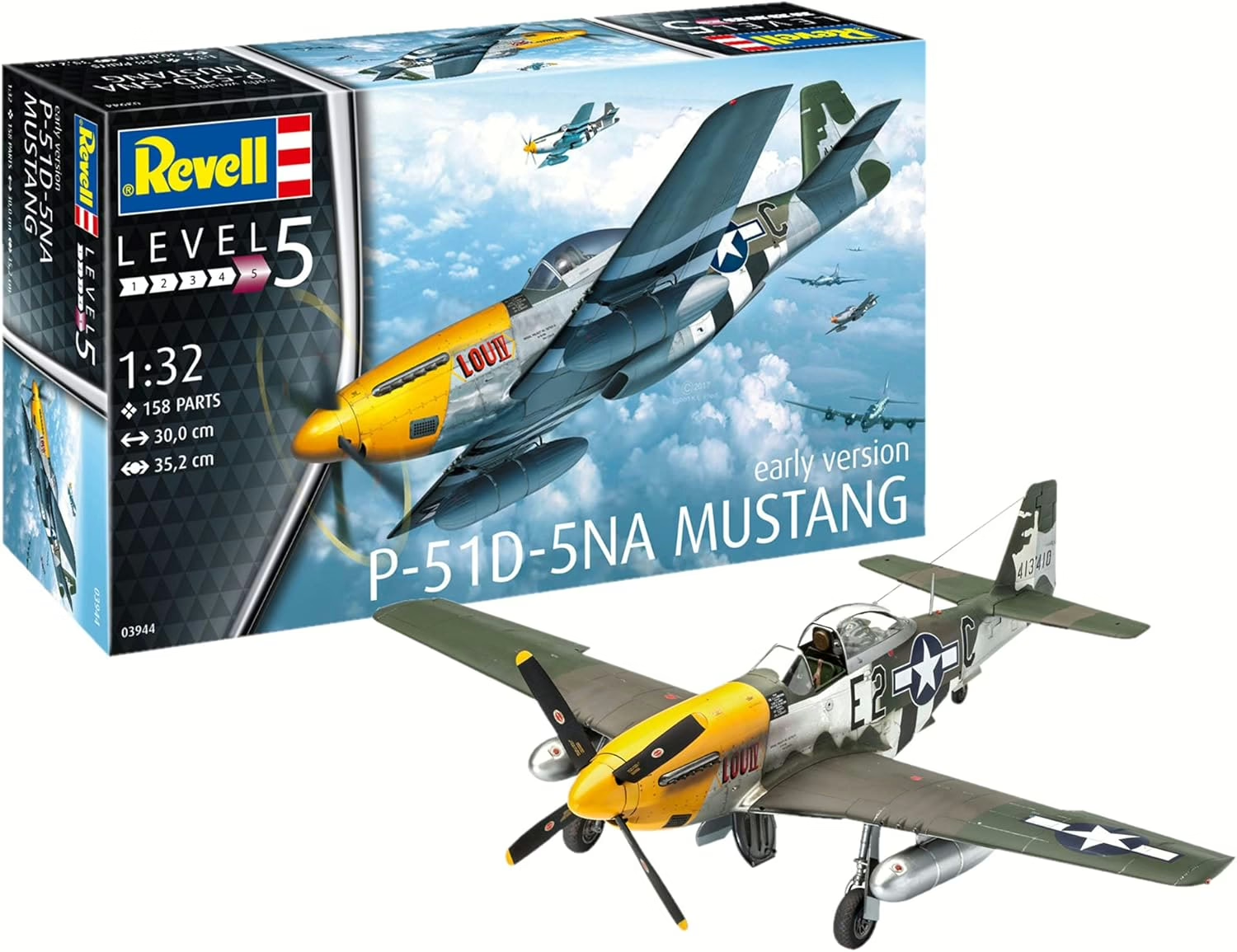
Revell’s modern 1/32 tooling focuses on the early Block 5 Mustang, distinguished by the absence of the tail fillet extension found on later production aircraft. This variant specificity makes the kit valuable for modelers pursuing early-war subjects, while the modular engineering hints at future variant releases using the same base tooling. The large scale provides substantial presence without the premium pricing of Tamiya’s 1/32 offering, making it attractive for builders wanting big-scale impact on realistic budgets.
The kit includes multiple examples that the affordability doesn’t sacrifice engineering quality. Parts fit is generally good, though not reaching Tamiya’s legendary standards. Some reviewers note a slightly pebbly texture on exterior surfaces that may require buffing before applying natural metal finishes. This surface preparation, while adding build time, is manageable for intermediate modelers and essential practice for anyone pursuing perfect metallic finishes.
The cockpit offers solid detail appropriate for the scale, and the instructions are clear. The kit provides good value for modelers who want to build multiple Mustangs for comparison displays without repeating premium-priced kits. The lower cost also makes this an excellent choice for experimental finishing techniques—testing new paint systems or weathering products risks less financial investment than with expensive kits.
This Revell release proves that quality 1/32 scale Mustangs don’t require luxury pricing. Modelers willing to invest extra preparation time will achieve results comparable to more expensive options. The kit particularly suits builders who prioritize scale and presence over absolute engineering perfection, or those assembling fleets of aircraft where budget considerations matter.
8. Airfix 1/48 P-51D Mustang (Kit No. A05131A) — Best for Highly Detailed Surface Texture and Modern Tooling
Scale: 1/48 | Manufacturer: Airfix | Skill Level: Intermediate | Price Range: Mid-Range
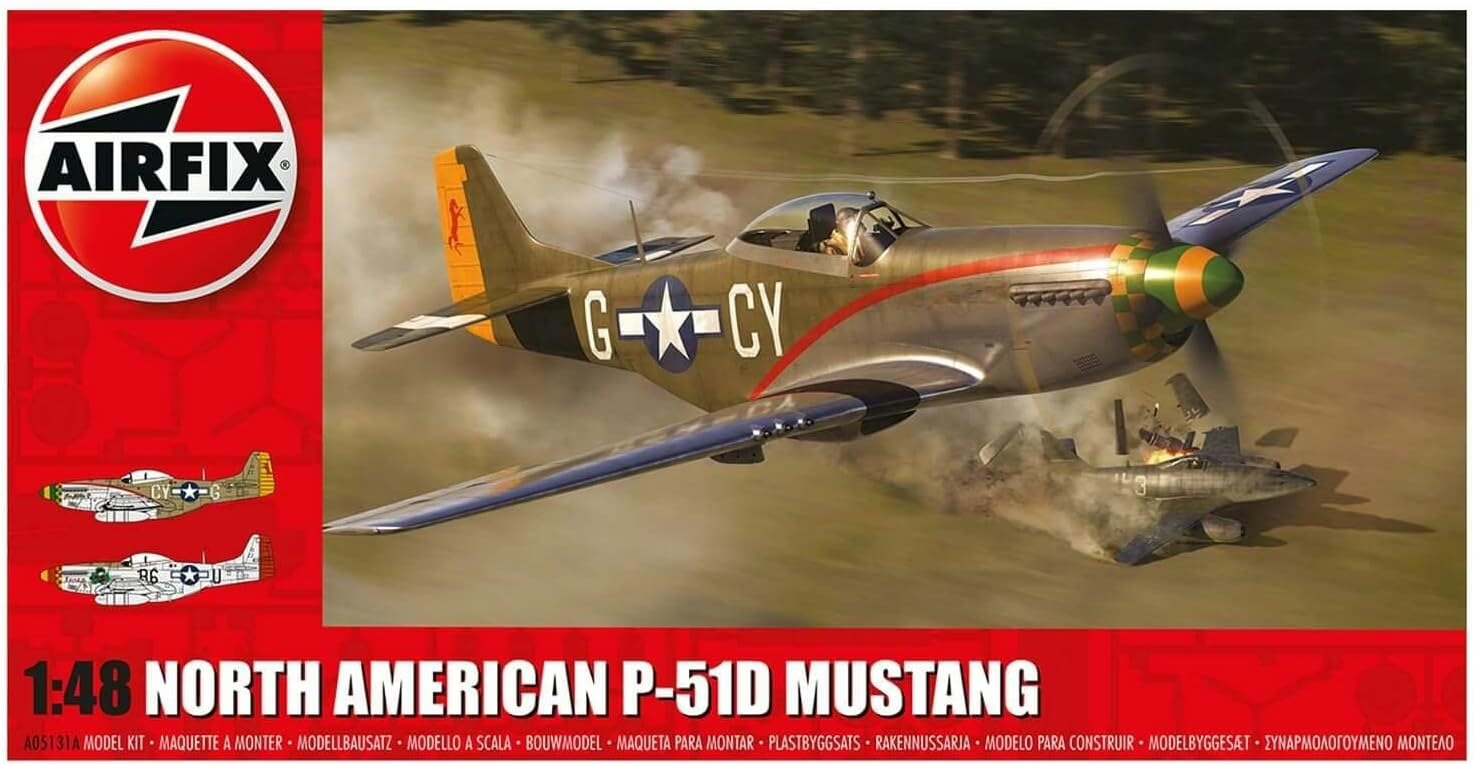
Airfix’s modern 1/48 P-51D demonstrates how the revitalized British brand now competes directly with top-tier Japanese and Czech manufacturers. The kit features innovative engineering in the cockpit sidewalls and includes separate components for raised or lowered flaps that utilize robust plug tabs for solid positioning. This attention to both detail and practical assembly represents contemporary kit design at its best.
The surface texture is particularly noteworthy, with crisp recessed panel lines and restrained rivet detail that captures the Mustang’s streamlined appearance. The parts breakdown is logical and modular, allowing builders to paint and detail sub-assemblies before final installation—a workflow that improves finish quality and reduces masking complexity. Clear parts are thin and optically clear, minimizing the over-scale thickness that plagues older toolings.
The kit strikes an effective balance between detail and buildability. Cockpit representation is comprehensive without requiring photo-etched brass for acceptable results, though PE sets remain available for enhancement. The engineering includes thoughtful touches like separate gear doors that can be positioned open or closed, adding display flexibility.
This Airfix release targets intermediate modelers ready to move beyond basic kits but not yet committed to the expense and complexity of premium ProfiPack offerings. The kit proves modern tooling can deliver near-premium results at mid-range pricing. It’s particularly suited to modelers who want crisp surface detail for weathering and panel line emphasis without the challenges that come with older designs.
9. Tamiya 1/32 P-51D/K Mustang (Kit No. 60323) — Best for Multi-Variant Options and Engine Detail
Scale: 1/32 | Manufacturer: Tamiya | Skill Level: Advanced | Price Range: Premium
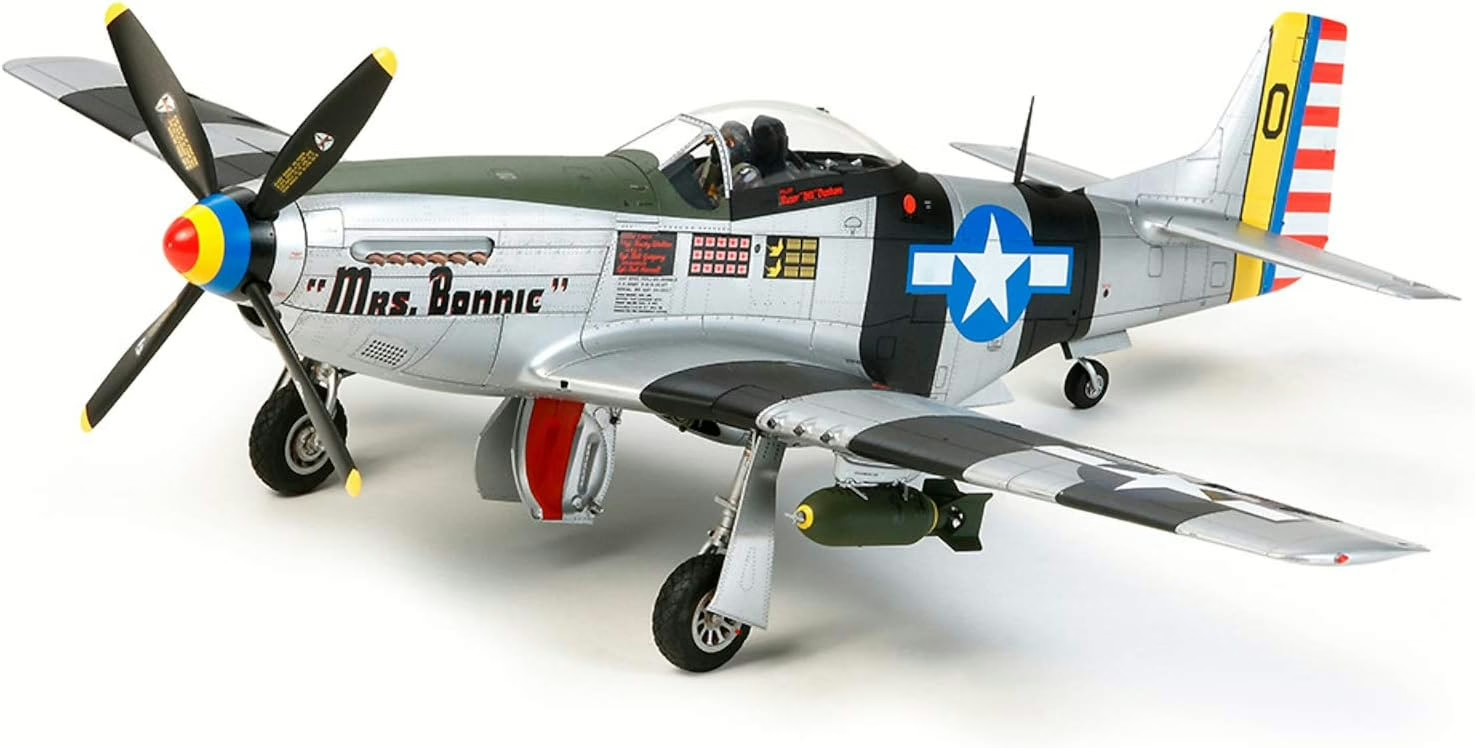
Tamiya’s variant expansion builds on the exceptional engineering of kit 60322 while adding the P-51K and F-6D reconnaissance variants. The P-51K is distinguished by the Aeroproducts propeller, faithfully captured with accurate blade geometry and hub detail. This multi-variant capability means a single tooling investment enables builders to construct multiple historically distinct aircraft through different parts selections.
The kit retains all the strengths of the original 60322 release: magnetic removable cowlings revealing the detailed Packard Merlin engine, exceptional fit quality, and comprehensive surface detail. The modular design philosophy extends to the variant-specific components, which integrate seamlessly into the base engineering. Instructions clearly identify which parts correspond to each variant, reducing confusion during assembly.
The F-6D reconnaissance configuration adds another dimension for modelers interested in specialized P-51 roles beyond the fighter mission. This variant includes appropriate differences in cockpit configuration and external equipment, satisfying builders pursuing accurate representation of photo-reconnaissance operations.
This kit suits advanced modelers who want to build multiple Mustang variants while amortizing the premium price across several projects. The variant flexibility also appeals to builders constructing unit-specific displays where multiple aircraft types operated together. The engineering quality ensures each variant achieves the same high standard, making this an investment in long-term modeling satisfaction for dedicated Mustang enthusiasts.
10. Italeri 1/72 P-51A Mustang (Kit No. 1423) — Best for Early Allison-Powered Variant Representation
Scale: 1/72 | Manufacturer: Italeri | Skill Level: Intermediate | Price Range: Budget
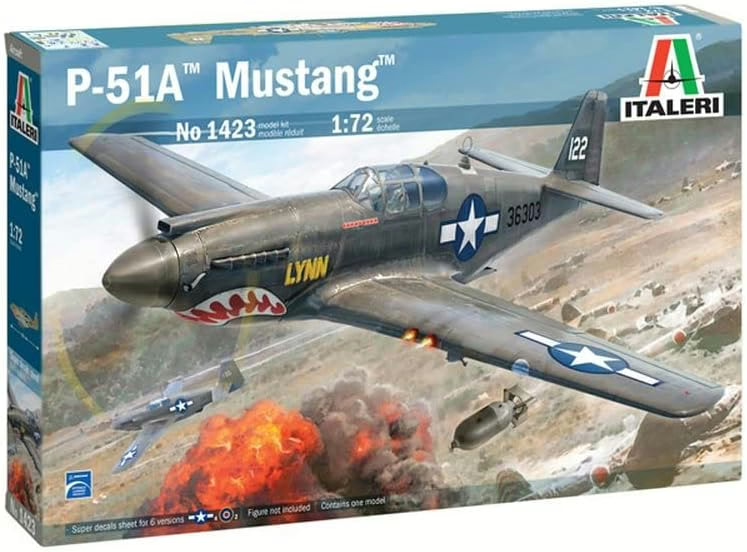
Italeri’s 1/72 P-51A fills a unique niche by representing the early Allison V-1710-powered variant that preceded the famous Merlin-equipped versions. This kit is essential for modelers pursuing comprehensive Mustang lineage displays or those interested in the aircraft’s developmental history. The P-51A’s distinct nose profile and razorback canopy create a noticeably different appearance from later bubbletop variants.
The kit’s detail level reflects its budget positioning and older tooling. Panel lines and cockpit representation are adequate rather than exceptional, suitable for small-scale display but not matching the refinement of newer releases. The engineering is straightforward with conventional construction sequences, making it accessible to intermediate builders despite the 1/72 scale’s inherent challenges with tiny parts.
The kit’s value lies entirely in its subject matter uniqueness. Few manufacturers have tooled the Allison-powered P-51A, making this Italeri release one of the only accessible options for this variant. Modelers building chronological displays of Mustang development need this kit to show the transformation from the initial design to the bubble-canopy fighter that dominated late-war skies.
This kit suits builders who prioritize historical completeness over absolute detail. It’s not the kit for someone’s first P-51 or for modelers seeking cutting-edge engineering. However, for enthusiasts wanting to represent the full Mustang story or those specifically interested in early-war North American Aviation products, this Italeri P-51A is the practical choice despite its modest detail levels.
CHOOSING YOUR IDEAL P-51 MUSTANG KIT
Finding the right Mustang kit requires matching your specific circumstances—skill level, display goals, budget constraints—with the strengths of each option. The ten kits reviewed represent distinct positions along these spectrums.
If You’re a Complete Beginner
Start with the Airfix 1/72 P-51D (A01004A) or the Meng 1/48 P-51D (LS-006). The Airfix delivers excellent fit in a forgiving small scale where mistakes cost less in time and materials. The compact size also reduces intimidation factor. The Meng’s cement-free design eliminates adhesive-related frustrations while maintaining 1/48 scale’s better detail visibility. Both kits feature clear instructions and engineering that won’t punish small errors. Avoid large-scale kits initially—the Tamiya 1/32 offerings or Airfix 1/24, while exceptional, present part counts and complexity that can overwhelm newcomers.
If You Want Maximum Value
The Eduard 1/48 ProfiPack (82102) delivers premium results at mid-range pricing by including photo-etched brass and masks. This kit suits budget-conscious modelers who understand that PE brass handling is the price of admission for near-premium quality. The Airfix 1/72 (A01004A) offers different value: outstanding fit and decals at budget pricing for collectors building multiple subjects. The Revell 1/32 (03944) provides large-scale presence without luxury costs, though surface preparation requirements mean you’re trading time for money savings.
If You’re Building for Display or Competition
Competition and high-end display work demands the Tamiya 1/32 P-51D (60322) or its variant sibling (60323). The magnetic cowlings enable maintenance dioramas showcasing internal engine detail—a proven competition winner. The engineering quality ensures builds proceed without fit-fighting, letting you focus entirely on finishing excellence. The extensive aftermarket support for these kits means any detail enhancement imaginable exists as a ready-made upgrade. Eduard’s 1/48 ProfiPack offers a more compact alternative with comparable detail density and the accuracy advantages of rivet-free wings.
Scale Considerations
Choose 1/72 for space efficiency and fleet-building economy. The Airfix 1/72 fits in limited display areas while allowing construction of multiple aircraft for formation displays. Select 1/48 as the sweet spot—large enough for meaningful detail work and aftermarket enhancements, compact enough for reasonable display requirements. The Eduard ProfiPack and Meng cement-free kit both excel here. Pick 1/32 for maximum presence and internal detailing capability. The Tamiya offerings enable museum-quality results with operating features impossible in smaller scales. The Revell 1/32 provides similar scale impact at lower cost. The Airfix 1/24 suits only advanced modelers seeking the ultimate large-scale project.
Historical Accuracy Priorities
Accuracy-focused modelers should note variant-specific considerations. The Eduard 1/48 ProfiPack offers historically correct smooth wings matching factory laminar flow surface treatment. The Italeri P-51A is essential for early Allison-variant authenticity despite modest detail levels—few alternatives exist for this configuration. The Tamiya 1/32 P-51D/K (60323) accurately captures the Aeroproducts propeller and reconnaissance equipment distinguishing these variants. Avoid kits with excessively heavy wing riveting if pursuing factory-fresh finish accuracy, though this detail can be filled if desired.
COMMON QUESTIONS ABOUT P-51 MUSTANG KITS
What scale P-51 kit should I buy as my first Mustang build?
Begin with 1/48 scale, specifically the Meng cement-free P-51D (LS-006) or Tamiya’s 1/48 classic (61040). This scale offers the best balance of detail visibility and manageable size for learning natural metal finishing techniques. The 1/48 scale lets you see what you’re painting and weathering without the magnification requirements of 1/72, while keeping the model compact enough that mistakes don’t represent enormous time losses. The Meng’s snap-fit engineering removes adhesive variables, while the Tamiya’s legendary fit ensures you’re learning finishing skills rather than fighting poor engineering.
Are Tamiya P-51 kits really worth the premium price?
Yes, if you value time and frustration reduction. Tamiya’s engineering quality means builds proceed smoothly without the constant corrections needed in lesser kits. For the 1/32 offerings (60322 and 60323), the magnetic cowlings and comprehensive engine detail justify premium pricing for modelers pursuing display or competition work. The older 1/48 Tamiya (61040), while not the most detailed current option, remains worth mid-range pricing specifically for its forgiving fit—ideal when learning natural metal finishing where surface preparation determines success. Budget-conscious modelers can achieve comparable results with the Eduard ProfiPack or Airfix kits, but they’ll invest more time managing fit challenges.
Which P-51 kit has the best cockpit detail?
The Tamiya 1/32 kits (60322 and 60323) dominate cockpit detail through sheer scale advantage and comprehensive engineering. The multi-part assemblies include instrument panels, control columns, and seat details visible through the large bubble canopy. In 1/48 scale, the Eduard ProfiPack (82102) delivers exceptional cockpit fidelity through included photo-etched brass components achieving scale-appropriate thinness impossible with plastic. The PE brass allows intricate sidewall detail and instrument panel depth. The Meng 1/48 (LS-006) offers solid plastic cockpit detail suitable for most builders, while the Airfix 1/48 (A05131A) provides good representation without requiring PE skills.
Can beginners tackle 1/32 scale P-51 kits?
Not advisable for true beginners. The Tamiya 1/32 kits contain 550+ parts with complex sub-assemblies and demanding multi-stage finishing. The large scale amplifies mistakes—poor seam work or surface preparation becomes dramatically visible on the expansive fuselage and wings. The natural metal finish that defines most P-51s requires advanced airbrushing skills practiced on smaller projects first. The Revell 1/32 (03944), while more affordable, presents surface texture challenges requiring experience to resolve. Beginners should build proficiency through 1/72 or 1/48 kits before attempting 1/32 scale, where the investment in time and materials demands skills that come only through practice.
What aftermarket additions improve these kits most?
For any P-51 kit, aftermarket decals dramatically expand marking options beyond kit-supplied schemes. Eduard produces extensive decal sets covering specific fighter groups and individual aircraft. Resin replacement wheels add weighted appearance and tire deflection—particularly effective on 1/32 scale kits where kit plastic wheels often look toy-like. Brass gun barrels from companies like Master or RB Productions replace solid plastic kit parts with hollow tubes matching real aircraft. For 1/48 and 1/32 scales, resin or PE replacement exhausts improve the prominent stacks visible on Mustang nose sides. Eduard’s brassin cockpit sets transform basic interiors, though ProfiPack kits already include quality PE.
How do I choose between the P-51D variants (razorback, bubble-top)?
The P-51D universally refers to the bubble-top configuration with cut-down rear fuselage and teardrop canopy providing 360-degree visibility. The razorback configuration applies to earlier P-51B and P-51C variants not covered in this roundup. If you want the iconic late-war Mustang recognized from countless photographs of bomber escort missions, choose any P-51D kit reviewed here—they all represent the bubble-top variant. The Italeri P-51A presents the early razorback profile but with the Allison engine, creating a distinctly different nose shape. For strict P-51D variant selection, focus instead on detail differences: the Tamiya 1/32 P-51D/K includes both standard and Aeroproducts propeller options, while most other kits represent standard production Block 10 or later configurations.

Key Takeaways
- Tamiya’s 1/32 scale P-51D kits (60322 and 60323) represent the pinnacle of Mustang modeling with 550+ parts, magnetic cowlings revealing detailed Packard Merlin engines, and fit quality that minimizes construction frustration—but suit only advanced modelers with substantial time investments.
- The Eduard 1/48 ProfiPack (82102) delivers the best overall value by including photo-etched brass and masks in the box, while offering historically accurate smooth wings reflecting factory laminar flow surface treatment—ideal for intermediate builders developing advanced skills.
- Beginners should start with either the Airfix 1/72 P-51D (A01004A) for forgiving small-scale assembly and budget pricing, or the innovative Meng 1/48 cement-free P-51D (LS-006) that eliminates adhesive-related frustration while maintaining expert-level detail through precision snap-fit engineering.
- The 1/48 scale represents the optimal balance for most modelers—large enough for meaningful detail work and aftermarket enhancements while remaining compact enough for practical display, with the strongest selection of quality kits from multiple manufacturers.
- Natural metal finishing demands smooth surface preparation regardless of kit choice, making superior fit quality more valuable than ultimate detail density—the reason Tamiya’s 1995 1/48 P-51D (61040) remains relevant thirty years after release despite simpler engineering than newer toolings.