


Blade’s Nano S3 promises a structured, crash-forgiving path from first hover to real 3D aerobatics. The SAFE Z altitude hold and AS3X stabilization sound impressive on paper. We flew it across all three modes — Stability Z, Stability, and Agility — to find out whether the technology gap that justifies its price is genuine.
The Blade Nano S3 (BLH013000) is a nano-class, collective-pitch flybarless electric helicopter manufactured by Blade, a brand under Horizon Hobby. It ships in Ready-To-Fly (RTF) format — no assembly required. Measuring 7.87 inches (200mm) in length and 3.11 inches (79mm) in height, and tipping the scales at just 32 grams all-up with its flight battery installed, the Nano S3 is built specifically for indoor training and the critical transitional stage of pilot development.
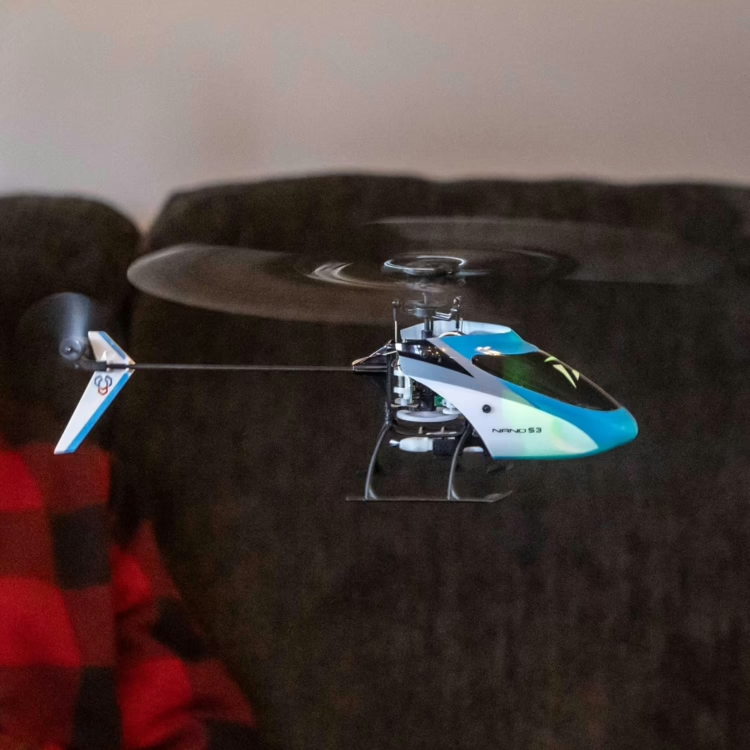
The ideal buyer is a U.S.-based beginner — someone taking their first steps into genuine collective-pitch flight after graduating from a coaxial or fixed-pitch trainer, or picking up the hobby from scratch. Its compact footprint makes it a natural fit for living-room practice sessions year-round.
Cool Features:
- SAFE Technology with Stability Z Mode — combines bank and software-dampened pitch control with accelerometer-based altitude hold, dramatically reducing the cognitive load on first-time CP pilots.
- AS3X (Artificial Stabilization – 3-aXis) — MEMS gyroscopes correct attitude hundreds of times per second, delivering locked-in hover stability that punches well above the helicopter’s 32-gram weight class.
- Panic Recovery — a single dedicated button on the transmitter instantly overrides all pilot input and returns the helicopter to a level, upright hover — providing a critical backstop against disorientation in Agility mode.
- Integrated Voltage Telemetry — real-time battery status pushed directly to the Spektrum MLP6 transmitter’s LED indicator, eliminating guesswork about when to land.
Pros & Cons
Pros
- Stability Z mode combines software-dampened pitch control with altitude hold — removes two of the hardest challenges for first-time CP pilots simultaneously
- Coreless direct-drive tail motor provides fast yaw response during aggressive flight mode transitions
- Carbon-fiber main shaft and tail boom deliver real crash resilience at nano scale
- Complete RTF package — transmitter, battery, and USB charger included — means no hidden startup costs
- Three-mode SAFE progression (Stability Z → Stability → Agility) offers a structured, logical skill ladder from first hover to 3D aerobatics
Cons
- The brushed main rotor motor is subject to brush wear with sustained heavy use and will eventually require replacement
- Flight time of 4 to 5 minutes per charge makes multiple batteries a practical necessity for productive training sessions
- DSMX protocol binds buyers to the Spektrum/Horizon Hobby transmitter ecosystem, limiting future radio choices
Few transitions in the RC helicopter hobby are as unforgiving as the jump from a coaxial contra-rotor trainer to a genuine single-rotor collective-pitch machine. The physics shift is abrupt: where a coaxial absorbs sloppy stick inputs and maintains a slow, stable hover almost by default, a real CP helicopter responds instantly and relentlessly to every error in attitude and throttle management. For years, that gap deterred pilots from progressing, and Blade has built a significant portion of its lineup around bridging it.
The Nano S3 (BLH013000) is the latest expression of that philosophy — a sub-200mm collective-pitch flybarless aircraft with an RTF configuration and three-layered flight modes designed to walk pilots from their first wobbling hover through to genuine inverted 3D aerobatics. It earns serious consideration among the best RC helicopters purpose-built for the beginner-to-intermediate transition, positioning itself clearly above toy-grade coaxials and well below true sport machines. The central question is whether the technology gap that justifies the price is real, or simply marketing. We put it to the test.
Design & Build Quality
Airframe & Physical Construction
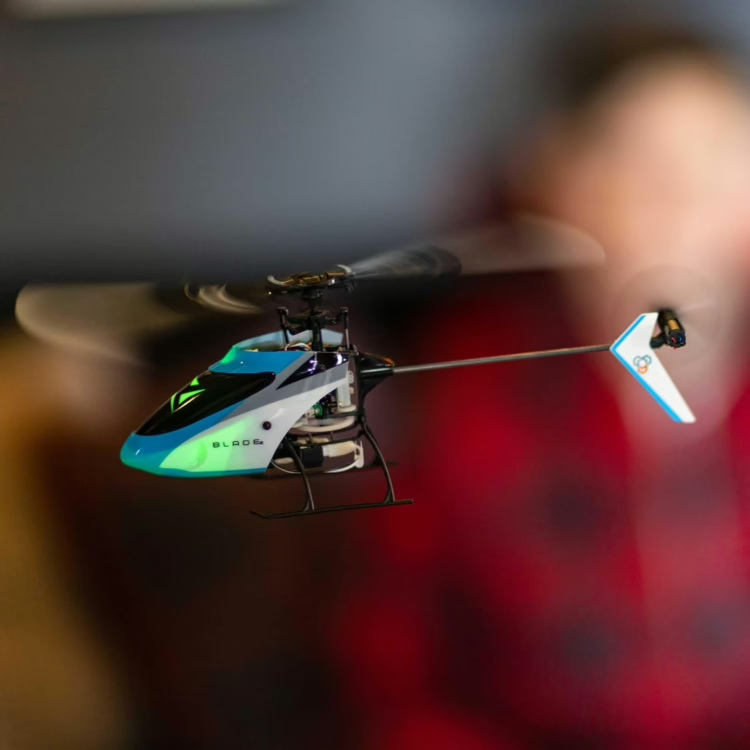
At 7.87 inches in length with a 7.71-inch (196mm) main rotor diameter, the Nano S3 occupies roughly the footprint of a large smartphone. Main frame and canopy are molded from resilient engineering-grade polymers — materials specified to absorb the repeated hard landings beginner pilots will inevitably produce. More important for long-term durability, both the main shaft and tail boom are carbon fiber. That’s a construction choice notable at this scale and price point, and one that transmits crash energy through flex rather than catastrophic component failure. The tail rotor diameter measures 1.57 inches (40mm), and the bare airframe tips the scales at just 28 grams — 32 grams with the included flight battery installed.
Electronics & Key Components
The flight controller is vertically mounted inside the airframe — a deliberate engineering decision that improves vibration dampening and isolates the MEMS gyroscopes driving AS3X from high-frequency motor noise. The swashplate is actuated by high-torque linear servos, which deliver faster response and greater holding torque than conventional rotary servos in this size class, translating directly to the crisp, lag-free cyclic authority the Nano S3 needs for 3D aerobatics.
The dual-motor configuration is worth understanding precisely. The main rotor is driven by a coreless brushed motor — effective for this application but subject to brush wear with sustained heavy use. The tail rotor runs on a coreless direct-drive motor. Coreless construction eliminates the iron armature core, slashing rotational inertia and allowing the tail motor to spool up and decelerate nearly instantaneously in response to AS3X commands. The practical result is a tail that stays locked in position during aggressive collective pitch transitions in Agility mode, rather than lagging and allowing the nose to swing.
Out-of-Box Readiness
The RTF package contains everything needed to fly: the Spektrum MLP6 6-channel 2.4GHz DSMX transmitter, a 150mAh 1S 3.7V 45C LiPo flight battery, a USB LiPo charger, and four AA batteries for the transmitter. No binding steps are required — the helicopter arrives pre-configured for the included radio. Time from opening the box to first hover is genuinely short, and no tools are necessary.
Flight Performance
First Flight & Setup
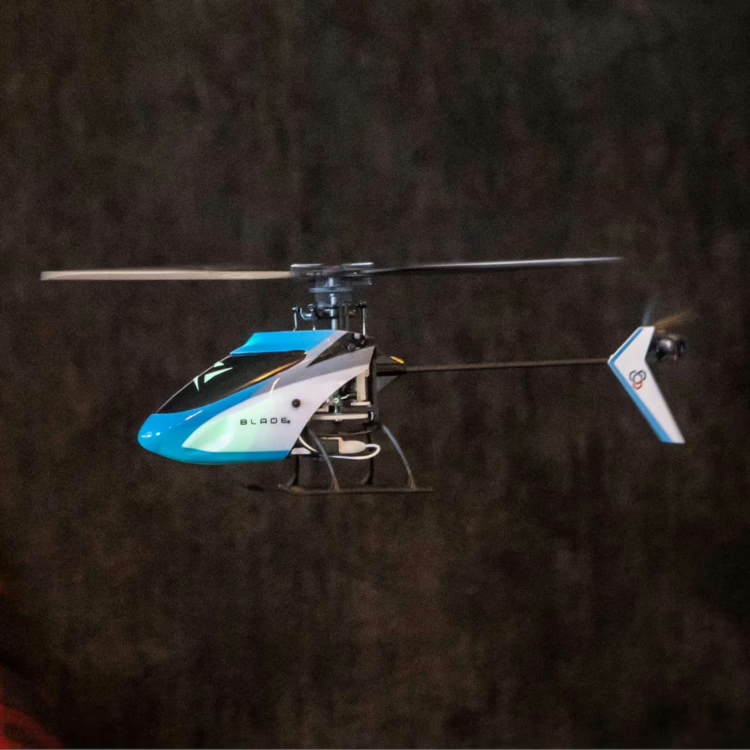
Startup follows a clean, logical sequence: power the transmitter first, plug in the helicopter, and allow the AS3X system to initialize — a process that takes only a few seconds. Once initialized, the Nano S3 is ready to fly. The minimal time between unboxing and hover is a genuine RTF credential, not just a marketing label.
Stability & SAFE Technology in Practice
The three-mode SAFE architecture is the Nano S3’s core value proposition, and it structures the beginner experience intelligently rather than just adding a single training mode and calling it done.
Stability Z is the most protective of the three modes. It leverages both the AS3X gyroscopes and an onboard accelerometer to impose a hard bank-angle limit while applying software-dampened pitch control — physically preventing the helicopter from inverting — and simultaneously using the accelerometer to hold a consistent hover altitude. This dual action is significant: it removes altitude management from the equation entirely while the pilot focuses on orientation and directional control. The cognitive load on a genuinely inexperienced pilot is dramatically lower than any conventional CP helicopter at this price point.
Stability mode retains the bank and self-leveling behavior — releasing the cyclic sticks returns the helicopter to a flat, level hover automatically — but hands altitude management back to the pilot. This intermediate step trains proper collective-stick discipline within a still-forgiving flight envelope.
Agility mode removes all bank and pitch restrictions. The helicopter will not self-level. The full 3D aerobatic potential is available here — inverted flight, flips, rolls — supported by the coreless tail motor’s immediate yaw authority. Panic Recovery remains accessible in Agility mode: pressing the designated transmitter button overrides all manual input and snaps the aircraft back to a level, upright hover, providing a critical backstop for pilots practicing disorientation recovery without the usual cost in bent hardware.
Maneuverability & Control Feel
The linear servos deliver inputs without the lag common to rotary servo designs in this size class. Cyclic response in Stability mode is intentionally softened and forgiving — correct for a new pilot still establishing orientation habits. In Agility mode, the same servos reveal their full range of authority: inputs are immediate and the rotor head tracks pilot intentions accurately and without drama. Outdoor performance in light air benefits visibly from AS3X’s continuous micro-corrections, though the Nano S3’s 32-gram all-up weight means it is best treated as an indoor or calm-day machine rather than a wind-fighting outdoor trainer.
Flight Time & Battery Performance
Blade rates the Nano S3 at 4 to 5 minutes on the included 150mAh 45C pack, and that figure reflects real-world use accurately. For a productive training session — actual flying time rather than crash recovery time — multiple batteries are a practical requirement rather than a luxury. The MLP6 transmitter’s LED telemetry system makes battery management straightforward: solid green indicates above 3.7V per cell and safe flight conditions; solid yellow signals between 3.3V and 3.7V, indicating the approach to landing; solid red accompanied by audio tones means land immediately to prevent LiPo cell degradation. It’s a simple but effective system that removes the guesswork experienced pilots take for granted and beginners genuinely need.
Why You’ll Simply Love This Helicopter
The moment you achieve a stable, hands-free hover in Stability Z mode — knowing the system is catching your micro-corrections in real time — something clicks. The Nano S3 doesn’t just tolerate beginner mistakes; it actively prevents the worst of them, keeping the aircraft in the air long enough for the muscle memory to form. From there, the progression is deliberate and earned: switch to Stability mode when altitude management starts to feel natural, then graduate to Agility mode when you’re ready to discover what a real collective-pitch helicopter is actually capable of. Each transition feels like a genuine skill unlock rather than an arbitrary mode change forced on you by the manual. Because the whole machine fits in a jacket pocket and runs in a living room, flight time accumulates fast — and so does ability.
Value for Money
The Nano S3 demands an honest justification. A toy-grade coaxial infrared helicopter costs a fraction of that figure — but delivers none of the collective-pitch mechanics, DSMX radio protocol, linear servos, coreless tail motor, or AS3X stabilization the Nano S3 brings to the table. The RTF package is genuinely complete: the Spektrum MLP6 transmitter, a 45C LiPo, and a USB charger are included with no hidden startup costs. The SAFE-Z altitude hold, the integrated voltage telemetry, and the carbon-fiber structural components are features that simply don’t exist in the toy segment at any price. For a pilot committed to developing real CP helicopter skills — rather than spinning a coaxial around a living room indefinitely — the Nano S3’s price represents fair value for a hobby-grade trainer that bridges a real and significant skill gap.
Who Should Buy It
The Nano S3 is the right purchase for absolute beginners — those with no prior RC helicopter experience — who intend to fly indoors and need a forgiving, structured training platform with meaningful protection against the crashes that destroy confidence early. It is equally well-suited to pilots currently flying coaxial or contra-rotating helicopters who are ready to transition to single-rotor CP flight without enduring the expensive crash-and-replace cycle that comes with jumping straight onto a sport machine. Experienced pilots will also find it useful as a compact indoor skills-maintenance tool during the off-season.
Pilots who have already mastered single-rotor flight will find the stabilization limits more frustrating than useful. Buyers prioritizing long flight times, brushless motor performance, or those shopping specifically for a micro sport or 3D machine with greater capability headroom should look elsewhere in the catalog.

Key Takeaways
- The Blade Nano S3 (BLH013000) is a Ready-To-Fly, collective-pitch flybarless nano helicopter with AS3X and SAFE Technology — no assembly required, no tools needed, genuine CP mechanics from day one.
- Its three-mode SAFE system (Stability Z with altitude hold → Stability → Agility) provides a structured, progressive training path from first hover to 3D aerobatics, including single-button Panic Recovery.
- Flight time runs 4 to 5 minutes per charge; multiple batteries are a practical necessity for productive training sessions; the MLP6 transmitter’s LED telemetry removes landing-time guesswork.
- The brushed main rotor motor will require eventual replacement with sustained heavy use — factor this into long-term cost.
- At its price, with a complete RTF package, the Nano S3 delivers fair value as a genuine hobby-grade CP trainer — the right tool for the right pilot at the right stage of the learning curve.