


At 157 g with three SAFE modes, it sells an easy start. But the box holds no radio, battery or charger, and the manual wants 1,300 feet of clear space. Here’s what that means for your wallet.
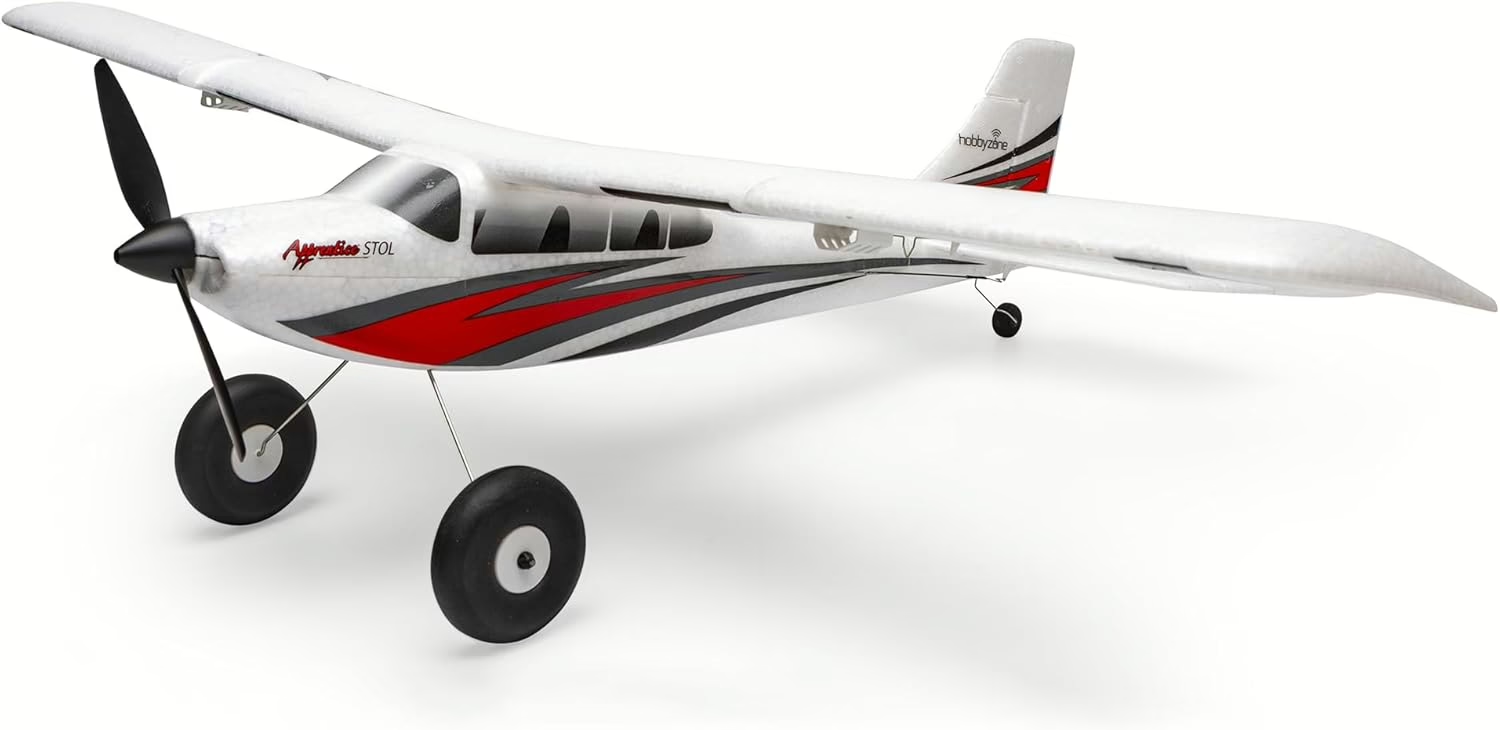
A first RC airplane usually stays grounded for one of two reasons: missing gear or the wrong field. The HobbyZone Apprentice STOL S 700 BNF Basic can trip you on both, because it ships without a radio, battery or charger and its instruction manual asks for far more room than a compact trainer implies. This HobbyZone Apprentice STOL S 700 BNF Basic review weighs Horizon Hobby’s marketing against that manual, its product listings and FAA guidance, so you can settle both questions before you pay. Put it on your shortlist of the best RC planes only if you already own a Spektrum radio and have a large, calm field.
Quick Verdict
A sensible buy with the right radio and field. Otherwise, compare the RTF.
- Buy it if: you own a compatible 6+ channel Spektrum transmitter and can fly from a large, open site in calm air.
- Why: staged SAFE flight assistance, Panic Recovery, installed brushless power and a flying weight under the FAA’s 250 g registration threshold.
- Main caveats: the package leaves out the transmitter, battery and charger. The manual calls for winds below its stated 5–7 mph range and at least 1,300 feet of clearance in all directions.
- Alternative: no-gear buyers should price the Ready-to-Fly version (HBZ6100).
- Evidence limit: no independent measurements of takeoff distance, flight time or durability have surfaced.
The real cost and the field you need decide this purchase, and both are spelled out below.
Brief Overview
What It Is
The Apprentice STOL S 700 is a high-wing electric trainer built from expanded polyolefin (EPO) foam and rated Skill Level 1 by HobbyZone. Horizon’s HBZ6150 listing includes an installed Spektrum brushless outrunner, a 6 A electronic speed controller (ESC), four linear servos and a dual-protocol receiver with AS3X stabilization and Sensor Assisted Flight Envelope (SAFE). Horizon markets it as a compact short takeoff and landing (STOL) trainer with oversized wheels and a steerable tailwheel. It flies on throttle, aileron, elevator and rudder, and its documentation shows no flaps.
Who It’s For
This package suits first-time or returning pilots who already own supported gear, plus instructors working with that equipment. Our guide to the best RC planes for beginners is the place to widen the search.
Cool Features
- Three SAFE modes: Beginner limits pitch and bank and self-levels at neutral stick. Intermediate widens those limits and drops self-leveling. Experienced removes the limits and keeps AS3X stabilization.
- Panic Recovery: Hold the Panic control with the sticks neutral, in any mode, and the system works to recover the airplane. It needs height and a clear path.
- Sub-250 g flying weight: The manual lists 157 g (5.5 oz.) with the specified pack.
- Simple field assembly: The main gear slides in, and two thumb screws hold the wing.
AT A GLANCE
Model: Apprentice STOL S 700mm BNF Basic with SAFE (HBZ6150)
Manufacturer: HobbyZone by Horizon Hobby
Wingspan: 27.6 in. (700mm)
Length: 19.3 in. (490mm)
Weight: 5.5 oz. (157 g) with specified pack
Pilot skill level: Skill Level 1 (manufacturer rating)
Power req’d: 2S 7.4V 300mAh 30C LiPo, 3-pin JST-PH
Radio req’d: Supported 6+ channel Spektrum DSMX or SLT
Price: Check current price
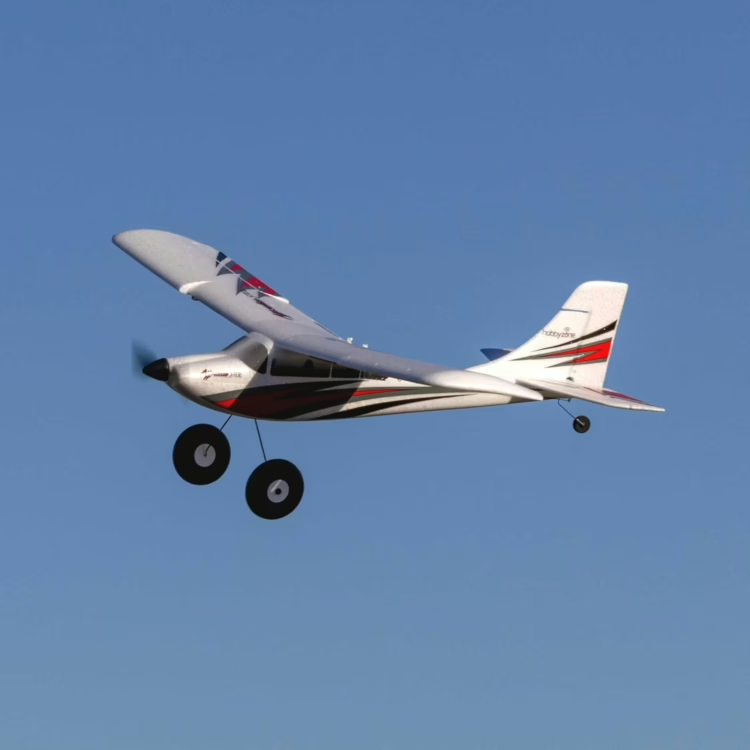
Already own a supported Spektrum radio? Check the current price of the HBZ6150 BNF Basic, and confirm the listing’s contents, since the transmitter, battery and charger cost extra.
Pros & Cons
HITS
- SAFE modes that step back as your skills grow
- Panic Recovery as a backstop
- No FAA registration for recreational flying at the specified weight
- Simple, hand-tightened wing and slide-in landing gear
- Repairable foam with listed spare parts
MISSES
- Radio, battery and charger cost extra
- Narrow wind window
- Needs far more room than a compact STOL label suggests
- No flaps, and no published measured takeoff data behind that label
The Real Cost of Getting Airborne: Is It Worth the Money?
The BNF makes financial sense when the radio is already in your flight box.
What You Still Have to Buy
- Transmitter: a supported 6+ channel Spektrum radio. Horizon’s multilingual manual names the programmable Spektrum NX6 (SPMR6775) as an accessory option.
- Flight battery: a 2S 7.4V 300mAh 30C LiPo with a 3-pin JST-PH 2.0 connector, such as Spektrum SPMX3002S30.
- Charger: a matching 2S LiPo charger, such as the Spektrum SPMXC0020 2S USB-C unit.
Spare packs, HBZ6105 propellers and an HBZ6110 landing gear set are worth pricing too. The Tower Hobbies specifications grid has said a charger is included, while the same page’s Needed to Complete list requires one. Horizon’s documentation sides with the second reading, so budget for a charger.
BNF or RTF?
The RTF (HBZ6100) adds a Spektrum SLT6LP six-channel transmitter (SPMR1275), the flight pack, a USB-C charger, four AA cells and a RealFlight Trainer Edition trial. The manual still expects you to supply the USB-C cable and power source for that charger. Horizon’s pages have priced the BNF below the RTF bundle, but that compares an airplane with a complete kit. Total each option by category: airplane, transmitter, battery, charger, then spares. A programmable radio you’ll keep for later models may justify a higher total. Horizon has also shown the BNF on backorder and the RTF out of stock, so check what you can actually buy.
How It Stacks Up
| Package | Wingspan | Published weight | Battery | Skill level | FAA registration (recreational) | Best for |
| Apprentice STOL S BNF (HBZ6150) | 27.6 in. | 157 g with pack | 2S 300mAh JST-PH | 1 | No at stock weight | Owners of a supported radio |
| Apprentice STOL S RTF (HBZ6100) | 27.6 in. | 157 g with pack | 2S 300mAh JST-PH, included | 1 | No at stock weight | Buyers starting with no gear |
| Sport Cub S 2 BNF (HBZ44500) | 24.3 in. | 61 g with 150mAh pack | 1S 150–200mAh Ultra-Micro | 1 | No at stock weight | Smaller trainer on 1S packs |
| AeroScout S 2 BNF (HBZ385001) | 1.1m size class | Above 250 g | 3S 1300–2200mAh EC3/IC3 | 1 | Yes | Larger pusher-prop trainer |
| UMX Timber X BNF (EFLU7950) | 22.4 in. | 168 g with 3S pack | 3S 300mAh JST-RCY | 2 | No at specified weight | Aerobatic step-up |
The Sport Cub is smaller and lighter but moves you to 1S packs. The AeroScout gives you a larger trainer, along with registration and a different equipment budget. Horizon has also shown this HBZ385001 version out of stock, so confirm the current SKU. The Timber X is a Skill Level 2 step-up rather than a first airplane. No head-to-head flight test of these models has surfaced, so the comparison rests on package and configuration. On those terms, the Apprentice BNF justifies its price only when your existing gear covers what the box leaves out.
Expected Experience with HobbyZone Apprentice STOL S 700 BNF Basic
Assembly
Flyers should expect a short mechanical job. The manual has the main gear slide into its fuselage slot, then the two aileron leads connect and the wing locates on front tabs before two thumb screws secure it. Seat the wing without pinching wires, and tighten the screws by hand without overtightening. No independently timed build has surfaced.
Radio Setup
On a programmable Spektrum radio, the manual assigns flight modes to Channel 5 and Panic to Channel 6. Its tables specify 100% rate and 10% expo on high, 70% rate and 5% expo on low, plus a throttle cut at −100%. Keep rates at 50% or higher to preserve AS3X operation. Menus and switch assignments differ by radio, so test every mode and Panic after binding. A BrianPhillipsRC video from Brian Phillips lists radio setup and an NX10 in its title, but we don’t rely on it for settings or flight results.
WARNING: Binding alone proves little. The manual warns of incomplete functionality with any SLT transmitter other than the SLT6LP, its BNF equipment table lists a DSMX transmitter, and Horizon documents no setup for non-Spektrum radios.
Balance and Preflight
Check the center of gravity (CG) 35–40mm (about 1.4–1.6 in.) back from the leading edge at the wing root, with the airplane upright and the pack installed, before powering the ESC. Shift the pack to balance. Keep the airplane still on a level surface during initialization, with throttle low and throttle cut on. Check control directions in Experienced mode, then run the range test; the SLT6LP procedure uses about 30 paces with an assistant holding the model. A failed test grounds the airplane. Set a 6–8 minute timer.
First Flights
Plan on Beginner mode, low rates and calm, open space. SAFE activates only after the throttle first passes 25%, and it does not fly the airplane for you. The manual also says to switch to high-rate elevator for landing. Sustained full-throttle level flight in calm air or long high-speed dives can cause damaging oscillation, so reduce throttle immediately if it starts. Prolonged high-G maneuvers in Experienced mode can also affect the training modes and Panic response.
TIP: We’d log simulator time and find a mentor first. The manual recommends simulator practice, though RealFlight isn’t in the BNF box, and the AMA Intro Pilot program offers supervised instruction through participating clubs.
Short-Field Promise vs. the Manual
Horizon’s marketing points to short-field work, including grass. The manual’s site screen tells a bigger story: at least 1,300 feet (400 m) clear in all directions, away from people, traffic and obstacles, in winds below its stated 5–7 mph range. It notes that wind aloft can be stronger. Its Beginner-mode ground launch calls for smooth asphalt or concrete, into the wind, with a helper’s hand launch where the ground is unsuitable.
Short ground roll describes how little runway the airplane may use; the clearance describes how much sky a beginner needs. No measured takeoff distance, grass-height limit or gust limit has surfaced, and no owner wind reports have been verified. A club runway can meet both needs when a backyard cannot.
Crashes, Repairs and Battery Care
The manual covers EPO repairs with hot glue, CA or epoxy. The warranty excludes accident damage. When the motor pulses, you’ve reached low voltage cutoff (LVC), so land immediately; repeated flights to LVC damage the pack. The manual says to remove the pack as soon as charging ends, and we’d never leave a charging LiPo unattended or near anything flammable. No model-specific recall has been confirmed, including in Horizon’s recall index.
Where the HobbyZone Apprentice STOL S 700 BNF Basic Really Shines
The strongest argument for this airplane is its graduated path. A student can start with self-leveling and firm limits, widen the envelope, then fly without those limits, all on one airframe. That structure gives confidence room to grow, and it gives a coach a clean way to add workload one step at a time.
Two thumb screws and a 27.6-inch span keep field setup and transport simple. On compatible Spektrum AirWare radios, Smart telemetry can report motor rpm and battery information. Verified owner evidence on durability and ease of flying remains thin, so these strengths rest on documented design rather than a track record.
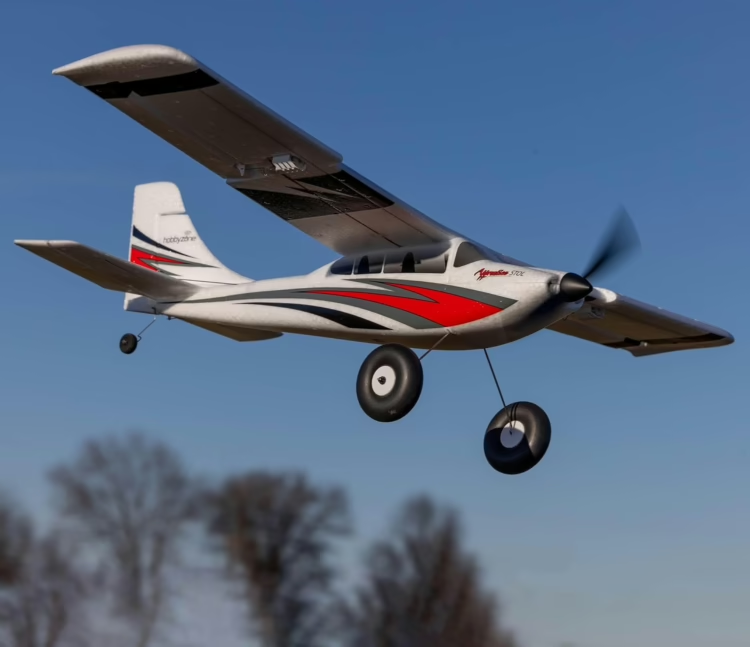
HobbyZone Apprentice STOL S 700 BNF Basic (HBZ6150)
Radio, battery and charger sold separately. Check the current price on Amazon.
Who Should Buy It
Good fit:
- Spektrum owners learning to fly
- Instructors or club mentors using supported gear
- Returning pilots who want a trainer that needs no recreational registration
Better off skipping it:
- Buyers with no radio, who should price the RTF
- Backyard-only pilots
- People flying at routinely windy sites
- Non-Spektrum radio owners
- Pilots wanting more power or 3D capability
- Anyone under 14, per the manual’s age recommendation. The manual separately says children need direct adult supervision.
FAQ
Q: Is the HobbyZone Apprentice STOL S 700 BNF Basic a good first RC plane if I’ve never flown before?
A: The HobbyZone Apprentice STOL S 700 BNF Basic can be a good first trainer if you have a supported radio and a suitable flying field.
- Beginner mode limits pitch and bank and self-levels at neutral stick.
- No verified novice success rate exists.
Q: What else do I need to buy before I can fly the BNF Basic?
A: The HBZ6150 BNF Basic requires a supported Spektrum transmitter, a matching flight battery and a compatible charger.
- Radio: 6+ channel Spektrum DSMX or SLT
- Battery: 2S 7.4V 300mAh with a 3-pin JST-PH connector
- Charger: matching 2S LiPo
Q: Will my FlySky or RadioMaster transmitter work with this plane?
A: Full HBZ6150 functionality with FlySky or RadioMaster transmitters is unconfirmed.
- Horizon’s documented setups use Spektrum radios.
- You would need working flight modes on Channel 5 and Panic on Channel 6.
- No model, module and firmware combination has been verified.
Q: Do I need to register the plane with the FAA or pass a test before flying in the U.S.?
A: The stock 157 g Apprentice falls below the FAA registration threshold under the recreational exception, but recreational pilots still must pass TRUST.
- Carry proof of passing the Recreational UAS Safety Test.
- Part 107 flying requires registration regardless of weight.
- FAA recreational rules require visual line of sight, or a co-located observer in direct communication, yielding to crewed aircraft and following an FAA-recognized community-based organization’s safety guidelines.
- Controlled airspace requires prior FAA authorization. The ordinary Class G limit is 400 feet above ground level.
- A stock, unregistered airplane flown only under the recreational exception falls outside the Remote ID requirement.
Q: How long does the plane fly on one battery, and how many batteries should I buy?
A: The English manual pairs the specified 2S 300mAh pack with a 6–8 minute timer, and actual flight time remains unconfirmed.
- Treat the timer as a planning setting, not a guaranteed duration.
- Start with the specified pack, then add a spare if you plan several flights per session.
Q: Can I use a 3S battery to get more power?
A: Use the specified 2S 300mAh pack, because Horizon documents no aircraft-level 3S approval for the HBZ6150.
- The ESC’s 2S–3S component rating does not approve the airplane for 3S.
- A checklist line in one Horizon multilingual manual mentions a 1300mAh 3S pack, but it conflicts with that manual’s own specifications.
Q: How much wind and open space do I really need?
A: The Apprentice manual calls for winds below its stated 5–7 mph range and at least 1,300 feet of clearance in all directions.
- Field permission and airspace rules are separate checks.
- A designated club field is worth evaluating for a first flight.

Key Takeaways
- The HBZ6150 makes the most sense for pilots who already own a supported Spektrum radio and can reach a large, calm field.
- Budget for a transmitter, a 2S 300mAh pack and a 2S charger if you lack them.
- The manual’s limits are firm: at least 1,300 feet of clearance and winds below its 5–7 mph range.
- Buyers with no gear should price the RTF (HBZ6100) first.
- Measured takeoff, endurance and durability data remain unavailable.