


Horizon’s own skill ratings disagree, but the reviewers agree: master a sport plane first. Here’s what the pilots who’ve flown it report on handling, flight time and a fragile nose gear.
Quick Verdict
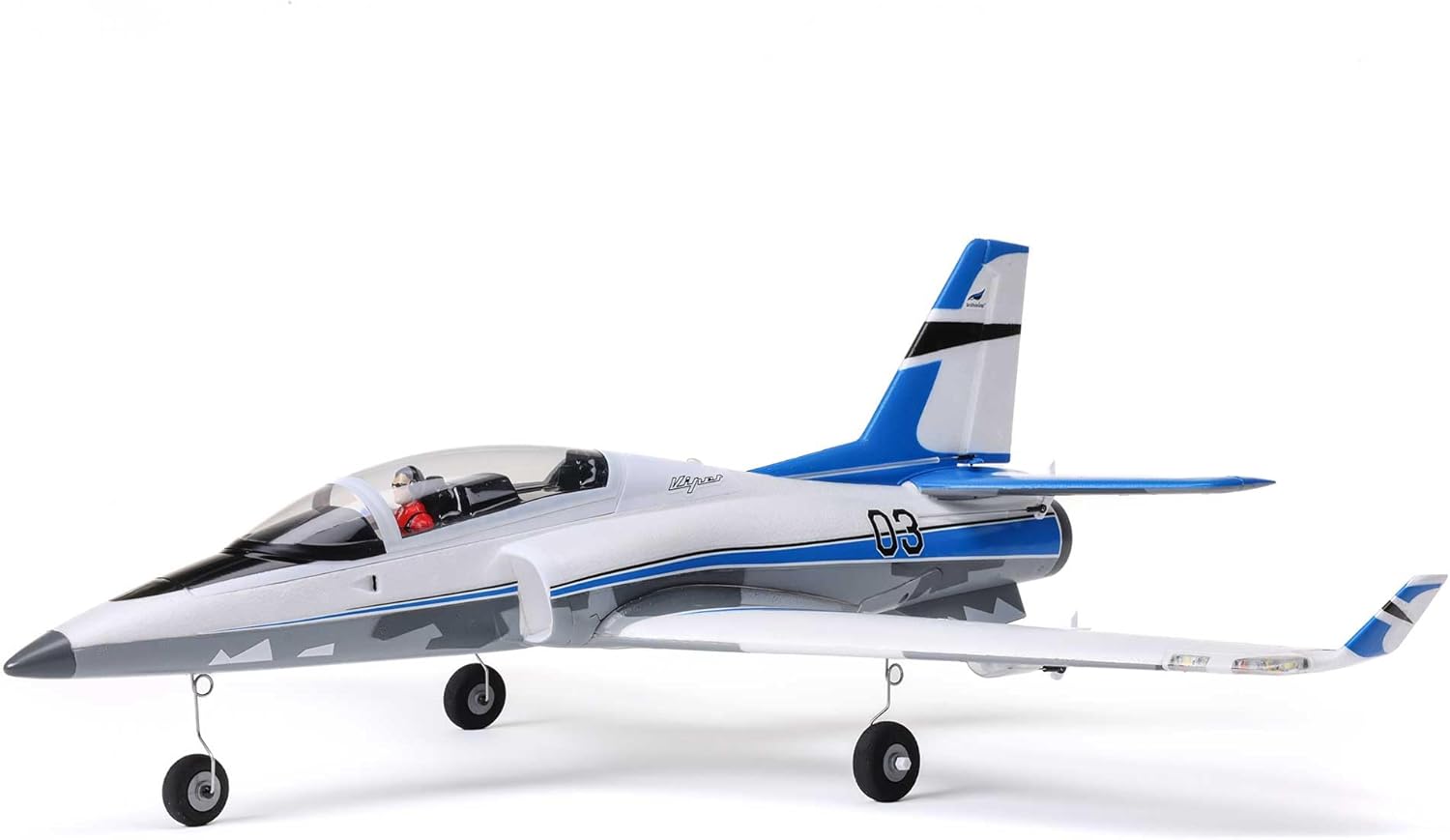
The E-flite UMX Viper 30mm EDF Jet BNF Basic is a compact, well-equipped electric ducted fan (EDF) sport jet. The named flight reviewers we found praise its handling, but it is not a first RC plane. Horizon Hobby’s own skill ratings disagree with each other. Its U.S. storefront lists Skill Level 3, and its launch material says Level 2. Neither calls it a Level 1 trainer.
The best buyer is a pilot who already flies agile four-channel sport planes, can hold orientation at a distance and flies repeatable approaches. It suits that pilot even better if they already own a compatible Spektrum transmitter and a 4S charger. Model AV8R’s test pilot ranks it the best-flying UMX EDF he has personally flown. Avery Flies says it handles like its larger Viper siblings.
The BNF Basic box doesn’t include a transmitter, battery or charger. Someone starting from zero pays roughly two to three times the airframe price before the first flight. If you’re still weighing options across the hobby, our guide to the best RC planes is a good place to start. If the Viper is on your shortlist, read on for the full cost math and the weak spots owners have flagged.
Brief Overview
What the E-flite UMX Viper 30mm Is
The UMX Viper 30mm (EFLU17750) is Horizon Hobby’s Ultra Micro eXtreme take on E-flite’s Viper sport jet family. The 64mm, 70mm and 90mm Vipers are separate, larger models.
The airframe is factory-assembled from composite-reinforced expanded polystyrene (EPS) foam. It spans 530 mm (20.87 in.) and weighs 125 g (4.4 oz) without a battery, or 185 g (6.5 oz) with the recommended 4S 450mAh pack.
- Power: a 30mm fan driven by a Spektrum 1010-8300Kv brushless outrunner (SPMXAM3200).
- Receiver and speed control: a combined Spektrum receiver/electronic speed controller (ESC), the SPM-1063.
- Servos: four Spektrum A201 2.3g long-throw linear servos, for two ailerons, the elevator and the rudder.
Who It’s Built For
The Viper is built for two kinds of pilot. One is the experienced sport flyer stepping into EDFs. The other is the established jet pilot who wants a micro that packs down small. If you’ve never soloed, our guide to the best RC planes for beginners will serve you better than this jet.
Cool Features That Solve Real Problems
- Layered stabilization. Artificial Stabilization–3-aXis (AS3X) corrects the jet in flight. Sensor Assisted Flight Envelope (SAFE) Select adds self-leveling and limits on pitch and bank angle. Hand Launch Assist holds a set climb attitude for a few seconds after the throw, then hands back to SAFE.
- 4S power through an IC2 connector, with voltage telemetry. In Horizon Hobby’s RCGroups launch announcement, Jason M explains that Horizon chose IC2 over JST-RCY because of the higher current. A Spektrum AirWare radio set up for it can display flight-pack voltage.
- A one-piece wing and gear that come off. The wing locks with a quarter-turn retainer, and its electrical connections mate automatically as it goes on. The tricycle gear has a steerable nosewheel and removes completely for belly landings.
- Full four-channel control with lights. Throttle, ailerons, elevator and a working rudder, plus LED navigation and landing lights.
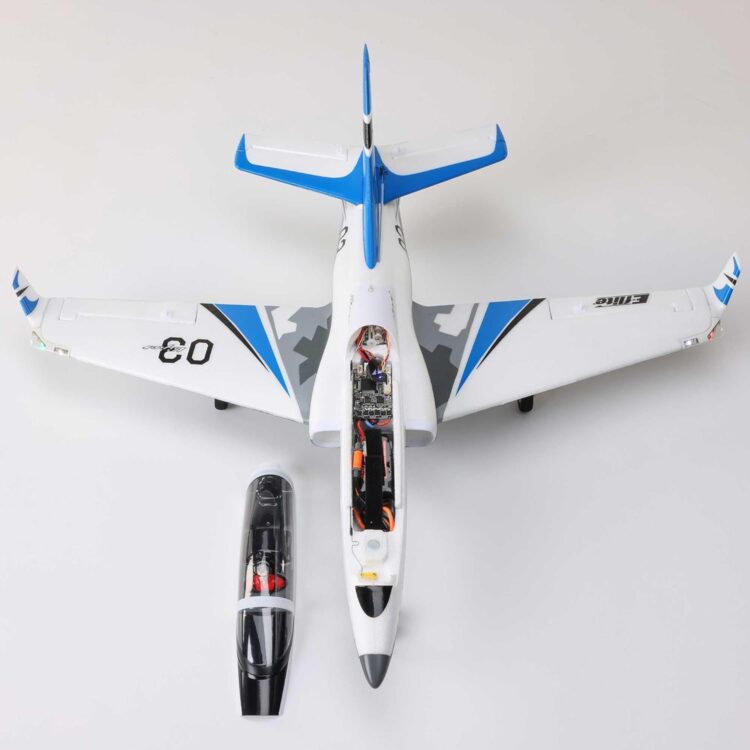
Ready to fly a full-featured micro jet that weighs under 250 g? Check today’s price and availability for the E-flite UMX Viper 30mm.
Pros & Cons
Pros
- Reviewers praise its handling. Model AV8R, Avery Flies and Ethan Ater all reported smooth, Viper-like flying.
- At 185 g, it falls below the FAA’s 250 g registration threshold for flights under the recreational exception.
- It has a rudder, LED lights, a quarter-turn wing and removable steerable gear. The Arrows Viper 50mm PNP lists none of the rudder, gear or lights.
- It offers SAFE Select, Hand Launch Assist, AS3X and battery-voltage telemetry on compatible AirWare radios.
- It shares its 4S 450mAh IC2 pack, motor and 30mm fan parts with the UMX F-86 Sabre, and the airframe-specific spares catalog is broad.
Cons
- The BNF Basic format brings real added costs, and at regular Horizon Hobby prices the micro is only about one-third cheaper than the much larger Viper 64mm.
- Horizon Hobby lists conflicting skill levels (2 and 3), and neither is a trainer rating.
- Two RCGroups owners report broken front gear wires, one after a heavy landing with a modified mix, and both say the broken stub was hard to get out of the swivel.
- Flights are short (the manual’s starting timer is four minutes). It needs a Spektrum DSMX/DSM2 radio. Replacing all the core electronics costs nearly as much as a new airplane.
The Real Cost of Getting Airborne
This is where buyers get surprised. Most of the total depends on what you already own.
What’s Missing From the BNF Basic Box
- A transmitter: a full-range Spektrum DSMX/DSM2-compatible radio with at least five channels. Channel 5 handles mode selection. The manual uses the Spektrum NX7e+ (SPMR7120) as its example.
- A battery: a 4S 14.8V 450mAh 30C LiPo with an IC2 connector. The reference pack is the Spektrum SPMX4504SIC2.
- A charger: the manual recommends the Spektrum S155 55W AC G2 Smart Charger (SPMXC2050).
- An adapter, if your charger needs one: the SPMXCA320 or SPMXCA532 connects the S155 to an IC2 pack. A charger that already has a native IC2 lead doesn’t need it.
Three Buyer Scenarios
These totals use Horizon Hobby’s regular U.S. prices, with the complete Viper counted as 1.00. They leave out sales tax, shipping and spare packs.
| Scenario | What you add | Approx. total vs. airframe price |
| Existing pilot with a compatible radio and charger | One 4S IC2 pack, plus an adapter if needed | Up to about 1.17× |
| Newcomer, entry radio (Spektrum DXS) | DXS, pack, S155 charger, adapter | About 2.12× |
| Newcomer, manual’s example radio (NX7e+) | NX7e+, pack, S155 charger, adapter | About 3.12× |
The NX7e+ alone costs about 1.6 times as much as the airframe. The seven-channel DXS meets the published channel and protocol requirements, and it needs four AA batteries, which aren’t in the 2.12× figure. No published source has yet walked through Viper-specific DXS programming. We’d confirm you can set up the mode switch and the recommended rates before choosing a radio on price alone. Sale prices change all of these ratios, so compare every item on the same day.
Battery Freedom and Its Limits
Jason M’s launch post confirms the stock pack is a conventional non-Smart LiPo with a five-pin JST-XH balance lead. It weighs about 60 g and measures 56 × 29 × 26 mm.
- Other 4S packs: Jason M says other 4S packs of about that size and weight are acceptable. Any substitute still needs the right power and balance connectors, secure retention, safe lead routing and a center of gravity (CG) within range.
- Chargers: any compatible 4S LiPo balance charger with the correct connectors and settings will work.
- 3S packs: the manufacturer specifies 4S. BJames HH, a Horizon Hobby product-development account, reports that the Spektrum 3S 850mAh packs raised in the launch thread don’t physically fit.
Given the short flight times, we’d budget for several packs.
What the Expert Panel and Owners Agree On, and Where They Split
The pilots below published flight reviews independently. No common test protocol applies across them, so read each one as one pilot’s experience. Some have commercial ties. Model AV8R has disclosed a relationship with Horizon. Ethan Ater flew a pre-production unit for Horizon’s launch video. Brian Phillips discloses potential commissions.
Where the Reviewers Agree: Flight Quality
Model AV8R. Adam, the channel’s co-host and test pilot, flew the jet on the recommended 4S 450mAh pack, positioned rearward. In Model AV8R’s video review, he flies it with the gear on and with the gear off. He ranks it the best-handling UMX EDF he has personally flown. The episode description puts it bluntly: “The best flying UMX EDF ever made? Yep.”
Avery Flies. Avery Colburn is a powered-paragliding instructor with Mojo’s Flight School, and he bought his jet. He flew it on a 4S 450mAh Spektrum pack in winds he estimated at 2–4 mph and about 50°F, first with the gear on and then with it off. The description of his flight review reads, “As expected, the 30mm viper handles as well as its larger cousins.”
Ethan Ater. Ater filmed his maiden and second flights on 4S 450mAh in cold conditions, with the gear on for the first flight and off for the second. In his first-flights video, he describes classic smooth Viper handling.
The reviewers split on trim. Ater reports needing no trim on his first flight. Avery, with his pack mounted aft, had to add up-trim. Differences in setup and rigging may explain it, but no one has pinned down the cause.
Disputed: Is It Beginner-Friendly?
Horizon Hobby’s U.S. and EU storefronts both show Skill Level 3. Jason M’s launch announcement rates it Skill Level 2 under the heading “Some Experience Required.” European dealer RC Team lists it as Level 2, Intermediate. Horizon’s U.S. copy presents it as a possible first EDF. The manual’s 14+ label is an age warning, not a skill rating.
The reviewers agree with that reading. Model AV8R’s Adam recommends it as a step up once a pilot has mastered a trainer. Ater’s description aims it at “those who have experience with RC airplanes and wanting to branch into the world of EDFs.”
Our reading: for an established sport pilot, it can be a sensible first EDF. As a first airplane, it’s the wrong tool.
Disputed: How Much Room Does It Really Need?
Horizon’s copy and Atlanta Hobby’s EDF primer both compare the micro with bigger EDFs. Measured against a 70mm jet’s flying site, it needs less room. That says nothing about how much room it actually needs.
Avery reports flying figure eights in a field he estimated at about 150 ft from fence to treeline. He also says the jet’s small size makes slow speed hard to judge. No published test establishes a minimum field size. The manual treats 5–10 mph as moderate wind and advises against flying in anything stronger.
Disputed: Price vs. Bigger Jets
At Horizon Hobby’s regular prices, the Viper 64mm costs about 50% more than the micro, which makes the micro about one-third cheaper. A.M. RC’s video description names the micro’s closeness to the 64mm’s price as its main drawback. The counterargument is that the two jets do different jobs. The 64mm needs a much larger 4S pack, rated at 2200–3200mAh. The micro brings its sub-250 g configuration and a full micro feature set.
Minority Warnings Worth Knowing
TurboRacer, a member of the RCGroups launch thread, voiced a preference against linear servos. He didn’t report a failure on this jet. The manual says to center the linkages mechanically and leave sub-trim at zero. Its troubleshooting section lists fan imbalance or loose screws as possible causes of control oscillation. If you see oscillation or a power interruption, stop flying and work through the manual’s diagnosis before the next flight.
Expected Experience with E-flite Viper 30mm EDF Jet BNF Basic
Assembly: Light Bench Work, One Fiddly Strut
The manual lays out a short process:
- Engage the wing tabs first.
- Close the wing and turn the quarter-turn retainer. The electrical contact engages as you do.
- Rotate each main gear wire 90° until it clips in.
- Insert the nose gear with its coil facing rearward.
In Model AV8R’s video, Adam walks through the wing installation and notes that early printed instructions left out the wing procedure. The current English manual includes it. Ater describes the nose strut as a little tricky. He also found that the plugs could obstruct the hatch, so check lead clearance before closing it. No source has timed assembly from the box.
Radio Setup: Where Spektrum Owners Have the Edge
The manual specifies these settings for compatible Spektrum computer radios:
- Normal wing and normal tail, with sub-trim at zero.
- High rate: 100% with 10% expo. Low rate: 70% with 5% expo. Don’t set dual rates below 50%.
- Throttle cut on Switch H at −100%.
- Mode selection on Channel 5. The manual’s example uses Switch A. Position 0 is SAFE, shown by a solid blue receiver light. Position 1 is AS3X, shown by solid red.
In his maiden-flight video, Brian Phillips of BrianPhillipsRC sets the jet up on a Spektrum NX8+ with a 4S 450mAh pack and checks the telemetry.
Preflight: The Inverted CG Check and the Five-Second Rule
- Balance: with the recommended pack installed and secured, balance the jet inverted. The CG should sit 34 mm ± 3 mm (about 1.34 in. ± 0.12 in.) behind the wing’s leading edge at the root.
- Power-up: with throttle low and throttle cut on, connect the battery. Keep the jet still and out of the wind for five seconds while the system initializes.
- Checks: confirm control directions, then check the AS3X corrections separately. Moving the sticks doesn’t show whether stabilization is pushing the right way. Finish with a range check.
Launch and Flight Behavior
The manual describes two ways to get airborne:
- Hand launch: select SAFE and high rates. Grip the jet firmly behind the wings and use full power. Throw it overhand into the wind with the wings level and the nose slightly up. Assist engages when the throw is detected with the throttle above 70%. It holds the climb briefly, then reverts to SAFE.
- Runway takeoff: use a smooth surface, low rates and gradually applied throttle.
Ater removes the gear and demonstrates a SAFE hand launch. Phillips demonstrates a full-throttle SAFE launch at about 15°F in light wind.
Landings: Skip the Flaperon Shortcut
The manual’s stock landing is a wings-level approach into the wind, with the throttle eased off progressively before the flare. With the gear removed, the jet belly-lands. A ventral fin is designed to pop off on landing.
The trouble reports involve modified setups. Phillips describes a wing drop with his own landing mix before a successful touchdown. BellairIntl, an RCGroups member, flew a beach sortie with flaperon/spoileron mixing. He reports bouncing as the coastal wind rose and a snapped front gear wire after a heavy landing. He and r39o both describe struggling to extract the broken wire from the swivel. BJames HH cautions that flaperons can increase tip-stall risk and that spoilerons may make the flare difficult. We’d stay with the stock setup.
Flight Time Reality
Horizon publishes no flight-time figure. The manual suggests starting with a four-minute timer and adjusting from there. Low-voltage cutoff (LVC) reduces motor power at 3 V per cell, leaving enough for the receiver and servos to land. If it kicks in, land immediately, and plan to land with reserve, because repeatedly hitting LVC damages the pack.
The reviewers’ numbers vary:
- Avery: landed with 52 seconds left on a five-minute timer after hearing warnings around half throttle. He favors four minutes for moderate flying.
- Ater: estimates about three minutes at hard throttle in the cold, reaching LVC.
- Phillips: puts the upper end at four to five minutes when flown gently.
Durability, Repairs, and Parts Economics
The manual calls for foam-compatible CA glue or clear tape on the EPS airframe. Horizon’s launch material also mentions compatible epoxy and Foam 2 Foam. Airframe-specific spares run from EFL-3231 to EFL-3245, including the Landing Gear Set (EFL-3238). The Fuselage Set (EFL-3245) includes the nosewheel steering assembly and the hands-free connector. The fan set (EFLU7058) and rotor (EFLU7059) are listed separately.
On the cost of a bad day, at regular prices and before tax and labor:
- A fuselage set plus the SPM-1063 receiver/ESC costs about 62% of a complete new jet.
- The receiver/ESC, motor, four servos and fan set together cost about 94%.
Against a sale price on the complete jet, those figures rise to roughly 83% and 126%. Compare a repair to a replacement on the same price basis.
Horizon Hobby’s technical support for the U.S. and Canada runs Monday through Friday, 9 a.m.–6 p.m. Central. The limited warranty covers defects in materials and workmanship for the original purchaser. It excludes crash damage. We found no published repair turnaround times and no fleet-wide failure rates.
How It Stacks Up: Value vs. Its Closest Rivals
Prices below compare each rival’s listed U.S. price with the UMX Viper’s regular Horizon Hobby price.
| Model | Format | Price vs. UMX Viper | Biggest advantage | Biggest drawback |
| E-flite UMX F-86 Sabre 30mm | BNF Basic | ~10% less | Shares the 4S pack, motor and fan parts | Shorter span; different receiver/ESC |
| E-flite UMX Me 262 30mm | BNF Basic, twin EDF | About the same | Twin-jet warbird profile | 3S packs; 278 g on a 3S 850mAh pack, over 250 g |
| Arrows RC Viper 50mm | PNP, Vector stabilization | ~20% less | Larger; uses the receiver of your choice | No rudder, gear or lights listed; receiver and 3S 1300mAh pack extra |
| Arrows 30mm Viper | PNP or RTF, gyro | ~20–30% less | Same 30mm size; 2S power; RTF version includes a radio | No rudder; lights not listed |
| E-flite Viper 64mm | BNF Basic, AS3X+ | ~50% more | More size and presence | 4S 2200–3200mAh pack with EC3/IC3 |
| E-flite Viper 70mm | BNF Basic | ~85% more | 6S power, flaps and retracts | Heavier 6S power system to buy |
| E-flite Habu STS 70mm | RTF Basic | ~2× | Skill Level 1 trainer; DXS transmitter included | Needs a 3200–4000mAh pack and a charger; over 250 g |
No head-to-head flight comparison covers these jets. The UMX Viper earns its price over the F-86 if you value the Viper’s sport-jet airframe and longer wing, and over the Me 262 if you want a 4S jet that stays under 250 g on its recommended pack without configuration changes. Against the 64mm, the question is whether you need a portable micro or a bigger airplane.
Where the E-flite Viper 30mm EDF Jet BNF Basic Really Shines
This is where the micro format makes sense. With the wing off, the Viper packs down to a small bundle; Ater shows exactly that in his video. You can fly from a smooth runway with the gear on, or pull the gear and belly-land on grass. For a recreational flyer at stock weight, it also means no FAA registration.
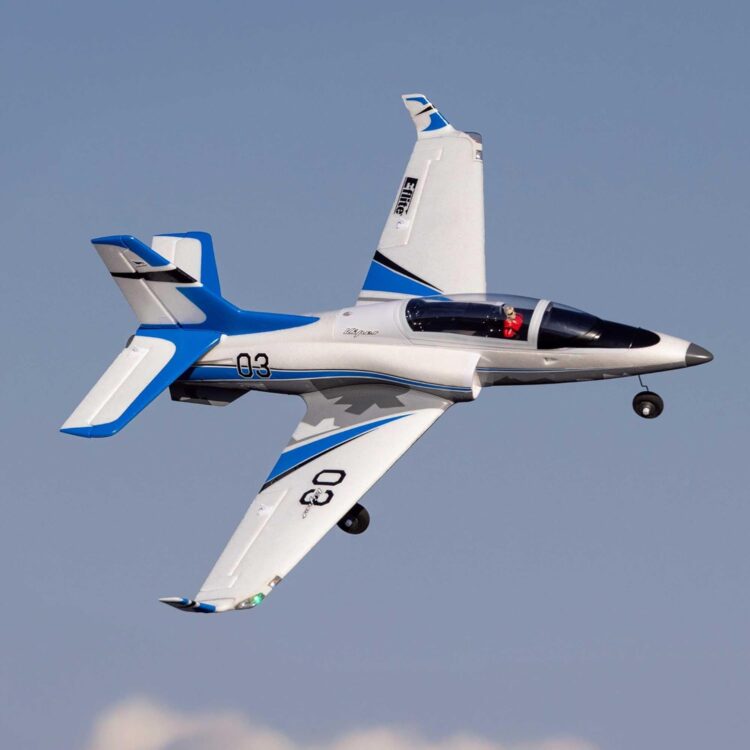
Ater also praises the navigation lights, which add some flair to an airframe this small. The flight modes give a step-up pilot a progression on one switch: Hand Launch Assist gets the jet away cleanly, SAFE keeps the bank and pitch angles in check, and AS3X leaves the flying to you with stabilization still working. Add the handling praise from the named flight reviewers, and an F-86 owner with spare packs in the field box gets a lot of jet from very little new gear.
See the E-flite UMX Viper 30mm EDF Jet on Amazon
Who Should Buy It
Buy It If You…
- Already own a Spektrum AirWare transmitter and a 4S balance charger.
- Fly a UMX F-86 Sabre and have 4S 450mAh IC2 packs on hand.
- Are a confident sport or jet pilot who wants a jet under 250 g for recreational flying.
- Want a first EDF after mastering agile low-wing sport planes, with a suitable field to fly it.
Skip It If You…
- Have never flown. Horizon’s HobbyZone AeroScout S 2 RTF Basic is a Skill Level 1 trainer that comes with a transmitter and RealFlight Trainer Edition (battery and charger sold separately). The Habu STS 70mm is a Level 1 jet, but it’s larger and weighs more than 250 g.
- Lack a clear site. You need usable sight lines and room for approaches.
- Fly a non-Spektrum radio. The Arrows Viper 50mm PNP takes a receiver that matches your transmitter.
- Want to practice first. A UMX Viper add-on for RealFlight Evolution is available on Steam. It requires the base simulator.
FAQ
Q: Is the E-flite Viper 30mm EDF Jet BNF Basic a good first RC plane if I’ve never flown before?
A: The E-flite Viper 30mm EDF Jet BNF Basic is not a good first RC plane for someone who has never flown.
- Horizon Hobby lists it at Skill Level 2 or 3, never Level 1.
- SAFE Select limits bank and pitch angles, but it can’t replace training or field judgment.
- A Level 1 trainer such as the HobbyZone AeroScout S 2 is a better starting point.
Q: What extra gear do I need to buy to fly the E-flite Viper 30mm EDF Jet BNF Basic, and how much more will it really cost me?
A: The E-flite Viper 30mm EDF Jet BNF Basic needs a Spektrum transmitter, a 4S 450mAh IC2 battery, a 4S balance charger and, for some chargers, an IC2 adapter.
- An existing pilot with a compatible radio and charger: up to about 1.17× the airframe price.
- A newcomer with a DXS: about 2.12×. Viper-specific DXS setup hasn’t been documented.
- A newcomer with an NX7e+: about 3.12×.
Q: Can I use third-party 4S batteries, my 3S packs, or a regular non-Smart charger with the E-flite Viper 30mm EDF Jet?
A: The E-flite Viper 30mm EDF Jet accepts comparable third-party 4S packs and charges on a standard 4S balance charger, but the manufacturer specifies 4S, not 3S.
- A substitute pack must match the size and weight and have the right connectors, and the CG must stay in range.
- The stock pack is non-Smart, with a five-pin JST-XH balance lead.
- Spektrum 3S 850mAh packs don’t physically fit.
Q: How long will the E-flite Viper 30mm EDF Jet fly on one battery charge?
A: Horizon Hobby publishes no flight time for the E-flite Viper 30mm EDF Jet. The manual recommends starting with a four-minute timer.
- Low-voltage cutoff engages at 3 V per cell. Land with reserve.
- Reviewers’ estimates range from about three minutes at hard throttle in the cold to four or five minutes flown gently.
Q: Do I need to register the E-flite Viper 30mm EDF Jet with the FAA or use Remote ID to fly it in the United States?
A: The E-flite Viper 30mm EDF Jet does not need FAA registration or Remote ID when flown under the recreational exception at its stock 185 g, which is 65 g under the 250 g threshold.
- Weigh your actual takeoff configuration whenever you change equipment.
- Per the FAA’s recreational flyer rules, you still need TRUST proof and must follow a community-based organization’s safety guidelines. You also need to keep visual line of sight, give way to crewed aircraft and get authorization before flying in controlled airspace.
- Part 107 flying carries separate registration and Remote ID rules.
Q: How do I set the CG and use Hand Launch Assist on the E-flite Viper 30mm EDF Jet?
A: The E-flite Viper 30mm EDF Jet balances inverted at 34 mm ± 3 mm (about 1.34 in. ± 0.12 in.) behind the wing root’s leading edge, and Hand Launch Assist works only in SAFE mode.
- Secure the pack and check the CG with the jet inverted.
- Remove the gear if you’re flying the gear-off configuration.
- Confirm the control directions, then select SAFE and high rates.
- Grip the jet behind the wings, point it into the wind and use full power (above 70% triggers Assist).
- Throw it with the wings level and the nose slightly up. Assist reverts to SAFE.
Key Takeaways
- Not a first RC plane: Horizon Hobby rates it Skill Level 2 or 3. It makes the most sense as a first EDF for experienced sport pilots.
- Budget beyond the box: A newcomer spends roughly two to three times the airframe price. Existing Spektrum pilots pay up to about 1.17×.
- Feature-rich and under 250 g: You get a rudder, LEDs, removable steerable gear and Hand Launch Assist at 185 g.
- Know the weak spots: Short flights from a four-minute starting timer, a gear wire that can snap on hard landings, and costly core electronics.