


The wrong plane costs you twice: once at checkout, then again for extras you didn’t expect. Here’s how to choose the best RC plane for your skill, site and budget the first time.
Straight to the Point – for the Busy Reader
If you want one answer, here it is:
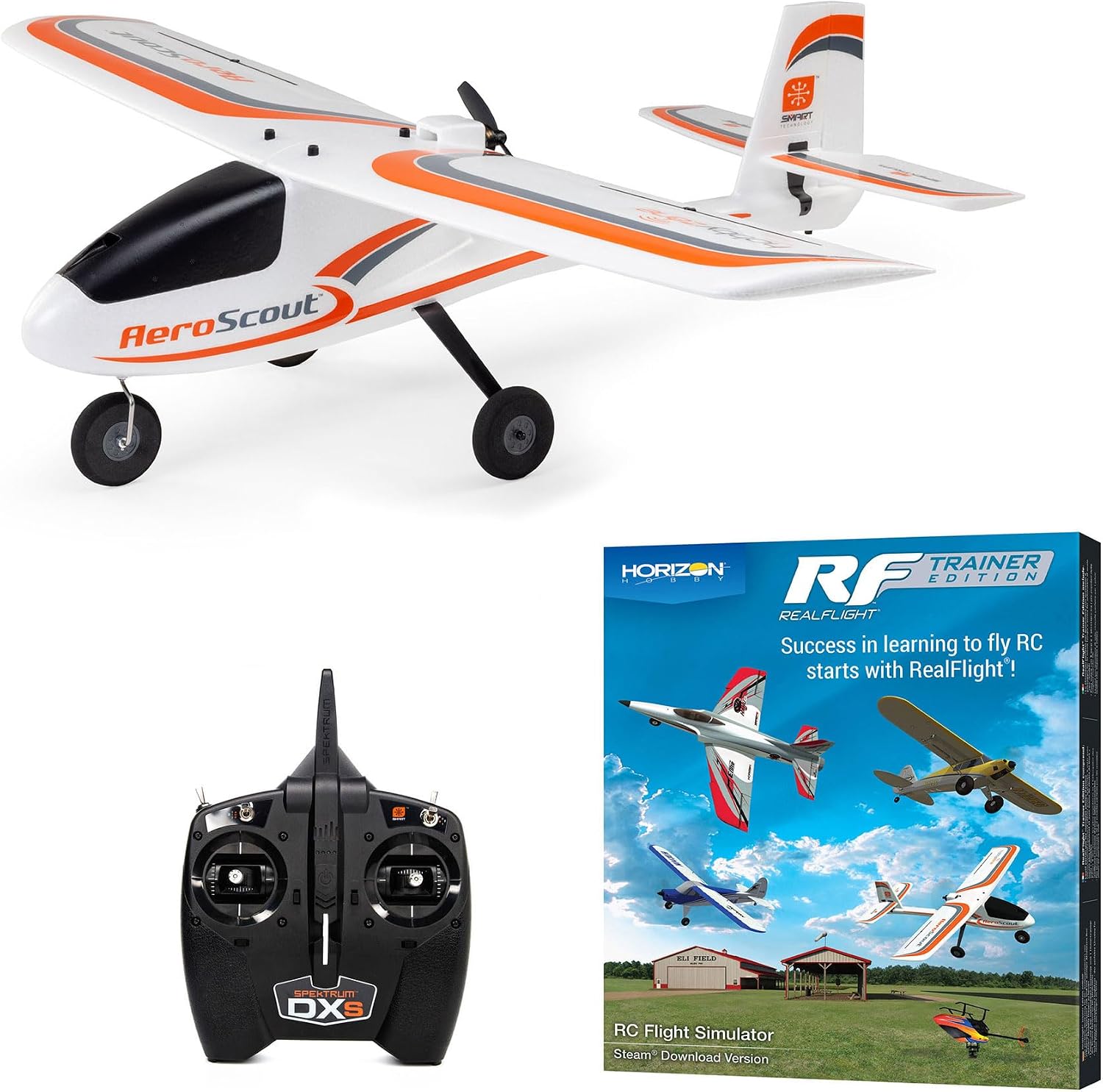
- Best overall and best for beginners: HobbyZone AeroScout S 2 1.1m RTF Basic with SAFE and RealFlight (HBZ380002). It’s a complete training system with a transmitter, stabilization modes and a flight simulator license. It isn’t a complete flying kit, though: you still need a 3S LiPo flight battery and a compatible charger.
- Want everything in one box? The HobbyZone Sport Cub S 2 (HBZ444000) and XCub 450mm (HBZ-1250) ship with the radio, flight batteries and a USB charger.
- Flying indoors? The E-flite UMX Night Vapor (EFLU1300) is built for it, but only if you have a large, uncluttered room.
- Already comfortable on a trainer? The E-flite Turbo Timber Evolution (EFL105250B) is a real step up. It needs your own 6- to 7-plus-channel transmitter, battery and charger.
The rule behind every pick: match the plane to your flying site, your skill level and your complete setup cost, not the box price alone. Read on before you click “buy.” The difference between “RTF” and “RTF Basic” alone can change your total spend.
Why Choosing the Best RC Plane Is Harder Than It Looks
Few hobbies deliver the thrill of watching something you control lift off, bank into a turn and settle back onto the grass. Choosing among the best RC planes, however, is where many newcomers stumble. The market is crowded with similar-looking high-wing trainers, scale Cubs and micro warbirds. The box labels (RTF, RTF Basic, BNF Basic, PNP) hide very different shopping lists.
That matters because the most common beginner mistake isn’t buying a bad airplane. It’s buying the wrong airplane, or a good one that turns out to need a pile of extras. One “ready-to-fly” model arrives with its transmitter, battery and charger. Another, with nearly the same label, ships without the flight battery or charger. A third needs your own radio, and that radio has to speak the right protocol.
This roundup sorts that out. We compared 19 electric aircraft across skill levels, flying environments and package types. For each one, we explain who it suits, what you’ll still need to buy and where it falls short. If a better fit for you is a first lesson, a simulator session or simply waiting, we’ll tell you that, too.
Who Should Read This Guide
This guide is for you if:
- You’re a U.S. newcomer choosing a first electric, fixed-wing RC airplane.
- You’ve soloed on a trainer and want to know what to fly next.
- You want to know the total cost of getting airborne before you commit.
Ideal reader profiles:
- The club-bound beginner: You have, or will have, access to an instructor and a flying field. Look first at the AeroScout S 2, Apprentice STS or Carbon Cub S 2.
- The small-space flyer: You want something compact for light-wind or indoor flying. Start with the Sport Cub S 2, XCub, T-28 Trojan or Night Vapor.
- The progressing pilot: You can already take off, fly a pattern and land without help. The Turbo Timber Evolution and the intermediate picks in “Other Top RC Planes” are your territory.
Who should skip this guide: If you’re shopping for gas-engine setups, turbine jets, FPV (first-person view) systems, build-from-scratch kits or advanced 3D aerobatic instruction, you need a different guide. If you have no flying site and no access to instruction yet, your smartest first purchase may be a lesson or a simulator rather than an airplane.
What Is an RC Plane, After All?
RC stands for radio controlled. An RC plane is a flying model that a pilot on the ground steers in real time through a radio link. The pilot moves sticks on a handheld transmitter, and the airplane’s control surfaces and motor respond.
A typical training aircraft like the AeroScout S 2 has four control functions:
- Aileron: Hinged surfaces on the wing’s trailing edge that roll the airplane left or right.
- Elevator: The hinged surface on the horizontal tail that pitches the nose up or down.
- Rudder: The hinged surface on the vertical fin that yaws the nose left or right.
- Throttle: Motor power.
Inside the airframe, a handful of components make that happen:
- Transmitter: The pilot’s handheld radio.
- Receiver: The airborne radio that receives the transmitter’s commands.
- Servo: A small actuator that physically moves a control surface.
- Electronic speed controller (ESC): The electronics that regulate motor power.
- Center of gravity (CG): The balance point you must verify before flight.
- LiPo battery: A lithium polymer flight pack. The “S” rating counts cells in series. A 3S pack has three cells and a nominal 11.1 volts; a 1S pack has a single 3.7-volt cell.
And What Makes RC Planes So Special?
Unlike a multirotor drone that can hover in place, an RC airplane must keep moving forward to stay in the air. You are always actively flying it. That’s the magic, and it’s also why training matters.
The variety is the other draw. The aircraft in this roundup cover indoor slow flight, structured club training, scale Cub flying, short takeoff and landing (STOL) from grass or water, and powered gliding. More features only help when they suit what you actually want to do. A float-equipped STOL machine is wasted on someone who wants to circle a gym, and an indoor floater is out of its depth in a breezy park.
Best RC Planes Compared at a Glance
The chart rates every aircraft in this roundup from one star (★☆☆☆☆) to five stars (★★★★★) on the same 11 criteria. The stars measure how well each attribute serves you, the reader of this guide. Each star level is tied to a documented fact about the aircraft, such as the manufacturer’s pilot level, what comes in the box, or the approved battery. The rating key below the chart explains exactly what earns each level.
Intermediate aircraft score lower on several criteria by design; they’re progression planes, not first planes. “NR” means not rated because no comparable figure exists. It is not a zero-star score. Specifications live in the individual reviews.
Comparison Chart for the RC Planes Listed in This Guide
| RC Plane | Skill Level Compatibility | Aircraft Type | Power System | Build Type | Durability & Material | Wingspan & Size | Control Channel Count | Flight Time | Parts Availability | Community Support | Budget |
| HobbyZone AeroScout S 2 1.1m RTF Basic (HBZ380002) | ★★★★★ | ★★★★★ | ★★★★★ | ★★★★☆ | ★★★★☆ | ★★★★☆ | ★★★★★ | NR | ★★★★☆ | ★★★★★ | ★★★☆☆ |
| HobbyZone Sport Cub S 2 RTF (HBZ444000) | ★★★★★ | ★★★★★ | ★★☆☆☆ | ★★★★★ | NR | ★★☆☆☆ | ★★★★★ | NR | NR | NR | ★★★★★ |
| HobbyZone XCub 450mm RTF (HBZ-1250) | ★★★★★ | ★★★★☆ | ★★☆☆☆ | ★★★★★ | ★★★★☆ | ★★☆☆☆ | ★★★★★ | NR | NR | NR | ★★★★★ |
| E-flite Apprentice STS 1.5m RTF Basic (EFL370001) | ★★★★★ | ★★★★★ | ★★★★★ | ★★★★☆ | NR | ★★★★★ | ★★★★★ | NR | NR | NR | ★★★☆☆ |
| HobbyZone T-28 Trojan 450mm RTF (HBZ-1228) | ★★★★★ | ★★★☆☆ | ★★☆☆☆ | ★★★★★ | ★★★★☆ | ★★☆☆☆ | ★★★★★ | NR | ★★★★☆ | NR | ★★★★★ |
| HobbyZone Carbon Cub S 2 1.3m RTF Basic (HBZ320001) | ★★★★★ | ★★★★☆ | ★★★★★ | ★★★★☆ | NR | ★★★★★ | ★★★★★ | NR | NR | NR | ★★★☆☆ |
| FMS Ranger V2 1220mm RTF (FMS147RYL-REFV3) | ★★★★★ | ★★★★★ | ★★★★★ | ★★★★★ | ★★★★☆ | ★★★★★ | ★★★★★ | NR | NR | NR | ★★★★★ |
| E-flite Turbo Timber Evolution 1.5m BNF Basic (EFL105250B) | ★★★☆☆ | ★★☆☆☆ | ★★★★★ | ★★☆☆☆ | NR | ★★★★★ | ★★★★★ | NR | NR | NR | ★★☆☆☆ |
| E-flite UMX Night Vapor RTF (EFLU1300) | ★★★☆☆ | ★★★☆☆ | ★★☆☆☆ | ★★★★★ | NR | ★☆☆☆☆ | ★★★☆☆ | NR | NR | ★★★★☆ | ★★★★★ |
| VOLANTEXRC Sport Cub 500 RTF (761-4 / 76104) | ★★★★☆ | ★★★★★ | ★★☆☆☆ | ★★★★★ | ★★★★☆ | ★★☆☆☆ | ★★★★★ | NR | NR | NR | ★★★★☆ |
| HobbyZone Apprentice STOL S 700mm RTF (HBZ6100) | ★★★★★ | ★★★★★ | ★★★★☆ | ★★★★★ | NR | ★★★☆☆ | ★★★★★ | NR | NR | NR | ★★★★★ |
| FMS Ranger 850mm RTF with Gyro/GPS (FMS123R) | ★★★★★ | ★★★★★ | ★★★★☆ | ★★★☆☆ | NR | ★★★☆☆ | NR | NR | NR | NR | NR |
| VOLANTEXRC Ranger600 RTF (761-2 / 76102) | ★★★★☆ | ★★★☆☆ | NR | ★★★★★ | NR | ★★☆☆☆ | ★★★☆☆ | NR | NR | NR | ★★★★★ |
| E-flite Commander mPd 1.4m BNF Basic (EFL14850) | ★★☆☆☆ | ★☆☆☆☆ | ★★★★★ | ★★☆☆☆ | NR | ★★★★★ | ★★★★★ | NR | NR | NR | ★★☆☆☆ |
| E-flite Sportix 1.1m BNF Basic (EFL10750) | ★★★☆☆ | ★☆☆☆☆ | ★★★★★ | ★★☆☆☆ | NR | ★★★★☆ | ★★★★★ | NR | NR | NR | ★★☆☆☆ |
| E-flite Conscendo Evolution 1.5m BNF Basic (EFL01650) | ★★★☆☆ | ★★★☆☆ | ★★★★★ | ★★☆☆☆ | NR | ★★★★★ | ★★★★★ | NR | NR | NR | ★★☆☆☆ |
| E-flite Slow Ultra Stick 1.2m BNF Basic (EFL0350) | ★★★☆☆ | ★★☆☆☆ | ★★★★★ | ★★☆☆☆ | NR | ★★★★☆ | ★★★★★ | NR | NR | NR | ★★☆☆☆ |
| E-flite UMX Turbo Timber Evolution BNF Basic (EFLU8950) | ★★★☆☆ | ★★☆☆☆ | ★★★★★ | ★★☆☆☆ | NR | NR | ★★★★★ | NR | NR | NR | ★★☆☆☆ |
| FMS Super EZ V4 1220mm RTF (FMS122RF-REFV3) | ★★★★★ | ★★★★★ | ★★★★★ | ★★★★★ | ★★★★☆ | ★★★★★ | ★★★★★ | NR | NR | NR | ★★★★★ |
Rating key
- Skill Level Compatibility:
- ★★★★★ Manufacturer Level 1 or manufacturer-labeled beginner trainer
- ★★★★☆ Beginner label from the seller only
- ★★★☆☆ Level 2
- ★★☆☆☆ Level 3
- Aircraft Type:
- ★★★★★ High-wing trainer
- ★★★★☆ Scale high-wing trainer
- ★★★☆☆ Warbird-style trainer, powered glider or indoor slow flyer
- ★★☆☆☆ STOL sport or sport slow flyer
- ★☆☆☆☆ Sport aircraft
- Power System (highest approved cell count):
- ★★★★★ 3S or higher
- ★★★★☆ 2S
- ★★☆☆☆ 1S micro power, best in calm air
- Build Type:
- ★★★★★ RTF with radio, battery and charger
- ★★★★☆ RTF Basic
- ★★★☆☆ Contents depend on the version
- ★★☆☆☆ BNF Basic, so you bind and program your own radio
- Durability & Material:
- ★★★★☆ EPO or EPP foam construction documented
- No five-star rating, since we found no published impact testing for these models
- Wingspan & Size (visibility at a distance):
- ★★★★★ 1.2m or more
- ★★★★☆ 1.0–1.19m
- ★★★☆☆ 700–999mm
- ★★☆☆☆ 450–699mm
- ★☆☆☆☆ Indoor micro
- Control Channel Count:
- ★★★★★ Four or more control channels
- ★★★☆☆ Three control functions
- Flight Time: NR for every model. Published figures mix conservative starting timers with advertised maximums and can’t be compared fairly.
- Parts Availability:
- ★★★★☆ Replacement parts cataloged by the manufacturer
- Confirm current stock with your dealer
- Community Support:
- ★★★★★ Published expert review plus documented training use
- ★★★★☆ One published expert review
- Budget (purchases needed beyond the box):
- ★★★★★ None
- ★★★★☆ Transmitter batteries only
- ★★★☆☆ Battery and charger
- ★★☆☆☆ Radio, battery and charger, unless you already own a compatible radio
- NR: Not rated, because no comparable figure exists.
Stars aren’t added into a total. The AeroScout S 2 earns our overall pick for its complete training system: stepped SAFE modes, a supplied radio and a simulator license. Aircraft such as the Ranger V2 score higher on Budget because they include a battery and charger.
What Is the Best RC Plane?
There’s no single best RC plane for everyone. The right answer depends on whether you have an instructor, how much open space you can fly in, how windy it usually is and what equipment you already own. A plane that’s perfect for a club field can be a poor fit for a living room, and the reverse is just as true.
For an outdoor beginner with access to instruction, though, one package stands out in this group for the way it pulls the training pieces together.
Best RC Plane Overall Reviewed: HobbyZone AeroScout S 2 1.1m RTF Basic with SAFE and RealFlight (HBZ380002)
Quick Overview
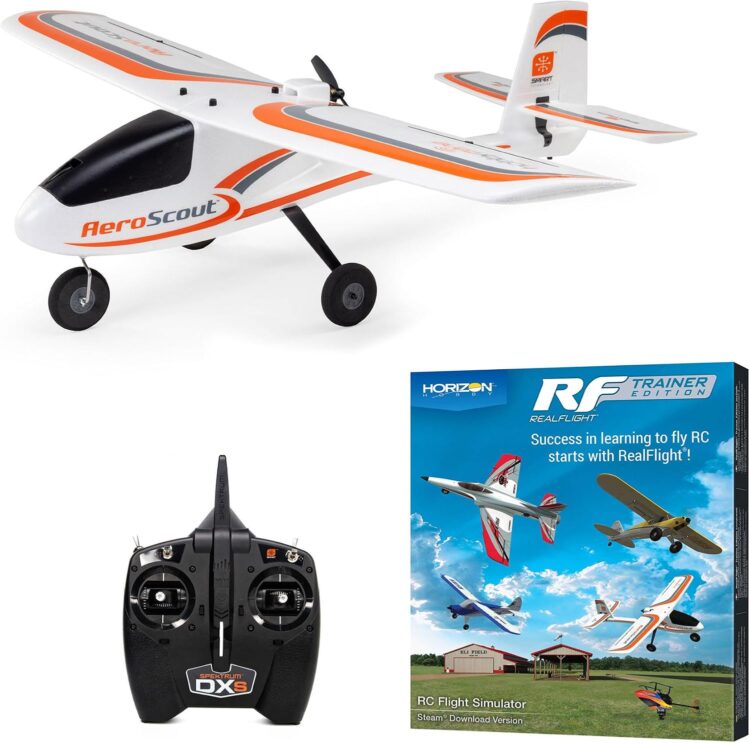
The AeroScout S 2 is a high-wing pusher trainer, with its motor behind the wing so the propeller stays away from the nose. Horizon Hobby sells it as an RTF Basic package. You get a Spektrum DXS transmitter, an AR631+ receiver, an Avian 30A Smart Lite ESC, the installed motor and four servos, plus a RealFlight Trainer Edition simulator license. The flight battery and charger are sold separately.
What makes it special is how much of the learning path comes in one box. There’s a radio you don’t have to choose, SAFE (Sensor Assisted Flight Envelope) training modes you can step through as your skills grow, and simulator software for practicing crashes that cost nothing.
Why It Wins
It’s the most complete training system in this roundup for an outdoor beginner. Other picks include more hardware, such as batteries and chargers. None pairs a full-size outdoor trainer with stepped stabilization modes and a simulator license in one package. That combination targets the real reason beginners crash: too little stick time before the first flight.
Who Should Buy This RC Plane
It suits a first-time outdoor pilot who can get instruction, has a suitable field and is ready to buy a 3S LiPo battery and charger. If you want to unbox and fly with nothing else to purchase, look at the Sport Cub S 2 or XCub instead.
Why You’ll Love It
You won’t outgrow it on day two. The mode structure lets you start with heavy assistance and hand over more control as your confidence builds. Kyle Jaracz, the Academy of Model Aeronautics’ Education Director, flew the earlier AeroScout S for an illustrated Park Pilot review. Of its Intermediate mode, he said: “I recommend doing most of your learning using this mode.”
Key Features
- Spektrum DXS transmitter included: You avoid the trap of buying an incompatible radio.
- Three SAFE flight modes: According to the AeroScout S 2 manual, Beginner mode self-levels, Intermediate mode removes self-leveling, and Experienced mode removes the flight-envelope limits. That gives you a built-in progression path.
- Panic Recovery: A single button press returns the aircraft toward level flight. The manual is clear about its limits: it doesn’t avoid obstacles, and it needs enough altitude to work.
- RealFlight Trainer Edition license: Rehearse takeoffs, landings and recoveries on a computer before you risk the airframe.
- Pusher layout: The propeller sits behind the wing, away from the nose.
- Optional floats (HBZ3811): Available separately if you want to fly off water later.
Technical Specifications
- Manufacturer / model: HobbyZone AeroScout S 2 1.1m RTF Basic with SAFE and RealFlight
- Item number: HBZ380002
- Wingspan: 1095mm (43.1 in.) per the HOBBY ZONE store listing; Horizon’s manual lists 1033mm (40.5 in.)
- Length: 871mm (34.3 in.) per the store listing; the manual lists 1140mm (45 in.)
- Weight: 639g (22.5 oz) without battery and 853g (30.1 oz) with a 3S 2200mAh pack per the store listing; the manual lists 1316g (2.9 lb) and 1550g (3.4 lb). The two sources haven’t been reconciled, so confirm with Horizon before relying on either set.
- Construction: EPO foam
- Motor / ESC: Brushless motor, installed; Avian 30A Smart Lite ESC
- Radio: Spektrum DXS transmitter (SPMR1010); AR631+ receiver (SPM-1031)
- Servos: Four, installed
- Controls: Aileron, elevator, rudder, throttle
- Battery required: 3S 11.1V 1300–2200mAh LiPo with EC3/IC3 connector (not included)
- Charger required: Compatible LiPo charger (not included)
- Replacement parts: Wing set (HBZ3803), nose gear (HBZ3805)
Overall Quality
The airframe is EPO foam, a resilient material common in trainers. The pusher layout keeps the propeller behind the wing rather than out front. The hardware list is a strong point: a name-brand Spektrum receiver, a Smart Lite ESC and four installed servos remove any guesswork about electronics compatibility. Replacement wing and nose gear sets are cataloged, which matters on a trainer that will inevitably meet the ground. Foam type isn’t a crash rating, so treat “durable” as a design intention rather than a guarantee.
Pros and Cons
Pros
- Transmitter, receiver, and stabilization system included, so there’s no radio guesswork
- Stepped training modes support a clear learning progression
- Simulator license adds risk-free practice
- Replacement wing and nose gear are cataloged
Cons
- Flight battery and charger are extra purchases
- Simulator use depends on your computer setup, so confirm compatibility first
- Larger than the micro picks; the manual calls for at least 1,300 feet (400m) of clear space in all directions
Expected Experience with This RC Plane
Expect final assembly and preflight setup rather than a kit build. Jaracz reviewed the earlier AeroScout S RTF with its included DXe radio, a 3S 2200mAh battery and the landing gear installed. He reported assembly in under 15 minutes, praised its strong glide, and noted he wasn’t fully comfortable with its control authority when inverted. His review doesn’t specify the wind conditions.
Terry Dunn, an Electrics contributor at Model Aviation, describes using the AeroScout S 2 for flight training at AirVenture and at the Green Bay Model Airplane Club in his article Set the Stage for Flight Training. That gives the S 2 real teaching credentials, though his account doesn’t cover performance figures. Dunn describes the S 2 as durable and docile for beginner and experienced pilots alike, so a reasonable expectation is a trainer that rewards the patience to start in Beginner mode and work up.
What Are the Best RC Planes?
The remaining picks aren’t runners-up. Each serves a different pilot, place or budget strategy. Some put every needed item in the box; others assume you already own a radio. Read the “who should buy” line first, because that’s where most mismatches begin.
Best RC Planes – In-Depth Reviews
Best RC Plane for Beginners: HobbyZone AeroScout S 2 1.1m RTF Basic with SAFE and RealFlight (HBZ380002)
Our beginner pick is the same airplane as our overall winner, reviewed in full above. We’d point a first-time outdoor pilot here for its combination of a supplied radio, stepped stabilization modes, and simulator practice. Budget for the 3S battery and charger, and see the full review for specifications and limitations.
Best All-in-One Micro Trainer: HobbyZone Sport Cub S 2 RTF with SAFE (HBZ444000)
Quick Overview
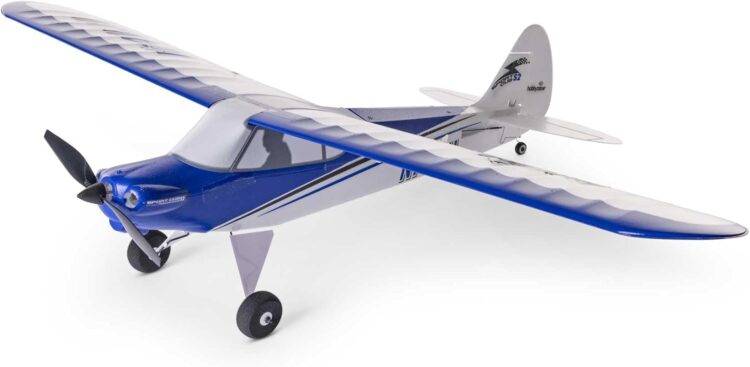
The Sport Cub S 2 is a classic micro high-wing trainer, and its biggest selling point is a genuinely complete box. Horizon includes the MLP6DSM transmitter with a USB Type-C port, AA batteries for the transmitter, a 150mAh 1S 3.7V LiPo flight battery, and a USB charger.
Its small size and SAFE stabilization make it an approachable first plane for calm days. That small size is also its limit: a very light model doesn’t make every open space or every weather condition suitable.
Who Should Buy This RC Plane
A buyer who wants a compact, complete package with nothing else to purchase and plans to fly in light winds.
Why You’ll Love It
You charge it, install the AA cells and you’re ready for setup. There’s no battery-chemistry homework and no connector hunting.
Key Features
- Truly complete RTF: Radio, flight battery and charger are included, so there are no surprise costs before your first flight.
- SAFE stabilization: Assists newcomers while they learn orientation.
- USB-C transmitter port: A convenient, modern connection.
- Optional floats (EFLUA1190): Opens up water flying later.
Technical Specifications
- Item number: HBZ444000
- Wingspan: 617mm (24.3 in.), per manual (marketed as 615mm)
- Length: 414.5mm (16.3 in.)
- Weight: 57g without battery; 61g with the 1S 150mAh battery; 77g with optional floats
- Battery: 1S 3.7V 150mAh LiPo (included)
- Radio: MLP6DSM transmitter (included)
- Controls: Aileron, elevator, rudder, throttle
- Pilot level: Level 1
- Age recommendation: Not for children under 14
Overall Quality
The manual describes a very lightweight micro configuration. Horizon’s documentation doesn’t spell out comparative crash resistance, and no published test measures how the airframe handles mishaps, so treat its light weight as a design trait, not a durability guarantee.
Pros and Cons
Pros
- Radio, battery and charger included
- SAFE assistance for beginners
- Optional float kit available
Cons
- Small size limits outdoor flying to calm conditions
- A single 150mAh pack means short sessions unless you buy spares
Expected Experience with This RC Plane
Expect a quick unbox-and-charge routine and a gentle, small-field flying style. The manual’s preflight checklist tells you to start with a five-minute flight timer. Its takeoff and landing illustrations are labeled for 0–5 mph wind, which tells you plainly that this is a calm-day airplane. Treat the timer as a conservative starting point to adjust within the manual’s guidance, not as a promise of endurance.
Best Budget-Minded Starter Package: HobbyZone XCub 450mm RTF with SAFE (HBZ-1250)
Quick Overview
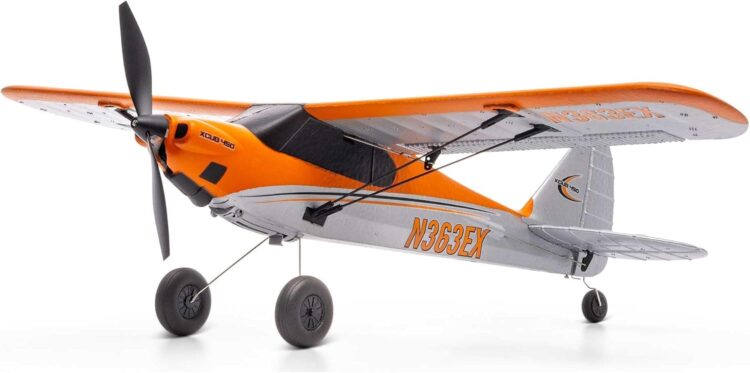
The XCub delivers scale bush-plane looks in a 450mm micro package with nothing extra to buy. Its EPP foam airframe and SAFE stabilization target newcomers. The box includes a five-channel transmitter, four AA cells, two 400mAh 1S 3.7V LiPos, a USB charger and a spare propeller with prop saver.
That second battery and spare prop are a small but real advantage over a single-pack kit. You get more flying per session and a ready replacement for the part most likely to break.
Who Should Buy This RC Plane
A buyer who wants a small, all-in-one training package rather than a separate radio purchase.
Why You’ll Love It
Two batteries out of the box mean you can fly, swap, and fly again while the first pack charges.
Key Features
- Two flight batteries included: Double the airtime per outing with no extra purchase.
- EPP foam construction: A flexible foam family chosen for small trainers.
- Spare propeller with prop saver: The most commonly damaged part is already covered.
- SAFE stabilization: Built-in beginner assistance.
Technical Specifications
- Item number: HBZ-1250
- Wingspan: 450mm (17.7 in.)
- Length: 320mm (12.6 in.)
- Weight: 59.1g without battery; 70.4g with a 1S 400mAh battery
- Electronics: Rotary aileron servo; combined receiver/ESC/two-servo unit
- Battery: Two 1S 3.7V 400mAh LiPos (included)
- Radio: Five-channel transmitter (included)
- Pilot level: Level 1
- Age recommendation: Not recommended under 14
Overall Quality
EPP identifies the foam family, and the combined receiver/ESC unit keeps the electronics simple. Horizon describes the airframe as durable, but that’s a manufacturer description rather than an independent impact test. Long-term repair costs depend on parts you’ll want to confirm with your dealer.
Pros and Cons
Pros
- Complete radio-and-power package
- Two batteries and a spare prop included
- Scale Cub-style looks
Cons
- Micro size demands calm conditions
- Confirm the supplied radio’s compatibility before planning to use it with other aircraft
Expected Experience with This RC Plane
Plan to charge the packs, install the transmitter batteries and complete a short setup before flying. The manual’s checklist suggests a seven-minute initial timer, a conservative starting setting rather than a measured endurance figure. Expect small-model limits: a light micro is more easily pushed around as the breeze builds, so save it for calm days.
Best RC Trainer Plane: E-flite Apprentice STS 1.5m RTF Basic Smart Trainer with SAFE (EFL370001)
Quick Overview
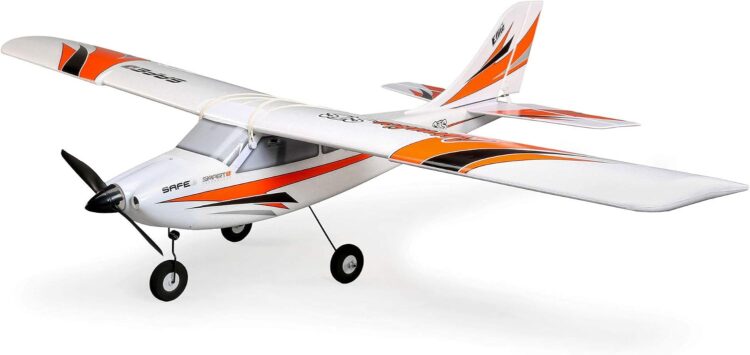
The Apprentice name has long been part of club training, and the STS carries it into a 1.5-meter “Smart Trainer” format. Horizon includes a DXS transmitter, a 3230 flight controller, and a 4650C serial receiver. The bigger airframe is easier to see at a distance, a real benefit when you’re learning orientation on a club field.
SAFE Plus and Spektrum’s Landing Assist Sensor (SPMA3180) are optional upgrades. GPS-assisted functions depend on buying the right optional equipment.
Who Should Buy This RC Plane
A newcomer who will learn in a traditional club setting with an instructor and has the vehicle space to transport a 1.5-meter wing.
Why You’ll Love It
Size equals visibility, and visibility equals confidence when you’re still working out which way the plane is pointing.
Key Features
- DXS transmitter included: No separate radio purchase.
- 3230 flight controller with SAFE: Stabilized training assistance.
- Large 1500mm wing: Easier to see and track in the sky.
- Upgrade path: SAFE Plus and the Landing Assist Sensor (SPMA3180), sold separately.
Technical Specifications
- Item number: EFL370001
- Wingspan: 1500mm (59.1 in.)
- Length: 1080mm (42.5 in.)
- Weight: 1418g (50.0 oz) without battery; 1672g (59.0 oz) with a 3S 4000mAh pack
- Power: Brushless, 3S
- Battery required: 3S 11.1V 3200–4000mAh LiPo, EC3/IC3 (not included)
- Charger required: Compatible LiPo charger (not included)
- Recommended power bundle: Spektrum Powerstage SPMXPSA300 (3S 4000mAh battery and S120 charger), sold separately
- Pilot level: Level 1
- Age recommendation: Not for children under 14
Overall Quality
Horizon documents the installed control and power hardware in detail: flight controller, serial receiver and brushless power. That documentation doesn’t cover long-term structural integrity or crash behavior. The equipment list reflects a serious training platform, but how well it holds up will depend heavily on how it’s flown and repaired.
Pros and Cons
Pros
- Supplied radio and a dedicated training system
- Large, highly visible airframe
- Clear upgrade path for assisted landings
Cons
- The larger battery and charger are additional costs
- GPS-assisted functions require optional equipment
- Its size demands a real field and transport space
Expected Experience with This RC Plane
The manual walks owners through assembly, balancing, a range test and flight-mode setup, so plan on all of those tasks before the first flight. Expect a traditional club-trainer experience: bigger, more visible and better suited to flying alongside an instructor than to a backyard.
Best Small Warbird-Style RC Plane: HobbyZone T-28 Trojan 450mm RTF with SAFE (HBZ-1228)
Quick Overview
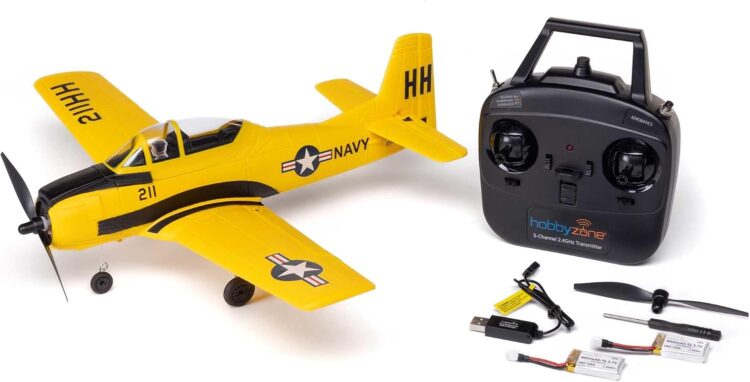
Want a trainer that looks like a warbird? The T-28 Trojan wraps a SAFE-stabilized micro trainer in a scale military-trainer outline. Like the XCub, it’s a complete package: a five-channel transmitter, AA batteries, two 400mAh 1S 3.7V LiPos, a USB charger and a spare propeller with prop saver.
A warbird appearance doesn’t mean it flies like a larger low-wing warbird or demands the same skill. It’s a small stabilized model first and a scale subject second.
Who Should Buy This RC Plane
A newcomer specifically drawn to this scale subject who has suitable flying conditions and instruction.
Why You’ll Love It
It’s one of the most clearly documented packages here. You know exactly what’s in the box, and Horizon’s Part Finder lists the key replacement parts.
Key Features
- Complete package with two batteries: Nothing extra needed to start flying.
- EPP foam and SAFE stabilization: Beginner-oriented construction and assistance.
- Spare prop with prop saver: Ready for the inevitable nose-over.
- Cataloged service parts: Replacement airframe (HBZ-1229), landing gear (HBZ-1230) and propeller/spinner (HBZ-1231).
Technical Specifications
- Item number: HBZ-1228
- Wingspan: 450mm (17.7 in.)
- Length: 368mm (14.5 in.)
- Weight: 67g without battery; 78g with a 1S 400mAh battery
- Battery: Two 1S 3.7V 400mAh LiPos (included)
- Radio: Five-channel transmitter (included)
- Pilot level: Level 1
- Age recommendation: Not recommended under 14
Overall Quality
EPP construction and a modular parts catalog make the T-28 a sensible pick for anyone who expects to repair rather than replace. The identified airframe, landing gear, and prop assemblies show Horizon planned for service. Confirm current stock with your dealer, though: a cataloged part isn’t always an available one.
Pros and Cons
Pros
- Battery, charger and transmitter included
- Two flight packs
- Replacement airframe, gear and prop are cataloged
Cons
- Micro size restricts it to calm conditions
- Horizon’s listing has shown it on backorder, so confirm availability before ordering
- The warbird looks don’t make it a stepping stone to larger low-wing warbirds
Expected Experience with This RC Plane
Expect to charge the packs, prepare the radio, and fly without choosing a separate system. The manual’s seven-minute preflight timer is a starting setting to adjust carefully, not an endurance guarantee. Follow its battery-care rules: never charge unattended or overnight, use the appropriate LiPo charger, and stop using any swollen or damaged pack.
Best Scale Trainer for Adult Newcomers: HobbyZone Carbon Cub S 2 1.3m RTF Basic (HBZ320001)
Quick Overview
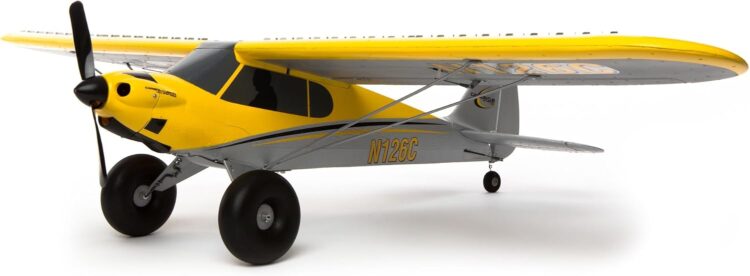
The Carbon Cub S 2 gives adult beginners a scale high-wing Cub with genuine trainer manners and serious electronics. Horizon includes the DXS transmitter, a 3230A flight controller, a 4650C serial receiver and a 30A telemetry-capable ESC. SAFE Plus GPS is an optional upgrade.
“Adult” isn’t a separate skill category. What suits grown-up beginners is the scale appeal, a 1.3-meter presence in the sky and a clear training system, as long as the complete setup and flying site fit.
Who Should Buy This RC Plane
An adult newcomer who wants a scale-looking trainer, has a suitable field and will add the battery and charger.
Why You’ll Love It
It looks like a real bush plane rather than a classroom trainer, yet it still offers a supplied radio and a documented training path.
Key Features
- DXS transmitter included: No radio guesswork.
- 3230A flight controller: Stabilized training support.
- Telemetry-capable 30A ESC: Provides power-system data with compatible equipment.
- Optional SAFE Plus GPS upgrade: For buyers who want GPS-assisted functions later.
Technical Specifications
- Item number: HBZ320001
- Wingspan: 1300mm (51.2 in.)
- Length: 865mm (34.1 in.)
- Weight: 1075g (37.9 oz) without battery; 1285g (45.3 oz) with a 3S 2200mAh pack
- Servos: Four, installed
- Battery required: 3S 11.1V LiPo of at least 2200mAh per the manual, EC3/IC3 (not included)
- Charger required: Compatible LiPo charger (not included)
- Recommended power bundle: Spektrum Powerstage 2 SPMXPSA200 (3S 2200mAh Smart G2 battery and S120 USB-C charger), sold separately
- Pilot level: Level 1
Overall Quality
The installed electronics are the standout: a name-brand flight controller, a serial receiver and a telemetry-capable ESC. Horizon’s documentation covers that equipment list rather than comparative structural toughness, so judge the build integrity at the bench when the box arrives.
Pros and Cons
Pros
- Radio included, with a documented training-system route
- Scale Cub looks with a 1.3m presence
- Optional GPS upgrade path
Cons
- Flight battery and charger are extra
- GPS functions are an additional expense
- Horizon’s product page and manual disagree on the minimum battery size, so follow the manual’s 2200mAh minimum
Expected Experience with This RC Plane
Expect aircraft preparation plus a separate battery and charger purchase before your first flight. Once it’s set up, expect a scale-looking Level 1 trainer whose 1.3-meter size suits a club field better than a small yard.
Best Electric RC Plane with Everything in the Box: FMS Ranger V2 1220mm RTF with Reflex V3 (FMS147RYL-REFV3)
Quick Overview
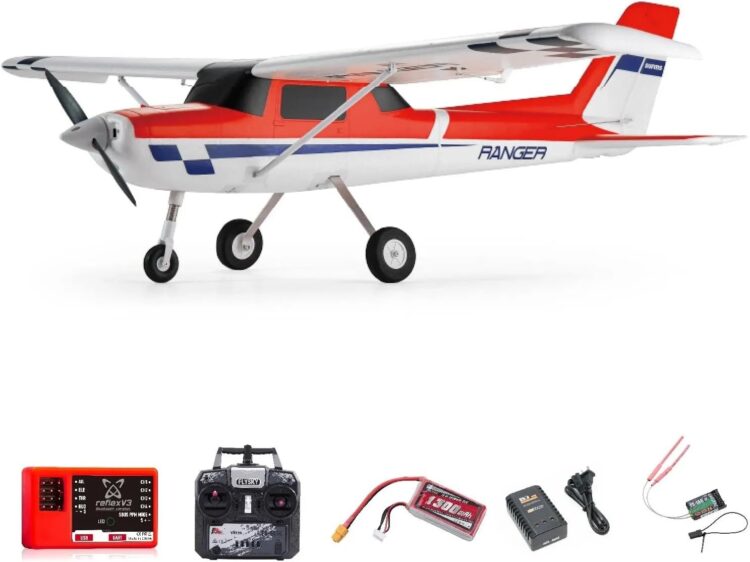
Every airplane in this roundup is electric, so “best electric” here means something more specific: the best full-size electric trainer that ships truly complete. FMS defines its RTF version as including the radio, receiver, flight battery and charger, which its PNP sibling doesn’t. The Ranger V2’s Reflex V3 system offers Stabilized, Optimized and Manual modes, and floats are available as an option or package selection.
That makes it one of only two 1.2-meter-class trainers here, alongside the FMS Super EZ V4 RTF, that don’t send you shopping for a battery and charger.
Who Should Buy This RC Plane
A buyer who wants a full-size, high-wing electric trainer with nothing else to purchase, and who will confirm that the U.S. RTF variant they order matches this package.
Why You’ll Love It
You get the field presence of a 48-inch trainer with the convenience of an all-in-one micro.
Key Features
- True RTF contents: Radio, receiver, flight battery and charger included.
- Reflex V3 with three modes: Stabilized, Optimized and Manual, a built-in progression.
- Brushless power package: A 3136-1200Kv outrunner with a 20A ESC.
- Float option: Water flying with the float package.
- Spring-cushioned nose gear: Helps absorb imperfect landings.
Technical Specifications
- Item number: FMS147RYL-REFV3
- Wingspan: 1220mm (48 in.)
- Length: 947mm (37.3 in.)
- Weight: 1200g listed, a figure that includes floats
- Motor / ESC: 3136-1200Kv; 20A ESC
- Battery: 3S 1300mAh 25C LiPo, XT60 connector (included in RTF)
- Radio: 6-channel RTF radio (included)
- Construction: EPO foam
- Flight time: About 10 minutes, per FMS’s specification table
- Assembly time: 3–10 minutes, per FMS
Overall Quality
The EPO airframe and spring-cushioned nose gear are sensible choices for a trainer that will see bounced landings. Those are design details, not proof that the plane is crash-proof. Note that the Ranger uses an XT60 connector rather than the EC3/IC3 found on the Horizon trainers above, so spare batteries aren’t directly interchangeable.
Pros and Cons
Pros
- Everything needed to fly is included
- Three-mode Reflex V3 stabilization
- Large, visible airframe
Cons
- Regional SKUs vary, so confirm you’re buying this exact RTF version
- XT60 batteries don’t match the EC3/IC3 packs used by many Horizon models
Expected Experience with This RC Plane
FMS advertises a quick 3–10-minute assembly. Its specification table lists flight time at about 10 minutes, while its marketing copy claims 10–15 minutes, so plan around the lower figure. Expect a straightforward, full-size trainer experience, with the bonus of flying on day one without a return trip to the hobby shop.
Best RC Plane for Intermediate Pilots: E-flite Turbo Timber Evolution 1.5m BNF Basic, Including Floats (EFL105250B)

Quick Overview
Once you’ve mastered a trainer, the Turbo Timber Evolution is a seriously fun next step. This STOL sport plane comes loaded: a 70A Avian Smart Lite ESC, an AR637TA receiver, six metal-geared servos, optional-use leading-edge slats and upgraded landing-gear springs. In this B-suffix package, it also includes floats.
It’s a BNF Basic, though, so you supply the transmitter, battery and charger. Its Level 2 rating marks it as a progression airplane, not a first one.
Who Should Buy This RC Plane
A pilot already competent on a trainer who wants STOL flying and the option to fly off water.
Why You’ll Love It
Slats, floats, a beefy power system, and a broad battery range let you fly it gently on 3S or turn it up on 4S.
Key Features
- Floats included: Water operations right out of the box.
- Optional-use leading-edge slats: A STOL configuration when you want it.
- Six metal-geared servos: Robust control hardware.
- AS3X and SAFE Select: SAFE Select can limit pitch and bank and self-level when enabled. AS3X stabilization stays active even with SAFE turned off.
- 3S or 4S power: A flexible performance envelope.
Technical Specifications
- Item number: EFL105250B
- Wingspan: 1555mm (61.2 in.)
- Length: 1040mm (40.9 in.)
- Weight: 1860g (65.6 oz) without battery; 2190g (77.2 oz) with a 4S 3200mAh pack
- ESC: 70A Avian Smart Lite
- Receiver: AR637TA
- Radio required: Full-range 6–7+ channel Spektrum DSMX/DSM2-compatible transmitter (not included)
- Battery required: 3S or 4S 2200–5000mAh LiPo, EC3/IC3 (not included)
- Charger required: Compatible LiPo charger (not included)
- Pilot level: Level 2
Overall Quality
Metal-geared servos and reinforced landing-gear springs point to hardware built for rough-field STOL work. Those specifications describe the components; they don’t establish a lifespan.
Pros and Cons
Pros
- Floats included in this package
- Robust servo and power hardware
- Wide 3S–4S battery flexibility
Cons
- Radio, battery, and charger add significant cost
- Rated above first-time trainer level
- Requires a DSMX/DSM2-compatible transmitter with enough channels
Expected Experience with This RC Plane
Expect meaningful setup work: binding your own transmitter, assigning switches and configuring SAFE Select. Even with stabilization, a gyro-equipped sport plane still demands careful setup and pilot competence. Once it’s configured, it’s a versatile STOL machine best enjoyed by someone with a trainer’s worth of landings already behind them.
Best Indoor RC Plane: E-flite UMX Night Vapor RTF with AS3X and SAFE Select (EFLU1300)
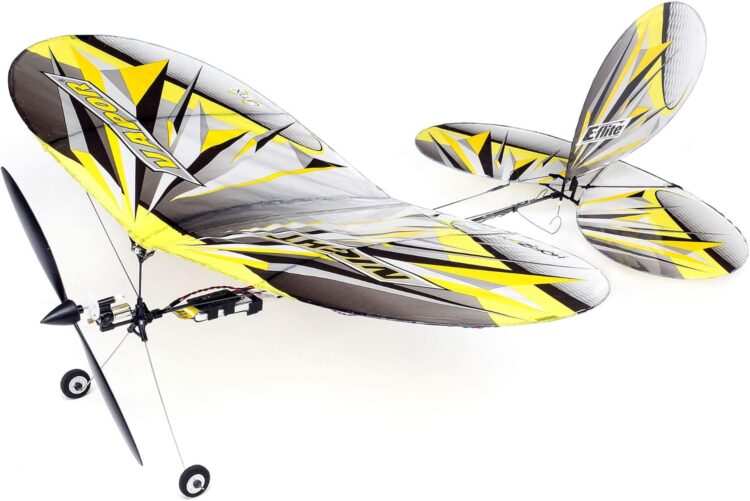
Quick Overview
The Night Vapor is a featherweight indoor slow flyer that turns a gym, or a calm evening outdoors, into a flying site. The RTF box includes the transmitter, four AA batteries, a 150mAh 1S 3.7V LiPo and a USB charger. LED lighting and optional-use SAFE Select round out the package.
It’s built for a very specific environment, so choose it for the space you actually have, not the space you hope to have.
Who Should Buy This RC Plane
Someone with a large, uncluttered indoor area or access to a calm outdoor venue.
Why You’ll Love It
LED-lit slow flight is mesmerizing, and the complete package means you can fly the evening it arrives.
Key Features
- Complete RTF package: Radio, battery, and charger included.
- LED lighting: Adds visibility and night-flying appeal.
- AS3X with optional SAFE Select: Stabilization that smooths out the slow, light airframe.
- Ultralight build: Designed for slow indoor flight.
Technical Specifications
- Item number: EFLU1300
- Wingspan: 14.8 in. (per Jay Smith’s Park Pilot review)
- Length: 16.5 in. (per the same review)
- Ready-to-fly weight: 25g with the 150mAh pack (per the same review)
- Power: Brushed motor, 1S
- Electronics: Receiver/ESC with two servos
- Battery: 1S 3.7V 150mAh LiPo (included)
- Pilot level: Level 2
Overall Quality
The Night Vapor uses a reinforced lightweight airframe, which makes sense for a 25-gram aircraft. It’s built to float, not to absorb hard hits, so treat it gently.
Pros and Cons
Pros
- Complete power and radio package
- Controllable LED lighting
- Designed for indoor slow flight
Cons
- Extremely light, so it needs calm air outdoors
- Needs a genuinely large indoor space
- Rated Level 2 despite its gentle speed
Expected Experience with This RC Plane
Jay Smith, identified by Model Aviation as its editor-in-chief, flew the RTF version with its included radio and 1S battery for a Park Pilot review. He flew it both indoors and in his yard in calm weather, and he found bigger rooms more rewarding: “The larger the indoor space, the more enjoyable it is to fly.” That’s the key expectation to set. He suggests that a space about the size of a two-car garage is about right. In a big, clear space, expect a slow, graceful lighted flyer. In a cramped living room, expect frustration.
Best Preassembled Micro Trainer: VOLANTEXRC Sport Cub 500 RTF (761-4 / 76104)
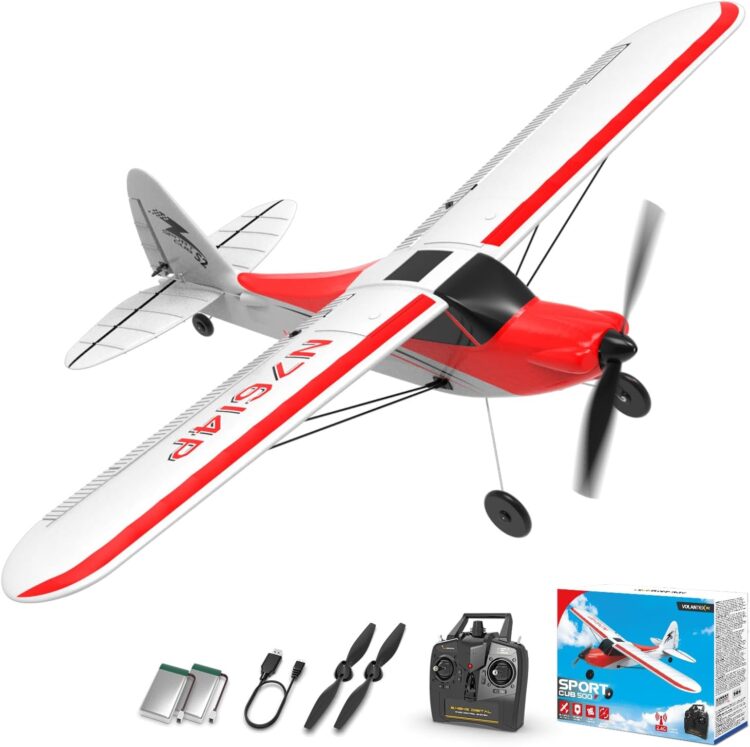
Quick Overview
The Sport Cub 500 is a small, factory-assembled four-channel trainer with ailerons and XPilot gyro assistance. EXHOBBY’s blue RTF sales variant (EXA76104RBB2) uses EPP construction and lists the battery, radio, and USB charger as included.
It’s an accessible package, but the seller’s own listing is inconsistent on two points, so do your homework before ordering.
Who Should Buy This RC Plane
A buyer who wants a small, preassembled trainer and is willing to confirm listing details and availability before buying.
Why You’ll Love It
You get four-channel control with ailerons in a ready-built micro, which makes it a real aileron trainer with no build session required.
Key Features
- Factory assembled: Minimal prep.
- Four channels with ailerons: Full primary controls.
- XPilot gyro: Beginner, Intermediate, and Expert assistance levels.
- Detachable prop-saver system: Designed to protect the prop in minor mishaps.
Technical Specifications
- Item number: 761-4 / 76104 (blue RTF sales variant EXA76104RBB2)
- Wingspan: 19.69 in. (500mm)
- Length: 13.78 in.
- Flying weight: 0.115 lb (about 52g)
- Motor: 10mm coreless
- Battery: 3.7V 400mAh LiPo (the listing’s box contents show two included)
- Transmitter batteries: Not included
- Electronics: Integrated receiver/ESC
- Construction: EPP foam
- Flight time: Up to 20 minutes, per the seller
Overall Quality
EPP foam and a detachable prop saver are sensible beginner features. No systematic crash or repair results are published, so judge it as a lightweight micro rather than a tank.
Pros and Cons
Pros
- Four primary control channels with ailerons
- Radio, battery, and charger included
- Three gyro assistance levels
Cons
- The seller’s skill field reads 3 of 5, while its marketing targets beginners
- The listing has shown both “sold out” and “in stock,” so confirm availability at checkout
- The 20-minute flight time is a seller maximum
Expected Experience with This RC Plane
Expect a short setup and gyro-assisted micro flying. The Beginner, Intermediate and Expert labels describe how much the XPilot system helps you. They don’t certify that you’re ready to fly without assistance, and they don’t define a safe wind limit. Fly it on calm days and set your timer conservatively rather than around the advertised maximum.
Other Top RC Planes
Need a quick reference? These nine aircraft round out the field.
Best RC Planes for Beginners
HobbyZone Apprentice STOL S 700mm RTF with SAFE (HBZ6100)
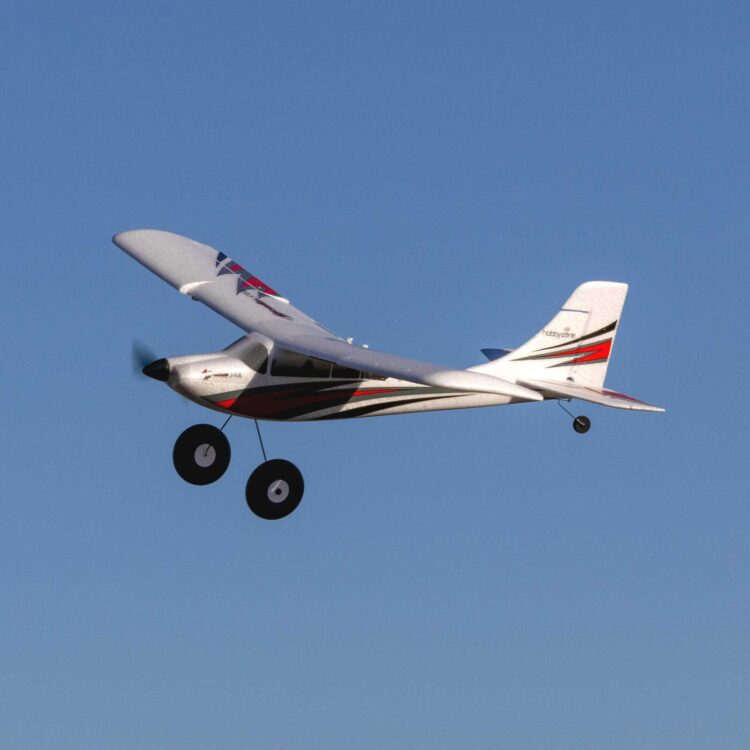
A compact, sub-250g Level 1 trainer for beginners who want a complete package in a small size. The listing reviewed was Horizon’s EU-region page, so confirm U.S. package contents.
- Key Features: SLT6 transmitter; dual-protocol DSMX/SLT receiver; 300mAh 2S 7.4V LiPo and USB-C charger included; 700mm span.
FMS Ranger 850mm RTF with Gyro/GPS (FMS123R)
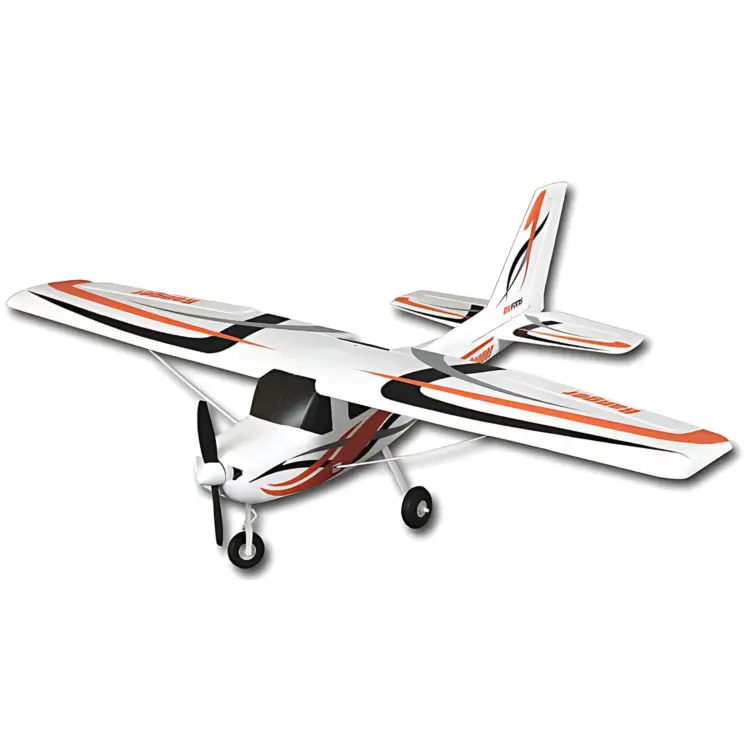
For beginners attracted to GPS-assisted safety features in a small trainer. FMS sells RTF-with-gyro and PNP-with-Reflex versions with different contents, and its listing mixes details, so verify exactly what FMS123R includes.
- Key Features: 850mm span; brushless 2S power; GPS return-to-home and flight-perimeter functions named in the description.
VOLANTEXRC Ranger600 600mm 3-Channel RTF (761-2 / 76102)
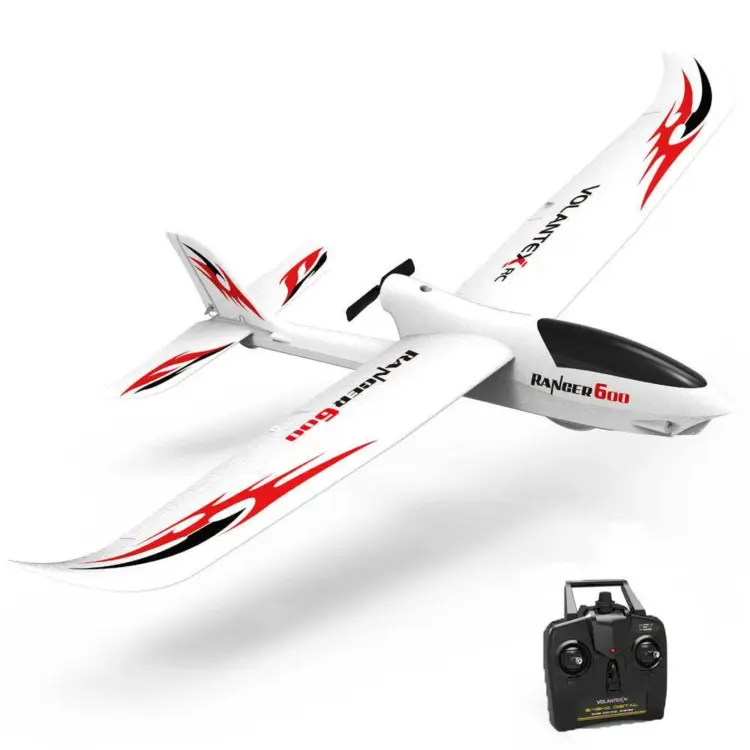
A simplified, factory-assembled powered glider for absolute beginners. Its three channels keep things simple, but confirm which surfaces it controls. The Canadian listing (EXA76102RB2) has shown it as sold out.
- Key Features: 600mm span; three-channel control; XPilot assistance; factory assembled.
Best RC Planes for Intermediate Pilots
E-flite Commander mPd 1.4m BNF Basic with AS3X and SAFE Select (EFL14850)
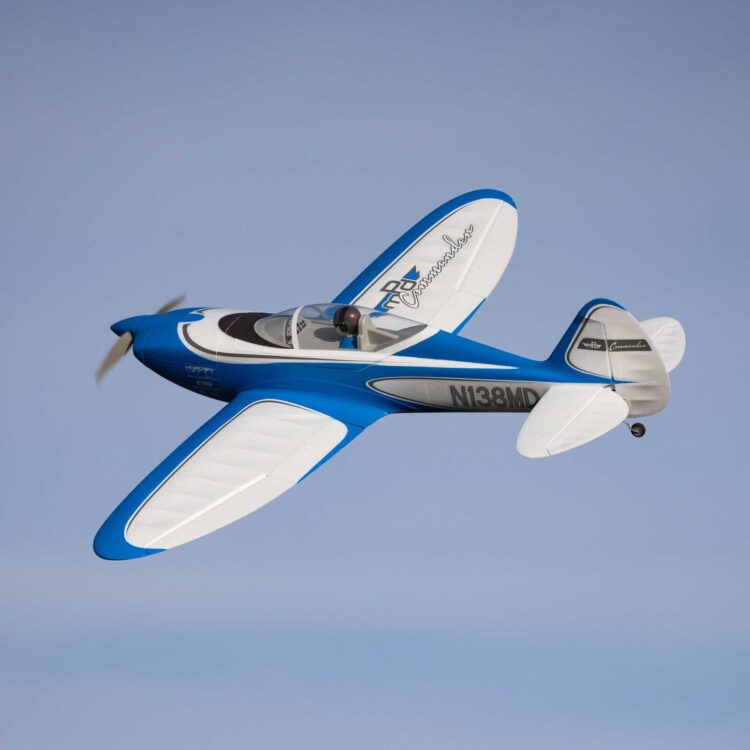
A Level 3 sport aircraft for experienced pilots. Horizon’s EU listing shows it as discontinued, so confirm U.S. availability first.
- Key Features: AR631 receiver; 45A Smart Lite ESC; six metal-geared servos; requires a 5–6+ channel DSMX/DSM2 radio and a 3S/4S 2200–3200mAh EC3/IC3 LiPo.
E-flite Sportix 1.1m BNF Basic with AS3X+ and SAFE Select (EFL10750)
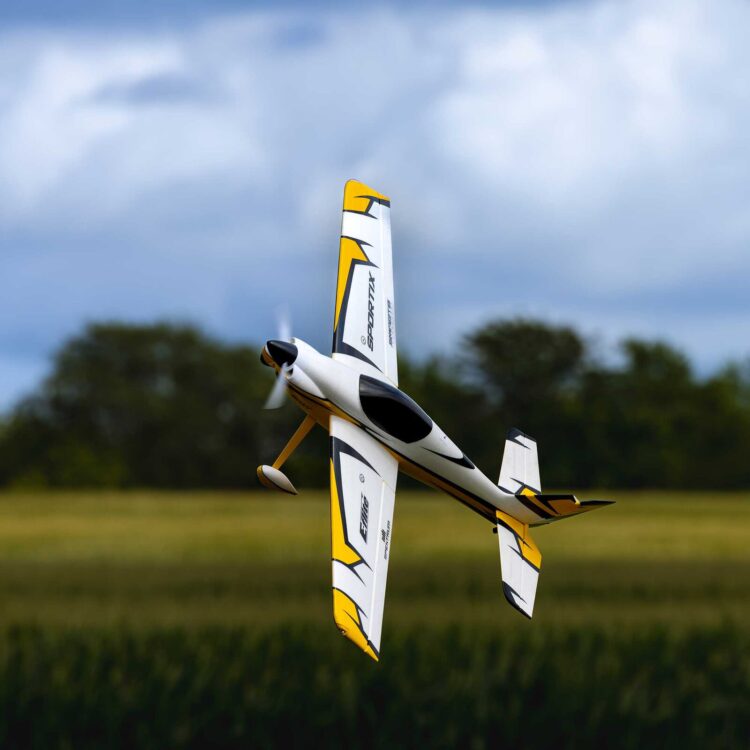
A Level 2 sport plane for pilots graduating from a trainer.
- Key Features: 1100mm span; 1105g without battery, 1338g with a 4S 2200mAh pack; four metal-geared servos; 45A Smart Lite ESC; requires a 4–5+ channel radio and a 3S/4S 2200–3200mAh pack. The current product page lists an AR631+ receiver, while the manual names the AR631.
E-flite Conscendo Evolution 1.5m BNF Basic with AS3X and SAFE Select (EFL01650)
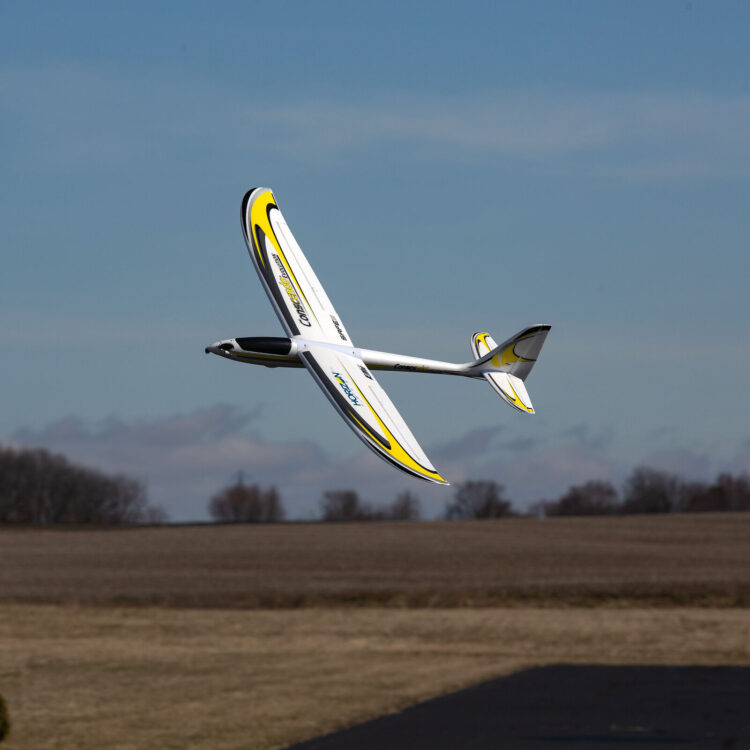
A Level 2 powered glider for established pilots who want soaring flight.
- Key Features: AR637TA receiver; four servos; 30A telemetry-capable ESC; requires a 5+ channel radio and a 3S 1300–2200mAh or 4S 1000–2200mAh EC3/IC3 battery.
Best Electric RC Planes
E-flite Slow Ultra Stick 1.2m BNF Basic with AS3X and SAFE Select (EFL0350)
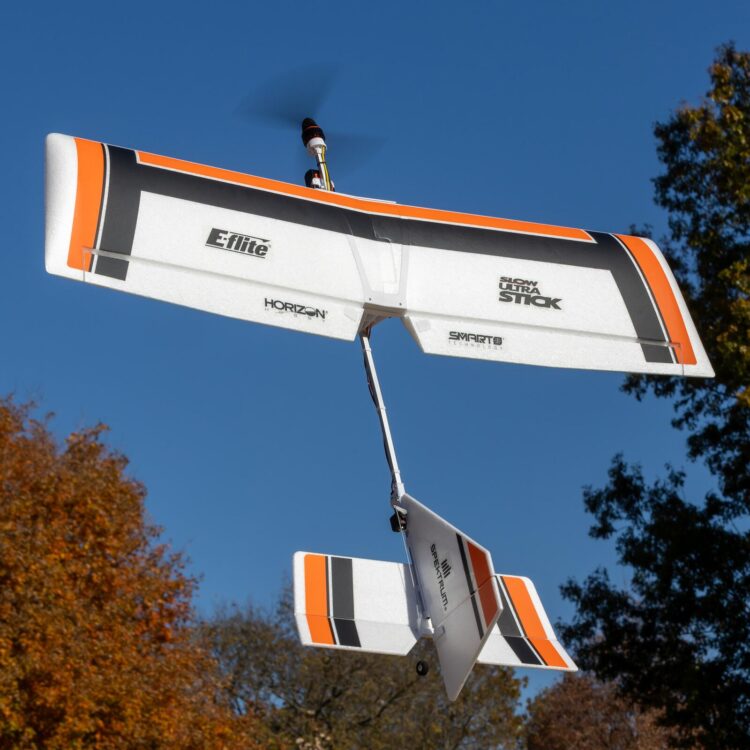
A Level 2 slow-and-sport flyer for pilots who want a relaxed second airplane rather than a first trainer.
- Key Features: 1188mm span; 801g without battery, 918g with a 3S 1300mAh pack; AR630 receiver; three servos; 30A Smart Lite ESC; requires a 4+ channel radio and a 2S/3S 1300–2200mAh pack.
E-flite UMX Turbo Timber Evolution BNF Basic with AS3X and SAFE (EFLU8950)
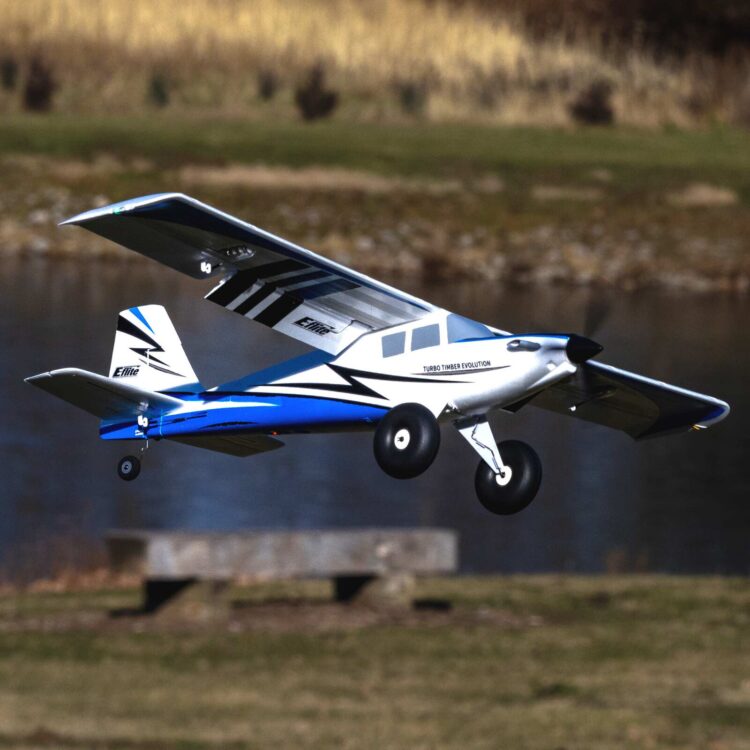
A micro STOL progression plane for Level 2 pilots with a capable radio. Its “under 250g” listing doesn’t automatically cover every battery-and-accessory combination.
- Key Features: Five linear servos; brushless power; leading-edge slats; requires a 6+ channel radio and a 2S/3S 280–300mAh JST-RCY battery (JST-PH packs need an adapter such as SPMXCA327).
FMS Super EZ V4 1220mm RTF with Floats and Reflex V3 (FMS122RF-REFV3)
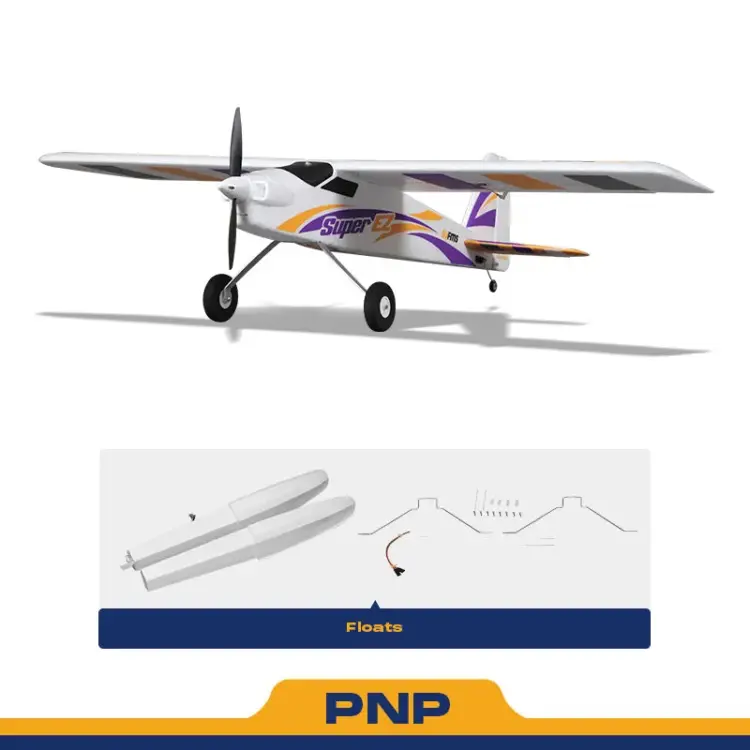 A full-size, float-equipped beginner trainer. Confirm the exact version, since the U.S. distributor record mixes V4 and V3 descriptions.
- Key Features: 1220mm span; 1020mm length; 890g; 3136-1200Kv motor; 20A ESC; four-channel radio; 3S 1300mAh XT60 battery; about 8 minutes per FMS’s specification table.
Best RC Plane Brands
Brand names help you navigate, but your decision should rest on the exact model and package. Here’s where each brand in this roundup shines:
- HobbyZone: Trainers and small RTF packages, including the AeroScout S 2, Sport Cub S 2, XCub, T-28 Trojan, Carbon Cub S 2 and Apprentice STOL S. For a true beginner, this is home territory.
- E-flite: The widest range here. It spans a club trainer (Apprentice STS), STOL and sport aircraft (Turbo Timber Evolution, Sportix, Commander), a powered glider (Conscendo) and an indoor slow flyer (Night Vapor).
- FMS: Electric high-wing aircraft such as the Ranger and Super EZ, offered in RTF and PNP versions with Reflex stabilization variants. Always check which version you’re buying.
- FlightLine: One of the two principal model brands of DongGuan Freewing Electronic Technology.
- Freewing: DongGuan Freewing Electronic Technology Co., Ltd. designs and produces electric aviation models. Motion RC is its listed distributor for U.S. and EU sales.
- Hangar 9: Horizon’s catalog positions the brand around factory-finished aircraft and their materials. That’s a brand identity, not a beginner endorsement for any particular model.
- Extreme Flight: Founded around balsa almost-ready-to-fly (ARF) aerobatic aircraft. It’s a destination for experienced aerobatic pilots rather than beginners.
- VOLANTEXRC: Small, stabilized RTF aircraft such as the Sport Cub 500 and Ranger600. Evaluate support and availability for the specific listing you’re considering.
How to Choose the Right RC Plane for You
The smartest buying sequence isn’t “find the coolest plane.” Work through these steps in order:
- Secure instruction and a flying site.
- Choose the aircraft’s role: trainer, indoor, STOL, sport or glider.
- Choose a package you can complete: RTF, RTF Basic, BNF Basic or PNP.
- Add up the complete setup cost.
- Only then compare convenience features.
A low aircraft price proves nothing about value if you still need a battery, charger and radio. The AeroScout S 2, Apprentice STS and Carbon Cub S 2 all need a separate battery and charger, and every BNF Basic model also needs your own transmitter.
Matching the RC Plane to Your Needs
Start with instruction. The Academy of Model Aeronautics’ Intro Pilot program offers nonmembers a free, 90-day supervised introduction with an Intro Pilot Mentor, under stated program conditions. Participation is one-time and excludes event participation. It’s a great way to try model aviation before buying, though it doesn’t guarantee a local mentor, a loaner aircraft or unrestricted coverage.
Then use this fit guide:
| Your situation | Where to start | What changes the recommendation |
| No aircraft or radio; club instruction available | Compare complete RTF and RTF Basic trainer setups | Your club’s radio and trainer setup, plus the total cost of completing the package |
| Small indoor venue | Night Vapor, after assessing clear space | Tight rooms and obstacles may rule it out |
| Want a compact outdoor package | Sport Cub S 2, XCub or Apprentice STOL S | Your actual weather, visibility, terrain and transport needs |
| Already competent on a trainer | Turbo Timber Evolution, Sportix, Conscendo, Slow Ultra Stick or UMX Turbo Timber Evolution | Transmitter functions, battery compatibility and a usable venue |
| Already own compatible equipment | Compare BNF Basic against the complete RTF cost | Exact protocol, connector, pack weight and balance |
| No suitable field or instruction | A lesson or simulator first | No deal can fix an unsuitable venue |
Pro Tip: A first lesson or a simulator session is a legitimate first “purchase.” Robert T. Motazedi’s Beginner’s Guide to Safe and Easy RC Flying (Kalmbach) argues for instruction and for matching the teacher to the learner’s needs. Jay Smith’s Getting Started in RC for Park Pilot likewise stresses an instructor and a suitable field.
What to Look for in a High-Quality RC Plane? The Selection Criteria Explained
We applied the same 11 criteria to every aircraft, and they’re the same criteria behind the star ratings in the comparison chart. Two of them are gatekeepers: if a plane fails on skill level or site suitability, nothing else saves it. The rest describe what you’re getting, and “more” isn’t automatically “better.”
| Criterion | How to apply it | What it can’t tell you |
| Skill Level Compatibility | Compare the manufacturer’s pilot level and mode behavior with your real ability | Stabilization labels aren’t standardized across brands |
| Aircraft Type | Match trainer, indoor, STOL, sport or glider to your intended flying | A scale look doesn’t define how demanding a plane is to fly |
| Power System | Check the approved cell count, connector, capacity, fit, weight and charger compatibility | A motor rated for higher voltage doesn’t approve that voltage for the whole aircraft |
| Build Type | Account for final assembly, binding and every completion purchase | RTF, RTF Basic, BNF Basic and PNP boxes differ; the exact contents list governs |
| Durability & Material | Look for documented construction, repair access and replaceable parts | Foam type isn’t a crash-test score; nothing is crash-proof |
| Wingspan & Size | Match visibility, transport, storage and flying space | Product names can differ from the listed dimensions |
| Control Channel Count | Separate primary flight controls from spare channels | A six-channel receiver doesn’t mean six control surfaces |
| Flight Time | Distinguish starting timers, advertised maximums and measured endurance | Advertised figures aren’t guarantees |
| Parts Availability | Identify likely replacement parts and confirm stock at a seller you can use | A catalog listing isn’t proof of stock or fast delivery |
| Community Support | Look for local instruction, current manuals and model-specific guidance | Your local club usually matters more than the brand |
| Budget | Total the complete flyable setup plus realistic repair items | An aircraft-only price can’t tell you the true cost |
Pitfalls, Limitations, and Buying Mistakes
- Confusing “RTF” with “RTF Basic.”
This is the classic hidden-cost trap. In this roundup, the Sport Cub S 2, XCub, T-28 Trojan, Night Vapor, Ranger V2 RTF and Sport Cub 500 include flight batteries and chargers. The AeroScout S 2, Apprentice STS and Carbon Cub S 2 don’t. Check: Read the “included” and “required to complete” lists for the exact SKU before buying. - Mismatched connectors and protocols.
The Turbo Timber Evolution uses EC3/IC3 packs, the UMX Turbo Timber Evolution uses JST-RCY, the FMS Ranger V2 and Super EZ use XT60, and the 850mm Ranger uses XT30. Two batteries labeled “3S LiPo” aren’t necessarily interchangeable. BNF Basic aircraft also need a DSMX/DSM2-compatible transmitter with enough channels. Rule out a BNF package if your radio can’t bind to it or lacks the switches it needs. - Treating stabilization as a safety net that never fails.
The AeroScout S 2 manual states that Panic Recovery doesn’t avoid obstacles and needs enough height to work. Setup errors can defeat these systems, too. Terry Dunn describes a trainer-radio configuration mistake by his own team that put panic recovery on a two-position switch. The AeroScout stayed in constant recovery with little elevator movement available. He’s clear that it was a setup error, not a defective aircraft. Check: Verify every switch assignment and control direction before each flight. - Trusting the biggest flight-time number.
Manufacturers sometimes publish different figures on the same page. FMS lists the Ranger V2 at about 10 minutes in its specifications while its marketing claims 10–15. It lists the Super EZ at eight minutes in its specifications and 10–15 in its copy. Plan around the conservative figure. - Buying the wrong regional version.
Several models appear in EU, Canadian or other regional listings with different codes, contents, or “discontinued” and “sold out” labels. Check: Confirm that the item number on the offer matches the box and the U.S. package you want. - Ignoring listing inconsistencies.
When a seller’s own page contradicts itself, as the Sport Cub 500 listing does on skill level and stock status, that’s a reason to ask questions, not proof of wrongdoing. Check: Get the return terms in writing before you fly. - Buying when the site or budget doesn’t fit.
If you can’t complete the radio, charging setup or flying venue within your budget, the right decision may be to wait. A bargain plane with no place to fly is no bargain.
Before-You-Buy Checklist
- [ ] Exact SKU and package version confirmed
- [ ] Manufacturer pilot level matches your skill
- [ ] Suitable flying site (indoor space or outdoor field)
- [ ] Radio protocol and channel count compatible (BNF Basic)
- [ ] Approved battery size and connector identified
- [ ] Charger and power supply budgeted
- [ ] Complete setup cost totaled, extras included
- [ ] Key spare parts in stock
- [ ] Seller return terms confirmed
- [ ] Instruction or simulator plan in place
You Bought It, Now What?
RC Plane Flying Tips
Follow your manual’s power-up sequence. The AeroScout S 2 preflight checklist card, for example, calls for this order:
- Turn the transmitter on first.
- Set all switches to position 0, lower the throttle stick fully and engage throttle cut.
- Connect the flight battery.
- Keep the aircraft still while the system initializes.
- Check every control for correct direction.
- After flying, engage throttle cut, then disconnect the aircraft battery before turning the transmitter off.
These steps are model-specific, so follow your own manual.
Know the FAA rules. According to the FAA’s recreational flyer guidance, recreational pilots must:
- Pass The Recreational UAS Safety Test (TRUST) and carry proof of completion.
- Keep the aircraft within visual line of sight.
- Yield to other aircraft.
- Follow airspace rules: stay at or below 400 feet in uncontrolled Class G airspace, and get authorization before flying in controlled airspace.
- Register any aircraft weighing 250g or more.
Flying under 250g doesn’t exempt you from the other rules. Registered aircraft generally need Remote ID unless flown under an exception such as an FAA-Recognized Identification Area (FRIA). In a FRIA, both pilot and aircraft must stay inside the boundary, with the aircraft in sight. A model field isn’t automatically a FRIA.
Handle LiPos with respect. Never charge unattended or overnight, use the appropriate LiPo charger, and retire any swollen or damaged pack.
Pro Tip: Set a conservative flight timer for your first flights, then adjust gradually based on observed battery use, staying within the manufacturer’s instructions. Have an instructor inspect your preflight before the maiden.
Final Words
The best RC plane is the one you can complete, fly safely where you live and keep flying after the first mishap. For most outdoor beginners with access to instruction, our safe bet is the HobbyZone AeroScout S 2 (HBZ380002); just budget for its 3S battery and charger. If you’d rather have nothing else to buy, choose the Sport Cub S 2 or XCub. With a big indoor space, the Night Vapor offers a different, delightful path. Already past the trainer stage? Step up to the Turbo Timber Evolution. And if your site or budget isn’t ready yet, waiting for a lesson is a smart decision, not a failure.
FAQs
Q: How do I choose my first RC plane if I have never flown one before?
A: Choose a first RC plane that matches your training support, flying site and complete setup budget.
- Screen trainer candidates such as the AeroScout S 2, Sport Cub S 2, XCub, Apprentice STS or Apprentice STOL S.
- Arrange a lesson, for example through the AMA Intro Pilot program.
- Total the complete cost, including any battery, charger or radio that isn’t in the box.
Q: What else do I need to buy with an RTF Basic or BNF Basic RC plane?
A: The extra purchases for an RTF Basic or BNF Basic RC plane depend on the exact product package.
- The AeroScout S 2, Apprentice STS and Carbon Cub S 2 (RTF Basic) need a separate flight battery and charger.
- The Turbo Timber Evolution (BNF Basic) also needs a compatible 6–7+ channel transmitter.
- Always check the “required to complete” list for your specific SKU.
Q: Can SAFE or a gyro stop my RC plane from crashing?
A: SAFE and gyro stabilization reduce your workload, but they don’t guarantee crash prevention.
- The AeroScout S 2 manual notes that Panic Recovery doesn’t avoid obstacles and needs enough altitude.
- Setup errors, such as a wrong switch assignment, can defeat the system.
- Your flying site and your skill still matter.
Q: Can I fly an indoor RC plane like the Night Vapor in my living room or outside in the wind?
A: Whether the Night Vapor suits indoor flying depends on having large, clear space, and outdoors it calls for calm conditions.
- Jay Smith’s Park Pilot review found larger indoor spaces more enjoyable.
- His outdoor flying was done in calm weather.
- An “indoor” label doesn’t mean any living room is big enough.
Q: Do I need FAA registration, TRUST or Remote ID for a small RC airplane?
A: Recreational RC pilots in the U.S. must check the FAA rules for their aircraft and type of operation.
- Pass TRUST and carry proof of completion.
- Register any aircraft weighing 250g or more.
- Fly within visual line of sight and follow airspace rules.
- Registered aircraft generally need Remote ID unless flown under an applicable exception, such as in a FRIA.
Q: How long will my RC plane fly on one battery?
A: An RC plane’s advertised flight time is not a guaranteed flight duration.
- Manual timers, such as the Sport Cub S 2’s five-minute starting timer, are conservative starting points.
- Some manufacturers publish conflicting figures; FMS lists the Ranger V2 at about 10 minutes but advertises 10–15.
- Start conservatively and adjust within the manual’s guidance.
Q: Should I buy the cheapest RC plane or spend more on a trainer?
A: An RC plane’s value depends on suitability and complete ownership cost, not the aircraft price alone.
- Compare radio, battery, charging, instruction and repair needs.
- An all-in-the-box micro may cost less to start, while a larger trainer may suit club training better.
- If the right complete package isn’t affordable yet, it’s sensible to wait.

Key Takeaways
- Choose by skill, site and complete setup, not box price alone.
- Compare the exact SKU and its contents. RTF, RTF Basic and BNF Basic packages differ sharply.
- Treat stabilization as assistance, never as crash insurance.
- Separate advertised flight time from real-world duration, and plan conservatively.
- Prefer a supported training path. Waiting for a lesson or a suitable site is a legitimate choice.