


When precision engineering transforms assembly into pure enjoyment—this P-47 delivers zero-filler construction and aftermarket-level cockpit detail straight from the box.
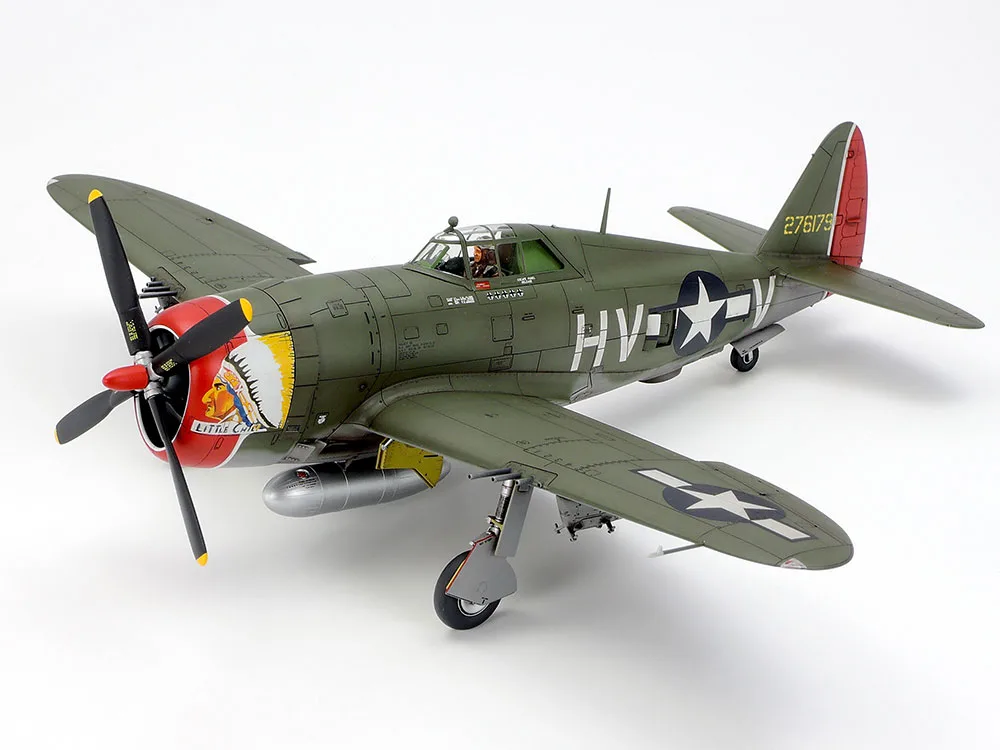
- Kit: 61086 // Scale: 1/48
- Manufacturer: Tamiya
- Key Features: Injection-molded plastic (light gray); 148 parts; decals
Republic’s P-47D Thunderbolt ruled the skies as a seven-ton juggernaut, bristling with .50-caliber machine guns and ground-attack ordnance. This Tamiya offering captures the early “Razorback” variant with engineering that has set the standard for 1/48 scale fighter kits since its 2002 release—and it consistently earns its place among the best model airplane kits available at this scale. The 148-part kit targets intermediate modelers seeking a frustration-free build and first-timers ready to step up from simpler kits, though experienced builders will appreciate how Tamiya’s mold precision eliminates the usual assembly headaches.
The kit shines where it matters most: cockpit detail rivals aftermarket resin sets, wing flaps pose up or down (unique among P-47 kits), and part fit is so precise that filler becomes optional rather than mandatory. At its price, you’re getting comprehensive options including multiple propellers, extensive ordnance choices, and two complete marking schemes for 56th Fighter Group aces.
Pros & Cons
Pros:
- Zero-filler wing roots: The fuselage-to-wing joint closes with a hairline seam that preserves delicate fillet detail
- Aftermarket-quality cockpit: Corrugated flooring, detailed sidewalls, and comprehensive controls match typical resin upgrade sets
- Unique poseable flaps: Drop those Fowler flaps to reveal well-detailed flap wells—a first for 1/48 P-47 kits
- Assembly confidence: Near-perfect fit across fuselage, wings, and tail surfaces makes this genuinely beginner-friendly
- Configuration flexibility: Two propeller types, five ordnance options, and open/closed cowl flaps expand display possibilities
Cons:
- Ejector-pin marks: Shallow marks on landing gear struts and doors require filling
- Thick decals: Carrier film resists standard setting solutions; requires hot water and strong solvents
- Part E8 fit issue: Instrument panel shroud sits too high, preventing windscreen from seating flush without filing
Why You’ll Simply Love this Kit
The satisfaction hits early when test-fitting the fuselage halves. They align perfectly without the usual wrestling match, clicking together with precision that justifies Tamiya’s reputation. This isn’t marketing hyperbole—we’re talking about wing roots requiring zero filler and horizontal stabilizers dropping into their fuselage slots at exactly the right dihedral angle.
That 26-hour build time breaks down favorably: roughly a third went to masking, decaling, and detail painting, meaning the actual assembly consumed maybe 17 hours. Compare that to kits where you’ll burn half your time filling seams and re-scribing panel lines destroyed by sanding. Here, the engineering quality transforms construction from problem-solving into pure enjoyment.
The cockpit deserves special mention. While the seat harness comes as a decal rather than photo-etch, everything else—from the corrugated anti-skid flooring to the sidewall throttle quadrant—provides enough detail that the nearly distortion-free canopy becomes a feature rather than a liability. You’ll actually want to display this with the separate sliding section posed open over the razorback spine.
Configuration options let you personalize the build without aftermarket hunting. Load it for ground attack with 500-pound bombs and bazooka launchers, or keep it clean as an escort fighter. Swap between 12-foot and 13-foot paddle-blade props depending on your reference photos. Drop those flaps to break up the wing lines and showcase the detailed wells. Each choice feels deliberate rather than gimmicky.
Construction Experience Analysis
Assembly begins in what P-47 pilots called the “Front Office”—a spacious cockpit that Tamiya renders with impressive fidelity. The corrugated flooring takes dry-brushing beautifully, and the sidewall details, including trim wheels and oxygen hoses, stand in high relief. The instrument panel offers a choice between kit plastic with decal or simply painting the molded detail, though modern builders might opt for 3D-printed decal overlays from aftermarket sources for maximum realism.
One caution: Part E8, the instrument panel shroud, requires attention. Installed per instructions, it sits too high and prevents the windscreen from seating flush. Test-fit repeatedly and file the bottom edge before committing glue. This preventative measure beats dangerous sanding near delicate clear parts later.
The Pratt & Whitney R-2800 Double Wasp comes as a proper model-within-a-model. Separate cylinder banks and a reduction gear housing capture the engine’s bulk, with two different magneto types letting you match specific production blocks. The missing ignition harness stands out given the large cowling opening, but advanced builders can remedy this with lead wire. The unified ring of open cowl flaps installs seamlessly—a thoughtful touch that avoids fiddly individual flap attachment.
Wing assembly showcases Tamiya’s engineering brilliance. Two heavy spars pass through the fuselage and lock the wings at the correct dihedral angle. The tolerances are so tight that parts often click into place, leaving seams that mimic real panel lines. The ailerons molded into the upper wing halves create razor-sharp trailing edges, though a mysterious separate insert panel in the left wing’s lower surface may puzzle you, but soon you’ll realize it’s modular tooling for later Bubbletop variants.
The poseable flaps represent the kit’s crown jewel. Previous P-47 offerings molded flaps closed, requiring surgery to drop them. Tamiya provides the parts to show those massive Fowler flaps extended, revealing structural detail typically hidden. This single feature justifies the kit for many builders.
Landing gear and wheel wells deliver excellent detail, marred only by shallow ejector-pin marks on the struts and doors. These marks aren’t deal-breakers but do require filling with Mr. Surfacer 500 and careful sanding. The anti-sway braces on underwing pylons demonstrate attention to structural accuracy often glossed over by other manufacturers.
Configuration Options and Value Analysis
The ordnance spread impresses: three 108-gallon paper tanks, one 150-gallon flat belly tank, two 500-pound bombs, and a pair of three-tube bazooka launchers. Testing the ground-attack configuration validated excellent fit across all attachment points. Note that the paper tanks’ smooth plastic halves lack the visible flange seam of the real pressed-paper construction—purists will want to add this detail.
Both Curtiss-Electric propeller types (12-foot and 13-foot paddle blade) ship in the box, along with an unused Hamilton Standard prop hinting at future releases. Other unused parts—spoked wheel hubs, a direction-finder loop antenna, and two gun sight types—sit in the spares box awaiting variant kits or creative modifications.
At its price, you’re getting 148 quality parts, aftermarket-level cockpit detail, extensive configuration options, and two complete marking schemes for Walker Mahurin’s “Spirit of Atlantic City N.J.” and Frank Klibbe’s “Little Chief.” The engineering precision that eliminates filler work alone justifies the premium over bargain alternatives that’ll frustrate you into buying putty by the tube.
Who Should Buy It
This kit serves intermediate modelers seeking a confidence-building experience with minimal frustration. If you’re stepping up to 1/48 scale for the first time or returning to the hobby after years away, Tamiya’s engineering removes assembly anxiety from the equation.
Experienced modelers who value their time will appreciate how perfect fit lets them focus on finishing techniques rather than basic construction. P-47 enthusiasts building a 56th Fighter Group lineup benefit from consistency—subsequent builds won’t require relearning quirky assembly sequences.
However, rivet counters demanding ultimate accuracy over buildability might prefer hyper-detailed modern alternatives. Photo-etch devotees who must replace every possible part with aftermarket upgrades won’t fully appreciate Tamiya’s included quality. And absolute beginners might find the 148-part count intimidating despite the excellent fit—consider a simpler subject first.

Key Takeaways
- Engineering precision delivers on the promise: Zero-filler assembly across fuselage, wings, and tail surfaces validates Tamiya’s reputation through hands-on testing.
- Aftermarket-quality cockpit included: Comprehensive interior detail eliminates typical upgrade needs.
- 26-hour build reflects efficiency: Perfect fit means more time enjoying construction, less time fighting gaps and misalignment.
- Minor compromises are acceptable: Ejector-pin marks, one fit adjustment, and thick decals constitute reasonable trade-offs against overall quality.
- Excellent value for intermediate builders: The sweet spot between beginner-friendly assembly and display-worthy results.