


Breathtaking scale hardware, genuine STOL muscle, and a brutally unforgiving stall — the FMS 1300mm PA-18 Super Cub is the most rewarding and most demanding bush plane in its class. Here’s the unfiltered truth.
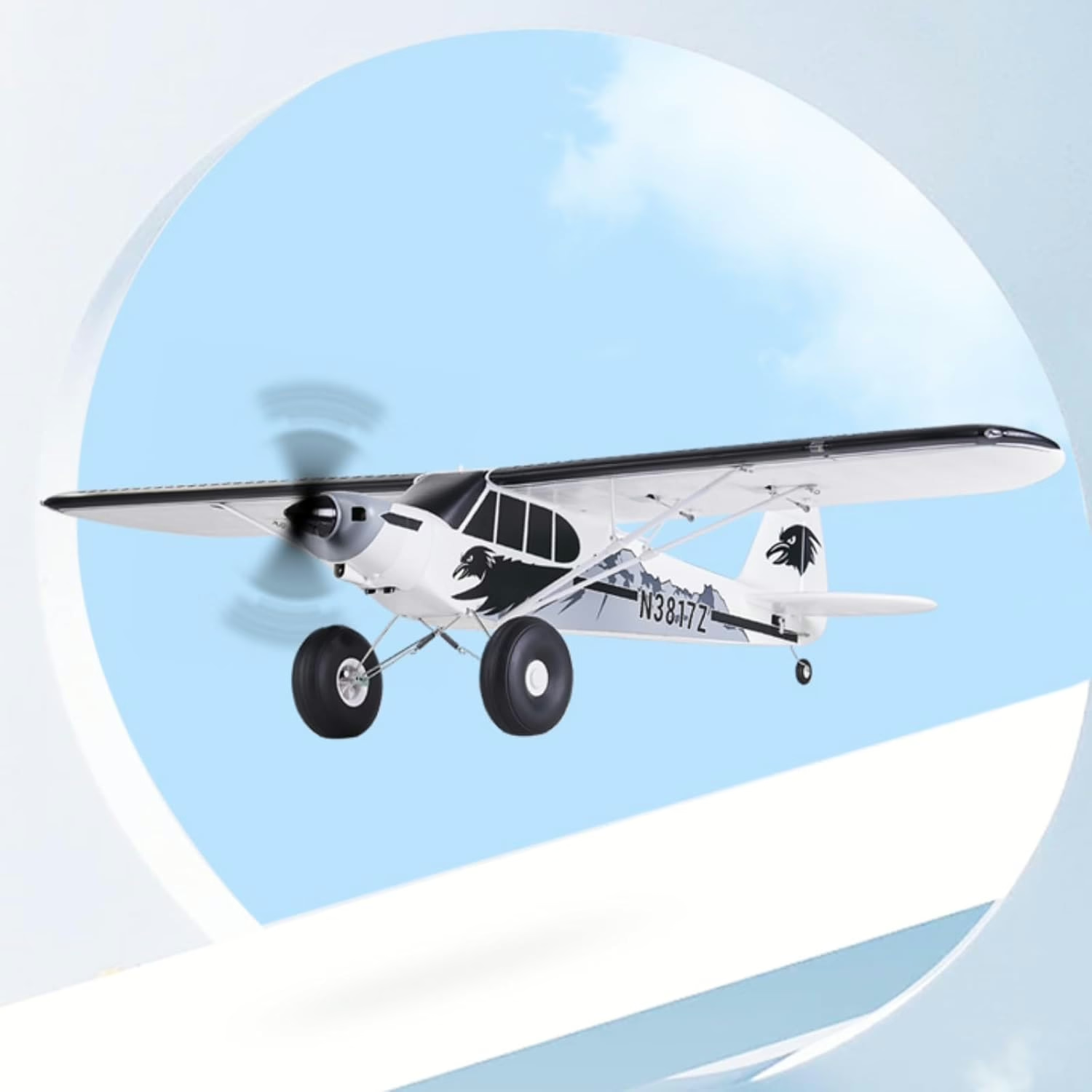
Walk the flight line at any grass strip in America, and you’ll spot at least one high-wing taildragger with oversized bush tires and a bush-pilot mystique. The market for 1.3-meter STOL trainers has never been more crowded — or more aggressively marketed. When every foam plane bolted to an electronic flight controller gets packaged as the “ultimate beginner trainer,” the burden of proof falls on a rigorous, real-world utility test rather than a manufacturer’s specification sheet.
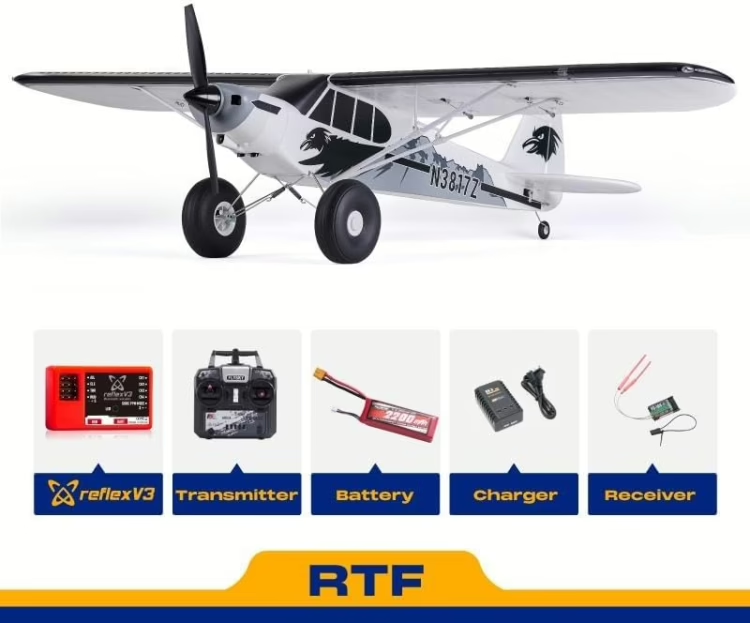
Our evaluations of the best RC planes consistently reveal a stubborn gap between marketing copy and flight-line reality. The FMS 1300mm PA-18 Super Cub arrives bearing an impressive set of credentials: Short Take-Off and Landing (STOL) capability, CNC-machined articulating metal landing gear, oversized pneumatic rubber tires, and the proprietary Reflex V3 gyroscopic stabilization system. FMS markets this scaled-down version of their legendary 1700mm platform as a highly stabilized, all-terrain bush plane recommended for beginners.
Brief Overview
The FMS 1300mm PA-18 Super Cub is engineered to replicate the legendary American-designed utility aircraft celebrated for its rugged versatility in harsh operating environments. Its purpose as an RC model is equally utilitarian: to deliver an authentic bush-flying experience, allowing operations off unimproved dirt strips, thick grass, and gravel runways that would instantly destroy the fragile wire landing gear found on traditional trainers.
The airframe spans 1,300mm (51.2 in.) with an overall length of 986mm (38.8 in.) and carries a substantial flying weight of approximately 1,450g. Power comes from a 3536-850KV brushless outrunner motor paired with a 40A Electronic Speed Controller (ESC), drawing current from a recommended 3-cell (3S) 11.1V 2,200mAh LiPo battery through an XT60 connector. The aircraft operates on a 5-channel system governing throttle, ailerons, elevator, rudder, and functional slotted flaps.
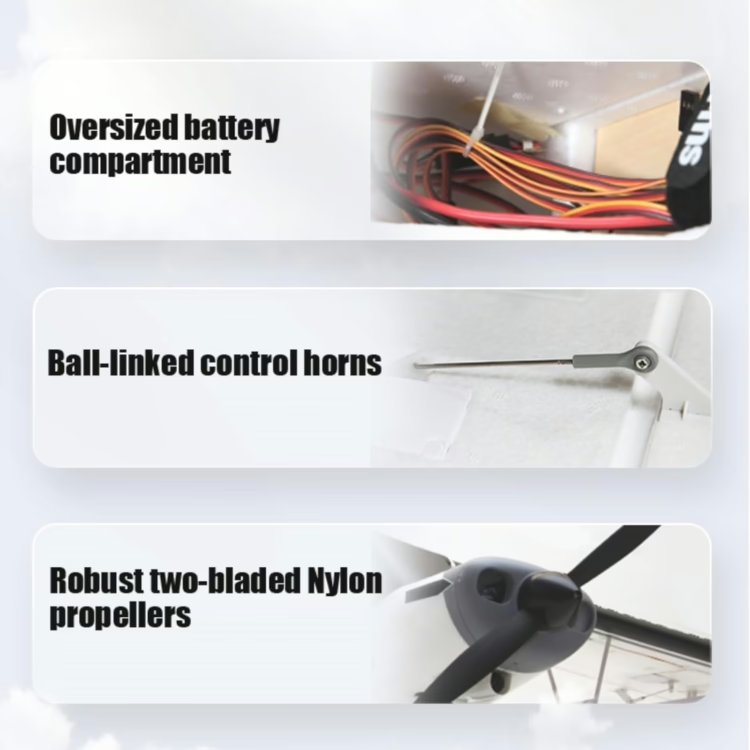
Four engineering decisions define this platform above all others. First, the CNC-machined metal articulating landing gear paired with oversized pneumatic rubber tires absorbs the kinetic energy of a rough touchdown mechanically, keeping it out of the foam fuselage. Second, preinstalled ball-linked pushrods eliminate the mechanical slop endemic to nylon clevises, delivering surgical control surface precision. Third, the functional slotted flaps dramatically alter wing camber, generating the massive lift required to break ground in under three meters. Fourth, the integrated Reflex V3 flight controller uses Bluetooth connectivity to let pilots tune PID gains directly from a smartphone application.
FMS officially targets this aircraft toward the beginner market. Whether that label accurately reflects the aircraft’s temperament is the central question this review answers.
Check Current Price & Availability on Amazon
Unboxing, Setup, and Buildability
FMS molds the PA-18’s airframe from Expanded Polyolefin (EPO) foam, a dense, kinetic-energy-absorbing material that resists localized compression damage. Official marketing promises an assembly time of ten minutes using a screw-together architecture that requires no CA adhesive or epoxy resin during the primary build phase.
The hands-on experience is considerably more frustrating than that. The aircraft uses a two-section fuselage to reduce packaging volume. Joining the rear empennage to the primary forward fuselage is a genuinely difficult procedure — the internal plastic interlocking tabs are molded with extremely tight tolerances, routinely requiring two people to forcefully compress the sections while simultaneously driving the securing screws.
That difficulty is compounded by the hardware itself. FMS supplies exceedingly soft Phillips-head screws for the primary structural joints. The torque required to overcome the tight fuselage joint rapidly strips the screw heads, locking them in a partially driven state. Experienced builders consistently recommend discarding the factory hardware immediately and substituting high-tensile hex-head machine screws before the first build attempt.
The much-touted CNC metal landing gear introduces its own frustration. While the articulating struts themselves are beautifully machined, the plastic anchor brackets embedded in the EPO fuselage are frequently misaligned straight from the factory — often sitting up to a quarter-inch proud of the fuselage surface. This gap is a structural liability: during a hard touchdown, shear forces concentrate entirely on the plastic anchor plate rather than dispersing across the foam hull, leading to catastrophic tear-outs. The horizontal stabilizer presents a similar issue, with a noticeable physical gap where it meets the vertical fin. Pilots must inject foam adhesive such as Foam-Tac into this void to prevent aerodynamic flutter at high airspeed.
Electronics setup requires its own careful attention. The pneumatic tires arrive completely flat; rather than inflating them, experienced bush pilots recommend removing the air plugs entirely to equalize with ambient pressure, leaving the tires soft and compliant for rough-field operation. Finally, the Reflex V3 requires synchronization through the mobile app. Early software iterations exhibit a bug where default gyroscopic correction axes are reversed — pilots must meticulously verify that a nose-down pitch input generates an automatic up-elevator deflection. Failing to correct reversed axes through the Bluetooth app will drive the aircraft into the ground at takeoff.
Real-World Flight Performance & Durability
Once airborne, the FMS 1300mm PA-18 exhibits the split personality of a genuinely capable aircraft that demands absolute respect for its mass and energy.
Takeoff validates the STOL marketing entirely. The 3536-850KV motor swings a massive 11×7 two-blade nylon propeller, generating a thrust-to-weight ratio exceeding 1:1. With 50% flaps deployed, the aircraft breaks ground in under three meters. That same large-diameter propeller, however, introduces severe left-turning tendency during the takeoff roll: as the tailwheel lifts, P-factor and the spiraling slipstream pull the nose violently left. The pilot must apply immediate, coordinated right rudder to maintain tracking.
Cruise flight showcases the airframe’s strengths. The heavy 1,450g mass gives the aircraft a locked-in, authoritative presence in turbulence that lighter competitors simply cannot match. The ball-linked pushrods translate transmitter inputs to the control surfaces with zero mechanical slop, producing crisp tracking. While the flat-bottom airfoil inherently limits roll rate, the thrust architecture supports large loops, stall turns, and sustained inverted flight. Pilots who program flaperons — linking the flap servos to the aileron inputs via their transmitter — report a dramatic improvement in roll response and agility.
Landing is where the PA-18 earns its intermediate-pilot rating. Deploying full flaps massively alters wing camber, reducing stall speed but simultaneously creating a wall of induced drag. To prevent deceleration into a tip stall, the pilot must execute a steep, controlled approach carrying approximately 1/3 throttle all the way to the runway threshold. Cutting power completely at ten feet causes the heavy airframe to drop out of the sky immediately. Flown correctly down to the surface, the CNC metal struts and soft pneumatic tires absorb the impact cleanly, with no bouncing. Forced into an unpowered pancake landing, the misaligned plastic anchor brackets tear straight out of the foam.
Battery performance warrants an upgrade from the factory recommendation. Running maximum continuous amperage through the manufacturer’s suggested 3S 2,200mAh 25C LiPo causes severe internal resistance heating and voltage sag, which can trigger the ESC’s low-voltage cutoff prematurely. Upgrading to a high-discharge 80C pack eliminates this bottleneck. Real-world flight times range from five minutes during aggressive aerobatics to an impressive 10-12 minutes of mixed-throttle cruising.
The tip-stall tendency is the most critical safety factor for prospective buyers to understand. With a wing area of 30 dm², a flying weight of approximately 1,450g yields a wing loading of 48.3 g/dm² (0.110 oz/in²) — exceptionally high for a 1.3-meter foam model. The PA-18 exhibits inadequate washout relative to this loading. When the aircraft is flown too slowly, particularly in a banked turn where the inner wing travels slower than the outer, airflow separates asymmetrically: one wing stalls completely while the opposite wing continues generating lift, causing a violent snap-roll into an uncontrollable spiraling dive. This happens instantaneously at low altitude.
The Value-to-Performance Ratio & Competitor Comparison
The 1.3-meter STOL class is dominated by three primary models, and the distinctions between them are sharper than the spec sheets suggest.
| Feature | FMS 1300mm PA-18 | HobbyZone Carbon Cub S 2 | Arrows RC Bigfoot 1300mm |
| Flying Weight | ~1,450g | ~1,080g | ~1,310g |
| Landing Gear | CNC Articulating Metal | Rigid Wire | Fixed CNC landing gear |
| Tires | Oversized Pneumatic Rubber | Oversized tundra tires | Oversized tundra tires |
| Flight Controller | Reflex V3 (Bluetooth) | Spektrum SAFE / AS3X | Vector (or none) |
| Telemetry | None | Smart ESC (Voltage/RPM) | None |
FMS PA-18 vs. HobbyZone Carbon Cub S 2: The Carbon Cub’s Spektrum SAFE system is a meaningfully superior electronics package for absolute beginners. It rarely suffers the reversed-axis bugs that plague the Reflex V3, and its Panic Recovery feature is genuinely dependable. More importantly, the Carbon Cub weighs only approximately 1,080g — nearly 400g less than the PA-18 — dramatically lowering wing loading and allowing it to fly far more slowly without tip-stalling, granting novice pilots crucial reaction time. The tradeoff is physical build quality: the RC community widely reports frustrating fitment issues, flimsy rudder mounts lacking proper bushings, and landing gear sleeves that slide out of place. The PA-18, by comparison, presents as a premium scale product.
FMS PA-18 vs. Arrows RC Bigfoot: The Bigfoot, at approximately 1,310g, is structurally closer to the PA-18 but enjoys a broadly superior flight envelope for transitioning pilots. Users consistently praise the Bigfoot for being nearly immune to the vicious tip-stall tendencies that haunt the FMS platform. Its drawback is the absence of true scale aesthetics and articulating suspension; the fixed CNC gear does not deliver the same shock-absorbing scale feel as the FMS system.
The verdict on value: The FMS PA-18 delivers the highest value-to-performance ratio for the pilot who prioritizes scale realism, mechanical hardware quality, and wind-penetrating mass over foolproof beginner-friendly electronics. For the absolute day-one novice, the Carbon Cub’s SAFE technology and lower wing loading provide a far more forgiving first aircraft.
Pros & Cons
Pros
- Exceptional STOL Capability: Functional slotted flaps and the high-thrust 3536 motor deliver ground breaks in under three meters and steep, controlled landing approaches.
- Premium Mechanical Hardware: CNC articulating metal landing gear and pneumatic rubber tires absorb kinetic energy on rough terrain without bouncing — a clear step above competitors that rely on basic wire gear or lack articulating suspension.
- Scale Fidelity: Expertly molded EPO foam, accurate panel lines, integrated navigation LEDs, and internal carbon fiber spars deliver a striking ramp presence that sets this aircraft apart.
- Superior Wind Penetration: The 1,450g airframe, combined with the Reflex V3’s Optimized mode, tracks smoothly through turbulence that grounds lighter competitors.
Cons
- Dangerous Tip-Stall Tendencies: High wing loading and inadequate washout produce violent, asymmetric snap-rolls in slow, banked turns — a genuine hazard for pilots without taildragger experience.
- Flight Controller Liabilities: The Reflex V3 actively fights pilot recovery inputs during a stall-spin, and the companion app is prone to reversed-axis orientation bugs on initial setup.
- Assembly Frustrations: Soft Phillips-head hardware and a misaligned two-piece rear fuselage demolish the advertised 10-minute build claim.
- Landing Gear Anchor Flaws: Plastic mounting brackets that often sit proud of the fuselage create a structural weak point that fails catastrophically under hard pancake landings.
Where the FMS 1300MM PA-18 Really Shines
The FMS 1300mm PA-18 is not just a foam trainer — it captures the emotive essence of authentic bush flying in a way few models at any price point manage. This aircraft shines brightest at dusk on an unimproved dirt patch or rough, unmanicured grass field that would rip the gear off lesser models. When the integrated LED navigation lights cut through the fading light and the pilot advances the throttle, the tail lifts almost instantly. Within a few feet, the massive pressure differential generated by the deployed flaps hauls the heavy airframe skyward, mimicking the legendary utility of full-scale Alaskan bush planes with genuine accuracy.
What makes this model truly compelling is how completely it immerses the intermediate pilot in the physical mechanics of flight. Touch-and-go circuits become a deeply satisfying, rhythmic exercise. Setting up on a long final, dialing in full flaps, and precisely modulating the throttle to control descent rate brings a quality of satisfaction that few foam airplanes deliver. When those oversized pneumatic tires contact the earth, the CNC metal suspension visibly compresses, absorbing the kinetic energy and planting the aircraft on the turf without a single bounce. The tactile, mechanical interaction — heavy foam, articulating metal suspension, raw thrust — forces the pilot to actively fly the wing, managing energy and momentum, ultimately forging a far more competent and confident RC aviator.
For the pilot who has the skill to manage its demands, the PA-18 rewards every session with an experience the hobby rarely delivers at this price point.
See Current Price & Buy the FMS 1300mm PA-18 on Amazon
Who Should Buy It
The FMS 1300mm PA-18 is tailored for the intermediate novice or the seasoned sport pilot seeking a relaxing, scale utility aircraft with genuine presence in the air. If you have already mastered a tricycle-gear trainer — such as the HobbyZone AeroScout or the VOLANTEXRC TrainStar Ascent — and understand the fundamentals of rudder coordination and airspeed energy management, this is the natural next step as a first taildragger. It is an ideal choice for pilots who operate out of rough local parks, baseball diamonds, or bumpy grass fields where fragile wire gear bends or collapses on contact.
Who should avoid it: Absolute day-one beginners with zero flight time must stay away, regardless of the “Beginner” label on the box. The 1,450g flying weight and severe tip-stall tendencies make this aircraft far too unforgiving for a pilot who has not yet developed the muscle memory for stall recognition and recovery. First-time flyers should invest in a lighter, high-wing tricycle trainer equipped with Spektrum SAFE technology to survive the inevitable early mistakes and build the foundational skills this aircraft demands.

Key Takeaways
- Unmatched Mechanical Hardware: CNC articulating landing gear and pneumatic rubber tires provide superior rough-field ground handling compared to any direct competitor.
- Genuine STOL Performance: Functional flaps and high thrust deliver sub-3-meter takeoffs and steep, controlled approaches.
- Airspeed Management Is Non-Negotiable: High wing loading (48.3 g/dm²) creates a dangerous tip-stall tendency; pilots must carry power through turns and landing flares.
- Gyro Has Critical Limits: The Reflex V3 stabilizes effectively in cruise but can actively fight recovery inputs during a stall — toggling to Manual mode is essential.
- Intermediate-Only: Best suited as a second aircraft for pilots transitioning to taildraggers, not a day-one trainer.