

Two iconic WWII subjects. One box. Tamiya’s classic P-51D combo set is the best entry point into 1/48 aircraft modeling — but is a 30-year-old tooling still competitive in 2026?
- Kit: 25205 // Scale: 1/48
- Manufacturer: Tamiya
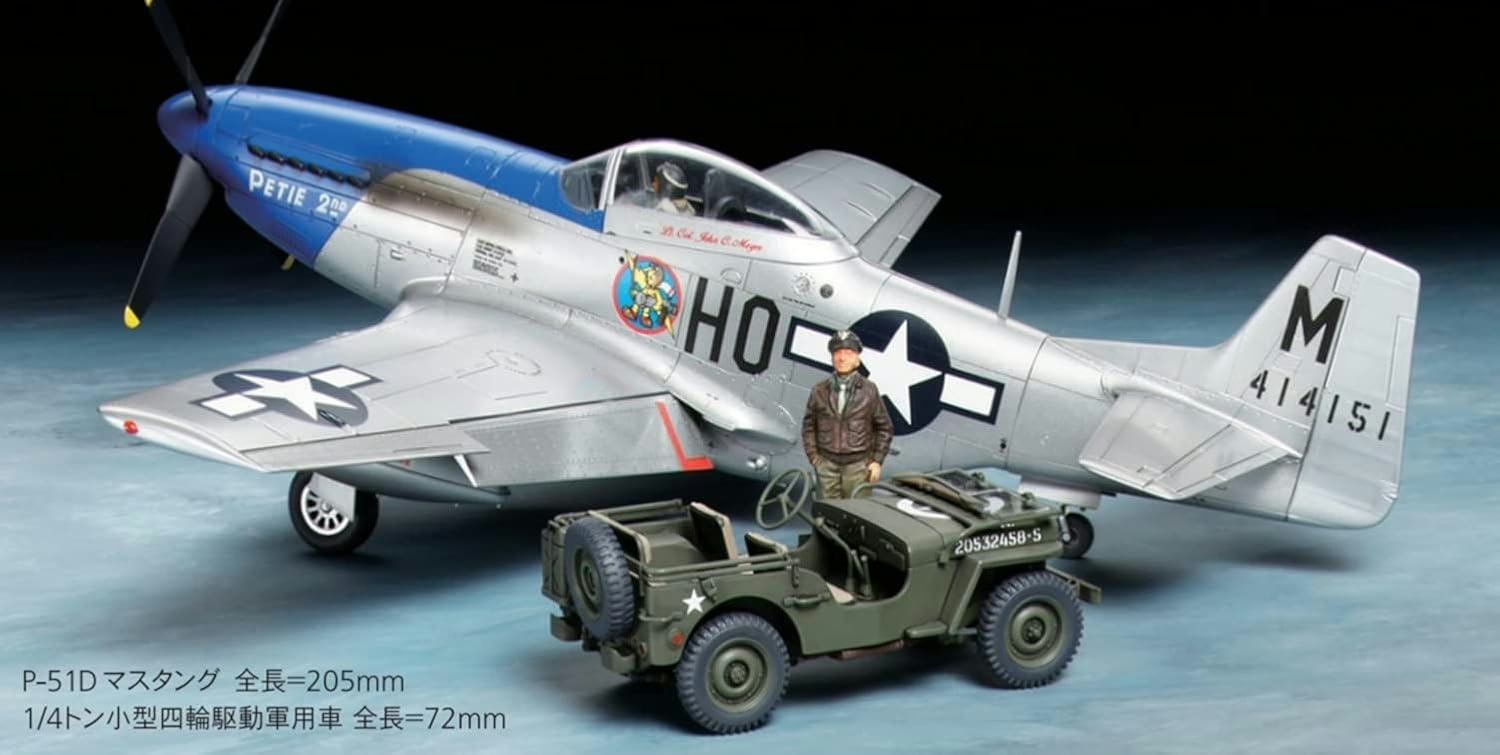
Tamiya’s 25205 is a 2023 combo set bundling two kits into a single, cost-effective package: the 1/48 North American P-51D Mustang (Item 61040) and the 1/48 1/4-ton 4×4 Light Vehicle (Item 89755), with bonus parts drawn from Item 61089 — two pilot figures (one standing, one seated) and two 108-gallon drop tanks not included in the standard P-51D boxing. The P-51D component is based on tooling originally released in 1995 and has been in near-continuous production ever since. The assembled Mustang measures 205mm (8.1 inches) in length with a 236mm (9.3-inch) wingspan; the vehicle builds to approximately 70mm in length.
The ideal buyer is a beginning to intermediate U.S. modeler searching for one of the best model airplane kits in the 1/48 scale — a manageable, brand-name WWII aircraft with ready-made diorama potential. The Tamiya name carries weight here: its gray polystyrene is famously easy to sand, score, and cement, and the engineering precision means most joints go together without gap-filling or putty work.
The kit’s most important features for that audience:
- Dual-subject value. The combo effectively delivers the vehicle, two extra figures, and 108-gallon drop tanks for a few dollars above the standalone P-51D’s MSRP. Two complete, display-ready models from a single purchase.
- “Shake-and-bake” fit. The P-51D has earned that nickname in modeling circles for good reason — fuselage halves and wing roots mate with benchmark precision. Beginners can close the airframe without filler, preserving surface detail and enabling Natural Metal Finishes (NMF) without ghost seams telegraphing through paint.
- Four ace-pilot marking options. All four schemes depict famous 8th Air Force P-51Ds in European Theater liveries, including John C. Meyer’s “Petie 3rd” (487th FS/352nd FG) and Leonard K. Carson’s “Nooky Booky IV” (362nd FS/357th FG). The personal connection to real USAAF aces adds historical engagement that generic marking sheets can’t match.
- Builder-adjustable details. Flaps can be positioned up or down, the rear radiator shutter opens or closes, and two canopy styles — standard Inglewood and the bulged “Dallas” bubble hood — are included. Drop tanks are optional. These choices let a beginner personalize the build without advanced techniques.
Pros & Cons
Pros
- Fit quality is genuinely unmatched. Across three decades of reviews, Tamiya’s P-51D earns a consistent 10/10 for fit precision. Fuselage and wing joints require zero filler in virtually all builds — a real confidence-builder for anyone who has wrestled with short-run kits.
- Outstanding value for the price. The combo provides two complete models plus bonus figures and drop tanks — all for less than buying the standalone P-51D at full MSRP.
- Genuinely beginner-accessible. The instruction manual (a new combined guide for both kits) references Tamiya paint codes, uses unambiguous step sequences, and features locating pins precise enough to hold components during dry-fitting without tape or clamps. Approximately 120+ total parts keeps the build manageable.
- Surface detail remains competitive. Recessed panel lines are crisp, flash-free on recent production runs, and accept pin washes cleanly without lifting or flooding neighboring panels.
- Separate wheel hubs. Tires and hubs are molded as individual parts, eliminating the need for time-consuming circular masking during painting — a meaningful shortcut for less experienced builders.
Cons
- The tooling is 30 years old, and it shows in places. Modern kits from Eduard (released 2019) and Meng offer greater rivet density, more detailed engine plumbing, and finer surface texturing. Builders who’ve worked recent-release kits will notice the difference inside the cockpit and wheel wells.
- Wheel well geometry is inaccurate. The rear walls of the main landing gear bays follow the gear door cutouts rather than the straight wing spar visible on actual Mustangs. This is a long-documented shortcoming. A dark wash or matte black paint on the rear walls minimizes the issue without surgery.
- Thick decal carrier film. Tamiya’s house decals from this era are robust but resist conforming to surface detail. Without a strong setting solution — Solvaset or Tamiya Mark Fit Strong — silvering is a real risk. Many experienced builders replace the kit decals outright with aftermarket sheets for a painted-on appearance.
Why You’ll Simply Love This Kit
Open the box and the first thing you notice is how organized everything looks. Parts are cleanly separated on well-labeled gray styrene trees, flash-free, with no mystery about what goes where. That clarity is not accidental — it’s the result of Tamiya building this kit to be assembled, not merely admired on a shelf.
The emotional appeal of this particular combo is real. The P-51D Mustang is arguably the most recognized fighter silhouette in aviation history — the “Cadillac of the Skies,” the aircraft that claimed nearly 4,950 enemy aircraft shot down in the European Theater and gave bomber crews a fighting chance over Germany. Pairing it with the 1/4-ton 4×4 “Jeep” — General George C. Marshall’s “America’s greatest contribution to modern warfare” — creates an instant wartime airfield narrative. A parked Mustang, a pilot climbing out, the faithful Jeep standing nearby: that scene practically builds itself in your imagination before you’ve opened the first instruction page. The inclusion of three figures (one seated, one standing, one sitting) means all the human-scale elements for that scene are already in the box.
For a beginning modeler, the anxiety of “will this actually go together?” is answered almost immediately. Positive locating pins hold assemblies during dry-fitting. The low part count — approximately 120+ pieces across both builds — means a first-time builder can reasonably complete both subjects in a single weekend rather than facing a months-long project. The vehicle component deserves specific credit here: it’s a simpler, faster build that delivers a finished, display-ready object mid-project, keeping momentum alive before the more prominent aircraft is tackled.
What Tamiya sells with this kit isn’t just plastic. It’s a first success story — the confidence that comes from finishing a recognizable, historically resonant model without frustration.
Who Should Buy It
- First-time 1/48 builders. If you’re moving from snap-together kits to glue-assembly aircraft, this is the standard recommendation — and has been for decades. The Tamiya P-51D is forgiving enough to absorb minor cement misapplication and imprecise sanding, while still producing a result good enough to display with pride.
- WWII history enthusiasts new to the hobby. The four marking options depict actual USAAF aces from the 8th Air Force, so builders aren’t just assembling plastic — they’re recreating specific aircraft flown by specific men in specific missions. That historical grounding matters, and Tamiya’s instructions provide enough context to support it.
- Diorama starters. The dual-subject combination, plus three included figures, provides the nucleus of a wartime airfield scene without requiring additional purchases. It’s a genuinely complete starting point for anyone interested in scene composition.
- Weekend builders with limited hobby time. The Tamiya P-51D can go from box-opening to painted aircraft in well under 10 hours thanks to its low part count and zero-filler engineering. For modelers with 4–8 hours of weekly hobby time, that completion window is realistic.
- Natural Metal Finish apprentices. The clean, well-fitting airframe makes an excellent “practice mule” for Alclad, AK Xtreme Metal, or Bare Metal Foil techniques — unforgiving metallic finishes demand smooth, seam-free surfaces, and this kit delivers them at a street price that doesn’t sting if the experiment goes sideways.
Who should look elsewhere: Advanced builders who demand rivet-level surface accuracy, full engine plumbing, or slide-molded technology should consider Eduard’s P-51D ProfiPACK (No. 82102) — the most detailed 1/48 Mustang currently available, though it requires significantly more skill and time. Meng’s LS-010 offers a snap-fit option and modern engineering for builders who want current tooling without committing to Eduard’s complexity.

Key Takeaways
- Tamiya’s 25205 bundles a 1/48 P-51D Mustang and a 1/4-ton 4×4 vehicle with bonus figures and drop tanks into a single box targeting beginning-to-intermediate U.S. builders.
- The P-51D’s legendary fit quality — virtually no filler required, even for NMF builds — remains its defining strength and still outperforms most 1/48 competitors in that specific category.
- The 1995 tooling shows its age in cockpit depth and wheel well accuracy; advanced builders will notice the gap compared to Eduard or Meng’s more recent releases.
- Beginners can realistically complete both subjects in a single weekend; the vehicle provides a mid-build confidence boost before tackling the aircraft.
- The value-to-performance ratio is difficult to beat at its price point — this is the right first 1/48 aircraft kit for most new U.S. modelers.