


Tamiya’s big -1D packs a full R-2800, folding wings, and a bomb-and-rocket arsenal. Builders praise the engineering, but 123 steps, heavy painting, and a premium price make it a real leap for newer modelers.
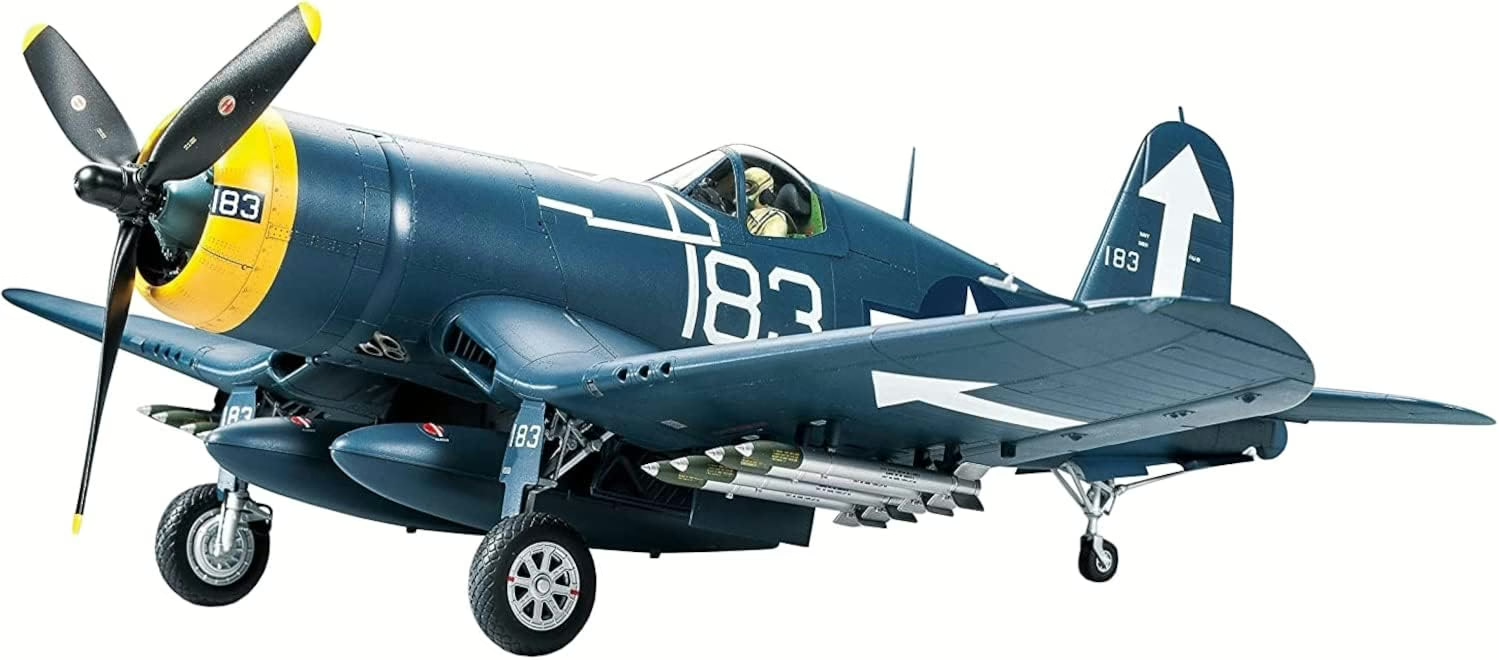
Kit: 60327 // Scale: 1/32 // Manufacturer: Tamiya
Comments: Injection-molded plastic (gray, clear, black stand); 20 sprues; 2 photo-etched metal (PE) sheets; 2 vinyl tires; canopy-mask sheet; 2 decal sheets; 2 crew figures; display stand. Finished size: about 12.5 inches long and 15.4 inches across with wings extended.
Quick Verdict
The Tamiya 1/32 Vought F4U-1D Corsair is a benchmark-grade kit that rewards patience. For a true beginner, though, it is a big step. It suits you best if you have finished a few simpler kits and are ready to move up to 1/32. Among the kits compared below, it has the most favorable build record. Multiple completed builds praise its engineering and overall fit, and builders report a convincing cockpit and engine straight from the box, with no resin replacements.
The catch belongs right next to the recommendation. Expect premium pricing and a 51-page, 123-step manual. You’ll work through a long run of cockpit, engine, and interior subassemblies, and each one needs paint. Partway through, you must commit to folded or extended wings, and you can’t undo that choice later. Budget for a broad paint list, consumables, and optional extras such as replacement markings or wheels.
Here’s what builders actually run into, and where the money goes.
Brief Overview
What It Is
Kit No. 60327 arrived in 2017. It is the third member of Tamiya’s 1/32 Corsair tooling family, after the F4U-1 “Birdcage” of 2013 and the F4U-1A of 2014. In his in-box review for The Modelling News, Adam Norenberg counted six new sprues for the -1D’s weapons and options, alongside new decals.
Tamiya lists the variant’s defining features as:
- a frameless semi-bubble canopy
- thicker propeller roots
- a raised seat
- expanded air-to-ground stores
The National Naval Aviation Museum credits Vought engineer Rex Beisel with designing the Corsair around the 2,000-hp Pratt & Whitney R-2800 Double Wasp. The engine swung a 13-foot propeller, and that propeller is what drove the famous inverted gull wing.
Who It’s For
This kit is for the ambitious beginner-to-intermediate builder who values visible mechanical detail and configuration choices more than speed or compact storage. It is also a strong pick for anyone who puts fit ahead of price.
If you’re comparing it with the wider field of best model airplane kits for newer builders, treat this one as a step-up project rather than a starter.
Standout Features
- Folded or extended wings. This solves the display-space problem. Folded wings shrink the shelf footprint and show off the fold structure. Extended wings keep the classic silhouette but need roughly 16 inches of clear width.
- Parked or in-flight display. You can build the landing gear down or retracted and the flaps and elevators up or down. The kit also includes a basic black stand.
- A well-stocked box. It includes PE seat belts and details, mask material, one seated and one standing crew figure, and a 12-page history booklet. Together these cut the need for extras.
- Branching instructions. Separate folded-wing and extended-wing sequences lower the risk of mixing configurations.
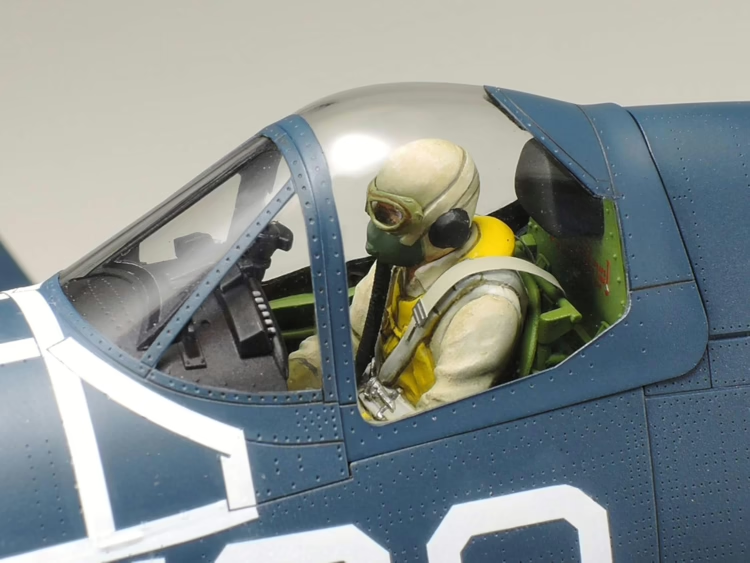
Planning your Corsair? Check current pricing and availability for Tamiya kit No. 60327, and add paint and consumables to your total before you commit.
Pros & Cons
Pros
- Documented engineering and fit. Completed builds at Scale Modelling Now, Large Scale Planes, and Model Airplane Maker all praise the fit of the major assemblies.
- Configuration depth. You can choose folded or extended wings and set the flaps, elevators, and landing gear.
- A full package. The box holds a detailed cockpit, an R-2800 under a removable cowling, two 1,000-pound bombs, two drop tanks, eight 5-inch HVARs (High Velocity Aircraft Rockets), PE details, two figures, and a stand.
- Clear, branching instructions.
- Genuine -1D parts. The canopy, propeller, pylons, and stores are new parts, not just a decal swap.
Cons
- Premium price and a heavy workload. The manual runs 51 pages and 123 steps, with many painted subassemblies.
- Fiddly cleanup. The vinyl tires have center seams, and one builder found the PE belts stiff. Norenberg’s in-box inspection also found ejector-pin marks on the rocket fins.
- Single-build cautions. One out-of-box builder reported a cowling gap and silvering on the large decals.
- A big footprint and only two marking options.
Expected Experience with the Tamiya 1/32 Vought F4U-1D Corsair
Out of the Box: Engineering and Parts Breakdown
According to Norenberg’s in-box review, the plastic arrives on 20 individually bagged sprues, including one clear sprue and one black stand sprue. It is joined by two small PE sheets, two vinyl tires, two decal sheets, and self-adhesive mask material that you cut out yourself. He saw practically no flash and mostly hidden ejector-pin marks. He also warned that the rivet detail is fine enough for heavy primer to soften it. No verified total part count is on record, so judge the scope by those 20 sprues and the 123-step manual.
Cockpit, Engine, and Interior Structure
The cockpit combines instrument decals behind clear lenses, fine raised side-console detail, and PE belts.
The Model Airplane Maker out-of-box build review reports several useful findings:
- The cockpit parts held together without glue during test assembly.
- The parts breakdown made painting easier.
- The R-2800 fit cleanly without feeling needlessly complicated.
- Very little of the internal fuselage structure stayed visible after the fuselage was closed.
That last point tells you where a beginner can simplify. Put your detailing time where the open canopy and removable cowl will reveal it.
Dave Coward built his third Tamiya 1/32 Corsair for Scale Modelling Now. His build added aftermarket cockpit PE, fabric seat belts, a resin engine, resin wheels, and paint masks, so read it as a detailed build rather than an out-of-box test. He called the cockpit strong from the box and closed the fuselage without trouble. He also notes that the wing recesses lack visible .50-caliber gun bodies.
The Model Airplane Maker builder found the kit’s PE belts stiff, though Norenberg judged the etched metal to bend reasonably well. Shape them with proper bending tools rather than heat.
The Wing Decision
After the engine and fuselage work, the manual splits into dedicated folded-wing and extended-wing paths. The rudder stays neutral unless you modify it.
Coward reported that his wing choice changed the parts and the sequence but did not make the build inherently harder. He also found that the folded-wing support struts helped him set matching fold angles.
The two builders differ on the wing spar:
- Model Airplane Maker found the spar placement at step 45 less positive than the surrounding assemblies.
- Coward found the finished outer-wing fit tight enough that he recommends easing the spar surface.
Neither report establishes a defect. Both are reasons to dry-fit.
Tip: Choose your wings before you open the glue. Measure your display space first. Then mark the wing path you chose in the manual and bag the unused parts. Build the left and right structures in matched pairs.
Known Trouble Spots
- Cowling. The Model Airplane Maker builder found large gaps ahead of and behind the removable cowl panels. He fixed them by shortening the mounting pins on part G5, but he suspected his own assembly might be to blame. No other published build reproduces the problem.
- Tires. Norenberg and Model Airplane Maker both note a center mold seam in the vinyl tread. Vinyl is easy to damage with aggressive cutting, so work slowly and support the tire while you clean it up.
- Rockets. Norenberg found ejector-pin marks on the fins and a fussy multi-part fin-alignment sequence.
- Propeller. Coward cleaned up a seam at the blade roots.
None of these builds reports needing to reshape the airframe.
Painting, Decals, and Finishing
Both schemes are Glossy Sea Blue: an FG-1D from VMF-351 and an F4U-1D from VMF-221. Tamiya lists more than two dozen spray and bottle colors, covering the airframe, interior, stores, and figures.
The Model Airplane Maker builder found the small decals satisfactory. The large insignia and stripes were a different story: they resisted repeated applications of Microscale Micro Sol and silvered despite gloss coats. Coward rated the decals three out of five, but he masked and painted the major markings. His score therefore neither confirms nor rules out that finding.
You have two options:
- Test the kit decals over a smooth gloss coat.
- Budget for masks or aftermarket decals.
Skill Level and Time Investment
Individual joins are approachable. Managing the whole project is the real challenge, because the stages, paint changes, and options pile up. No published build logs its bench hours.
Boyd Waechter of Large Scale Planes finished his model in 38 days. His build included aftermarket wheels, an aftermarket instrument panel, and custom markings, so it is not a beginner timetable. Split the project into stages: cockpit, engine, fuselage, wings, gear and stores, then finishing.
Warning: The Hidden Costs of Going 1/32
- Paints: Tamiya’s long callout list uses Tamiya spray and bottle colors. You can substitute equivalent paints, but the number of colors doesn’t shrink.
- Consumables: cement, masking materials, and abrasives.
- Optional upgrades: replacement markings or aftermarket wheels. Builders choose these out of preference. No build shows the kit can’t be finished from the box.
- Safety: Ventilate when using solvents, follow the paint and adhesive labels, cut away from your hands, and control loose PE edges.
Tip: Dry-fit the whole cowl stack. Test the engine, cowl flaps, front ring, and removable panels together before you glue anything. Remove material only once you’ve found the interference in your own kit.
How It Stacks Up: Value vs. the Alternatives
| Kit | Scale / release | What the record shows | Best for | Commitment |
| Tamiya 60327 F4U-1D | 1/32, 2017 | Favorable fit in several completed builds; -1D canopy, propeller, pylons, rockets; two schemes | Patient builder wanting maximum -1D detail | Premium / high |
| Tamiya 60325 F4U-1A / 60324 F4U-1 | 1/32, 2014 / 2013 | Same core tooling family; the variant is the main difference | Fans of earlier Corsairs | Comparable |
| Trumpeter 02221 F4U-1D | 1/32, older kit | One full build counted 355 parts and 20 instruction pages and recorded corrections | Experienced fixers | High, plus correction work |
| Tamiya 61061 F4U-1D | 1/48 | About 8.1 inches long; foldable wings; three markings | Newer builders, tight shelves | Lower |
The value case rests on fit. James Kelley’s Trumpeter build on iModeler was satisfying, but it demanded several fixes:
- a cockpit-floor correction
- PE hinge work
- ejector-mark cleanup
- support for the folded wings
He built his with the wings folded and warned that showing them extended calls for major rework, because the kit as supplied leaves a huge gap. That is one builder’s experience, not a controlled head-to-head test. Still, it records markedly more correction work than the Tamiya builds covered here. Fewer fixes mean less filler, less frustration, and less risk of a half-finished kit ending up back in its box. Choose between 60327 and the earlier Tamiya boxings by the airframe version you want.
If shelf space, total project commitment, or first-kit confidence matters most, start with the 1/48 Tamiya 61061. It won’t match the 1/32 kit’s engine and cockpit presence, but it is a far smaller undertaking. Decide on scale first, then variant, then how much correction work you’ll accept. Compare current prices last.
Where the Tamiya 1/32 Vought F4U-1D Corsair Really Shines
This kit shines when visible mechanical depth matters. An open cockpit, an exposed R-2800, folded wings, deployed flaps, landing gear, and a full weapons load can all live together in one coherent display.
Two bombs, two drop tanks, and eight rockets let you tailor the aircraft’s mission without buying a separate weapons set. The wing-root pylons take either bombs or tanks. The Model Airplane Maker builder found the rockets straightforward and the bomb and drop-tank detail strong. Folded wings, meanwhile, trade span for vertical drama.
The real reward is engineering you can trust. Once the big subassemblies close up cleanly, you can put your energy into paint and detail instead of fixes. Coward rated the molding, accuracy, enjoyment, and overall kit five out of five. Waechter put it plainly: “The kit’s design, engineering, and fit are just superb.”
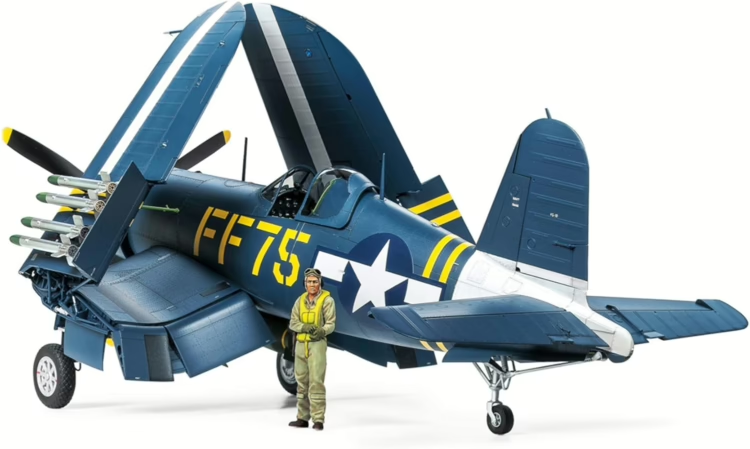
Tamiya 1/32 Vought F4U-1D Corsair (Kit No. 60327)
A large, option-rich -1D with a full engine, folding wings, and a full load of bombs, tanks, and rockets in the box.
See it on Amazon →
Who Should Buy It
Buy It If You…
- Have finished a few simpler kits and feel comfortable with PE, clear parts, and extensive painting.
- Love the Corsair or U.S. Navy and Marine Corps aviation.
- Value fit over price and want less correction work than the documented Trumpeter 1/32 build required.
- Want a centerpiece, especially one with folded wings.
Skip It (or Start Smaller) If You…
- Are building your first model. Tamiya 61061 in 1/48 is the gentler path.
- Lack about 16 inches of shelf width or a paint budget. Again, look at 61061.
- Want an earlier Corsair or more marking choices. The 1/48 kit offers three schemes, and 60324 and 60325 cover earlier variants.
FAQ
Q: Is the Tamiya 1/32 F4U-1D Corsair a good kit for someone who has only built a couple of 1/48 airplanes?
A: The Tamiya 1/32 F4U-1D Corsair is a reasonable step up after a few 1/48 kits, provided you’re patient.
- Builders praise the fit and the branching instructions.
- The workload is still heavy: 123 steps, PE, vinyl tires, and lots of painting.
Q: What extra tools and paints do I need to buy before I start the Tamiya 1/32 Corsair?
A: The Tamiya 1/32 Corsair calls for a large paint palette plus normal consumables.
- Tamiya lists more than two dozen spray and bottle colors.
- Add cement, masking materials, abrasives, and PE bending tools.
Q: Should I build my Tamiya 1/32 Corsair with folded wings or extended wings, and when do I have to decide?
A: The wing choice on the Tamiya 1/32 Corsair comes after the engine and fuselage work, and you can’t reverse it.
- Measure your shelf. Extended wings need about 16 inches.
- Mark your chosen path in the manual.
- Bag the unused parts.
Q: What is the difference between the Tamiya 1/32 F4U-1D and the F4U-1A kits, and which one should I buy?
A: The Tamiya F4U-1D and F4U-1A share core tooling, so choose by variant.
- The -1D adds its own canopy, propeller, pylons, rockets, and markings.
- The -1A represents the earlier airframe.
Q: How do I avoid the cowling gap some builders report on the Tamiya 1/32 F4U-1D Corsair?
A: The cowling gap on the Tamiya 1/32 F4U-1D Corsair appears in one published build, and dry-fitting is the safeguard.
- Test the engine, cowl flaps, front ring, and panels together.
- Trim part G5’s pins only if your own kit shows interference.
Q: Is the Tamiya 1/32 Corsair better than the Trumpeter 1/32 F4U-1D for a beginner?
A: The Tamiya 1/32 Corsair has the stronger build record for a beginner.
- James Kelley’s Trumpeter build needed cockpit, hinge, and wing corrections.
- That is one builder’s report, not a controlled test.
Q: What do I do if a part is missing or broken in my Tamiya kit in the U.S.?
A: Missing or broken parts in a Tamiya kit should go through Tamiya America’s official channel.
- Inventory the kit before cutting anything.
- Use the Tamiya America contact page.
- Expect no guaranteed outcome. No published account documents a 60327 replacement case, its cost, or its turnaround time.

Key Takeaways
- Verdict: A benchmark-grade 1/32 kit that rewards patience but is a big step for true beginners.
- Ideal buyer: A builder with a few finished kits who is ready to move up in scale.
- Key caveat: Premium pricing, 51 pages and 123 steps of instructions, heavy interior painting, and an irreversible wing choice.
- Value: It has a more favorable build record than the Trumpeter kit. The 1/48 Tamiya 61061 is the lower-commitment alternative.
- Hidden costs: A broad paint list, consumables, and optional markings or wheels.