

Skip the guesswork and game the system. From decoding fare classes to maximizing miles, here is the insider’s playbook for scoring premium seats and upgrading your long-haul experience.
Why the Front of the Plane Feels Out of Reach (And How to Change That)
You already know the feeling. You board a 12-hour flight, squeeze into a sub-18-inch seat, glance through the curtain at the flat beds up front, and wonder: Is there an actual path to getting up there, or is that cabin permanently off-limits?
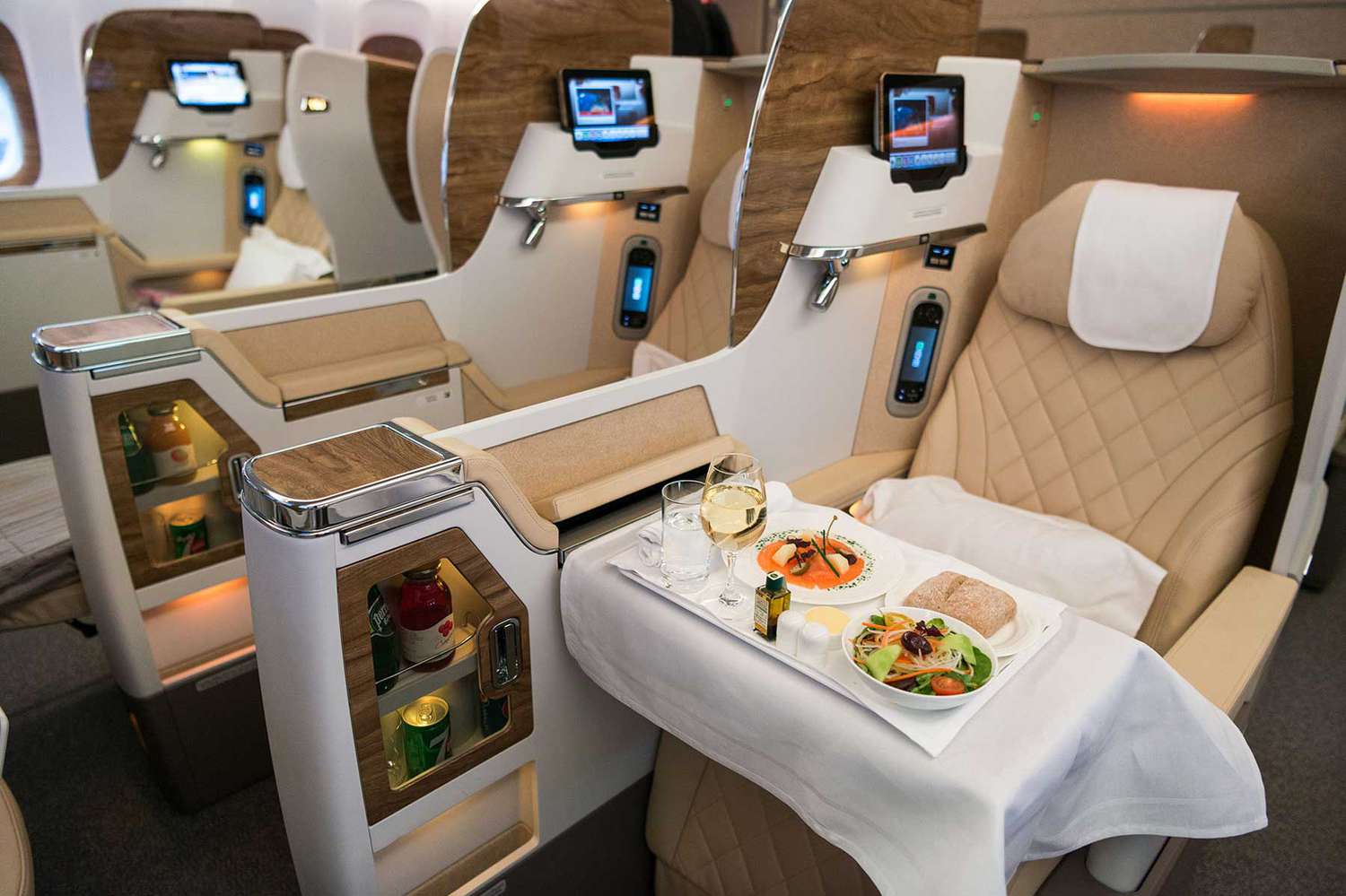
It is not off-limits — but the rules have changed. The era of dressing sharply and asking politely at the check-in counter is long gone, replaced by algorithmic Yield Management systems and Global Distribution Systems explicitly engineered to protect premium revenue. Airlines today operate at record-high load factors—83.6% for full-year 2025 per IATA, with a projected all-time high of 83.8% for 2026 amid aircraft shortages—making the once-reliable gambit of banking on an empty adjacent seat a statistical rarity. The modern long-haul economy cabin — with its denser configurations, thinner seating materials, and physiological toll on circulation and sleep — has made the premium cabin less of a luxury and more of a legitimate logistical tool.
The good news: for the traveler who understands how these systems actually work, the front of the plane is remarkably accessible. This is the step-by-step playbook to get you there.
Decoding the ROI: When Is Business Class Actually Worth the Investment?
The standard retail comparison — economy versus published business-class pricing — is the wrong framework entirely. When travelers access consolidator fares, the financial equation shifts dramatically: the same transoceanic business-class seat that appears prohibitive at full retail can frequently be secured at a fraction of that cost, reducing the cost multiplier from 7.5x to roughly 3.75x. At that ratio, the analysis becomes genuinely competitive.
The flight duration multiplier is the most reliable ROI indicator. On short-haul flights under four hours, the premium is difficult to justify — deep sleep is simply not on the table. On medium-haul flights between four and eight hours, business class delivers a brief productivity window and improved catering, but the financial case remains moderate. On long-haul overnight routes exceeding eight hours, the ROI reaches its peak: a lie-flat bed that enables six to eight hours of horizontal sleep eliminates the post-arrival recovery day entirely, a tangible and measurable return.
For corporate travelers, the calculus is even more compelling. A management consultant who loses a full day to sleep deprivation — factoring in a recovery hotel room and forfeited billable hours — may find that the true cost of an economy seat substantially exceeds the cost of a consolidator business-class ticket. For high-stakes professional commitments, arriving rested can generate expected-value outcomes that dwarf the upgrade premium.
Premium Economy deserves serious consideration as a “value-luxury” alternative. Designated by fare class codes such as “W,” Premium Economy offers 38 to 40 inches of seat pitch, significantly more recline, and improved catering — at a price point typically 50% to 100% above standard economy, but 50% to 70% below business class. By most analytical models, it delivers approximately 60% to 70% of the business-class comfort experience for 25% to 35% of the price premium, making it the most mathematically efficient cabin for daytime long-haul routes.
Finally, any honest ROI calculation must account for ancillary value. A business-class ticket routinely includes $250 to $500 in tangible ancillary value that offsets the initial purchase price. Lounge access offsets $50 to $100 in terminal food and beverage costs while providing access to showers and high-speed workspaces. Priority check-in, expedited security screening lanes, and priority boarding return 45 to 60 minutes of pre-flight time, eliminating the usual friction of the departure process. Expanded baggage allowances frequently save travelers $100 to $300 in checked luggage fees — narrowing the true financial gap between the cabins significantly.
The Insider’s Playbook: Step-by-Step Upgrade Strategies
a. The Strategic Use of Miles and Points
The era of fixed award charts — where a transatlantic business-class seat cost a predictable flat mileage rate regardless of season — has largely given way to Dynamic Pricing across major U.S. carriers. Under dynamic pricing, award mileage costs fluctuate directly with the cash fare, capping the upside for savvy redeemers.
The workaround is well-established among frequent flyer insiders: transfer bank points to international airline partners that still operate traditional, distance-based or zone-based award charts. American Express Membership Rewards, Chase Ultimate Rewards, Capital One Miles, and Citi ThankYou Points can all be moved to partner programs that bypass U.S. carrier dynamic pricing entirely.
The highest-value 2026 sweet spots include:
- Qatar Qsuites (Middle East/Africa): Bookable via British Airways Avios — accessible through Amex, Chase, or Capital One transfers — from 70,000 points one-way. Widely considered the world’s best business-class product.
- ANA First/Business Class (Japan): Bookable through Virgin Atlantic Flying Club, an Amex transfer partner, at 52,500 points (business) and 72,500 points (first) one-way. This route is notable because it uses a non-Star Alliance partner to book Star Alliance metal, bypassing dynamic pricing.
- Iberia Business Class (Spain/Europe): Accessible via Amex or Chase transfers to Iberia Plus Avios, with off-peak availability from the U.S. East Coast for 34,000 to 40,500 points one-way — among the most efficient redemptions for Europe.
- Air France/KLM Business Class via Flying Blue: Bookable from 50,000 points one-way using all major bank currencies. Frequent promotional transfer bonuses from banks make this the most accessible entry point to European business class.
Locating available premium award space requires specialized tools, since airlines deliberately obscure inventory to protect cash sales. Point.me is the optimal starting point for beginners, searching real-time availability across more than 100 airlines with guided transfer instructions. Seats.aero tracks 24 airline programs up to a year in advance, allowing travelers to sort by region and spot availability trends. Roame.travel excels at multi-region searches, particularly for Cathay Pacific and Singapore KrisFlyer space. For real-time inventory access on legacy carriers, ExpertFlyer connects directly to Global Distribution Systems, allowing travelers to view exact fare bucket availability and set automated alerts the moment a seat is released.
b. Bid for Upgrades (The Right Way)
More than 50 global airlines currently use third-party bidding platforms — primarily Plusgrade — to auction unsold premium seats in the days before departure. These are blind auctions: bidders cannot see competing offers, payment is captured only if the bid wins, and decisions are typically finalized 24 to 48 hours before departure.
The 20-40% formula is your starting point. Subtract the price you paid for your economy ticket from the current retail cash price of the business-class seat. Bid 20% to 40% of that exact difference. This optimizes your chance of winning while preserving significant savings versus a retail purchase.
Beyond the formula, two tactical refinements improve win rates substantially:
- Use fractional bids. Most passengers bid round numbers or the minimum allowable amount. Bidding $305 instead of $300, or $512 instead of $500, acts as a low-cost tiebreaker against the cluster of minimum bids.
- Target mid-week flights on wide-body aircraft. Boeing 777-300ER and Airbus A350 flights carry larger premium cabins, creating more seats to fill. Monday mornings and Friday evenings draw heavy elite business traveler traffic, shrinking your odds; mid-week departures face substantially less competition.
- Split group PNRs. Airline algorithms find it significantly easier to clear one seat than two or three adjacent seats. Travelers in groups should call the airline, split into individual Passenger Name Records, and bid separately to maximize overall success probability.
c. The “Same-Day Change” and Last-Minute Upgrades
In the 24-hour window before departure, airlines often dynamically discount remaining premium inventory to capture final revenue. The mechanics vary by carrier.
Delta Air Lines prices upgrades dynamically through its app. Crucially, paid cash upgrades cannot be processed at the departure gate — they must be secured via the app or check-in kiosk. Complimentary Medallion upgrades are cleared in a strict, unyielding hierarchy: Medallion tier, original cabin booked, Million Miler status, Reserve Card possession, and then Medallion Qualifying Dollars earned in the current calendar year.
United Airlines offers unusual transparency, displaying your exact waitlist position in the app up to 30 days before departure. Premier Platinum and 1K members use PlusPoints, cleared immediately after Global Services requests. For travelers without status, United offers free same-day confirmed changes for all tickets (excluding Basic Economy) — a valuable tool for finding flights with lighter premium cabin loads.
American Airlines begins clearing upgrades for its top-tier Executive Platinum members up to 100 hours before departure, prioritizing by rolling 12-month Loyalty Points totals. For non-elites, the AAdvantage app sometimes surfaces discounted cash upgrade offers in the final 24 hours. American is unique among legacy carriers in allowing Basic Economy passengers to use same-day confirmed changes.
An advanced tactic involves monitoring Irregular Operations (IROPS). When a controllable delay — mechanical issue or ground delay program — empties premium cabins as time-sensitive business travelers rebook elsewhere, savvy economy passengers can request same-day confirmed changes to those disrupted flights. If economy is oversold but business class has sudden no-shows, gate agents process operational upgrades to balance the load. Positioning yourself on these specific flights places you directly in line for a complimentary cabin roll-forward.
Economy Optimization: Selecting the Best Seats When You Can’t Upgrade
a. The Geography of the Cabin
If all upgrade strategies fail, aircraft selection matters more than airline brand. The critical benchmark is the 18-inch seat width threshold: seats narrower than 18 inches deliver measurably higher physical stress on a flight exceeding eight hours.
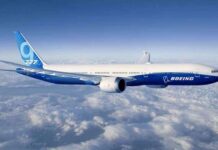
The Boeing 777-300ER, configured in a high-density 10-abreast (3-4-3) layout by most major operators, compresses seat width to 17 inches — among the tightest lateral envelopes in the sky. The Boeing 787-9 Dreamliner, typically flown in a 9-abreast (3-3-3) layout, holds at 17 to 17.3 inches. Its cabin pressurization (simulating lower altitude to reduce fatigue) and higher humidity levels are genuine advantages, but lateral width remains a compromise. The Airbus A350-900/1000, with its wider fuselage, achieves a comfortable 18 inches in a 9-abreast layout. When routing allows equipment choice, selecting an A350 over a 777 or 787 guarantees a meaningfully superior seat geometry.
On recline: the Qatar Airways A380 leads the industry at 7 inches in economy, followed by Singapore Airlines (A350) and Cathay Pacific (777-300ER), both at 6 inches.
Within the cabin, two premium economy micro-environments present distinct trade-offs. Exit rows offer essentially unlimited legroom but require all personal items to be stowed overhead during taxi, takeoff, and landing; armrests are fixed and slightly narrower due to built-in IFE hardware; and the emergency door seals make these rows noticeably colder. Bulkhead seats eliminate the recline cascade — no passenger ahead can encroach on your space — but share the same immovable armrest constraints and serve as the structural location for infant bassinets, carrying a higher probability of proximity to infants on overnight flights.
b. Seat Maps, Alerts, and the “Poor Man’s Business Class”
aeroLOPA is the premier 2026 resource for seat selection, providing to-scale architectural blueprints of aircraft interiors. Critically, it shows the exact alignment of windows relative to specific rows — essential intelligence for travelers who intend to lean against the fuselage wall to sleep.
ExpertFlyer remains indispensable for real-time inventory tracking. Set automated alerts for exit rows or bulkhead seats: these assignments frequently open up exactly 24 to 48 hours before departure as elite travelers are cleared into premium cabins, releasing their extra-legroom seats back into the inventory.
The ultimate economy optimization tactic is the “Poor Man’s Business Class” — securing an entirely empty row of three or four seats in the aft section of the aircraft. Because aircraft are boarded front to back, the final five rows near the rear galleys are reliably the last to fill. Monitor the seat map via ExpertFlyer in the final hours before departure and move your assignment to the emptiest row at the back moments before the gate agent locks the flight. A makeshift lie-flat bed costs nothing but attention.
The Essential Gear: Elevating the Economy Experience
The right gear converts the physiological punishment of economy class into something manageable.
Active Noise Canceling (ANC) headphones are not optional. Jet engine drone operates between 75 and 85 decibels inside the cabin, triggering a sustained physiological stress response that amplifies fatigue over a 12-hour flight. The Sony WH-1000XM6 is the current ANC benchmark, purpose-built to neutralize low-frequency aviation engine rumble across ultra-long-haul routes. The Bose QuietComfort Ultra (2nd Gen) prioritizes physical comfort, with a lightweight clamping force engineered to prevent the temporal lobe pressure headaches that develop during continuous multi-hour wear. For audio fidelity combined with effective ANC, the Bowers & Wilkins Px8 S2 is the audiophile choice. To connect Bluetooth headphones to legacy airline IFE systems requiring a 3.5mm jack, the Twelve South AirFly Pro 2 wireless transmitter bridges the gap cleanly.
Ergonomic neck support requires structural engineering, not foam stuffing. The traditional U-shaped microbead pillow fails because it lacks the rigidity to prevent lateral or forward cervical flexion during sleep. The Cabeau Evolution X uses dual-density memory foam with a flattened rear profile and integrated straps that physically anchor the pillow to the seat wings, preventing head bob regardless of turbulence. The Trtl Travel Pillow uses a hidden internal structural rib wrapped in soft fleece, functioning as a lightweight neck brace that lets the traveler rest their full head weight on their shoulder — ideal for aisle or middle seats with no fuselage wall to lean against.
Supporting gear addresses the remaining pressure points. A magnetic power bank (such as the Anker Magnetic Portable Charger) eliminates the unreliable aircraft outlet problem by adhering directly to the back of the phone. A flexible device mount like the Flight Flap keeps tablets at eye level, preventing cervical strain during long viewing sessions. Graduated compression socks (such as Charmking) are a medical necessity on flights over eight hours, actively countering peripheral edema and DVT risk. A Calpak Luka Duffel with a reinforced trolley sleeve keeps carry-on bags locked in place during the pre-flight terminal walk.

Key Takeaways
- Calculate the true ROI. The retail cost multiplier of business class drops sharply with consolidator fares. For overnight long-haul flights, the productivity math — eliminating a post-arrival recovery day — frequently justifies the premium.
- Leverage transferable points for proven sweet spots. Transfer bank currencies to international partners to bypass dynamic pricing: Qatar Qsuites from 70,000 Avios; ANA Business Class from 52,500 Virgin Atlantic points.
- Bid smarter, not higher. Apply the 20–40% formula, add a fractional dollar amount to beat minimum-bid clusters, and fly solo mid-week on wide-body aircraft.
- Choose your aircraft, not just your airline. On the A350, economy seats hold 18 inches of width. On a 777 in 10-abreast configuration, they don’t.
- Invest in structural gear. ANC headphones and a rigid neck support replicate the sensory isolation of a premium cabin without the premium cabin price tag.