


1/72 or 1/48? Snap-fit or glue? Tamiya or Airfix? Here’s how to decode scales, brands, and hidden costs — and pick a first kit you’re more likely to finish instead of one that stalls on the shelf.
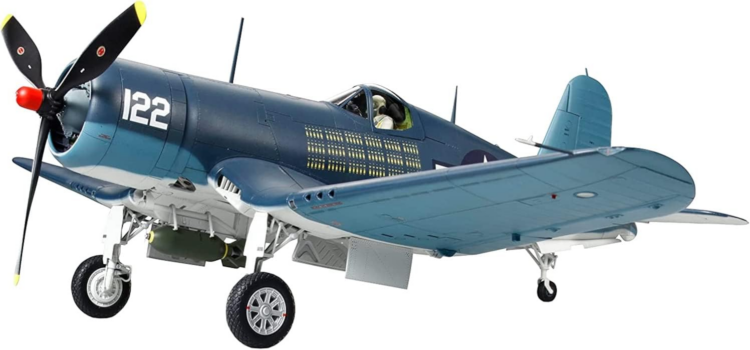
Walk into a hobby shop or scroll an online listing for aircraft model kits, and the choices pile up fast: several scales, a wall of brand names, and box art that makes every kit look like a sure thing. For a first purchase, five questions matter more: Do you want this aircraft? Is the build manageable? Will it fit your shelf? Is this exact kit well documented? And what will the whole setup cost?
Straight to the Point – for the Busy Reader
Our recommended first purchase: a manageable, all-plastic, single-engine fighter in 1/72 or 1/48 scale, backed by an independent review of the exact item number you’re buying.
- Pick 1/72 if shelf space is tight and small parts don’t bother you.
- Pick 1/48 if you want larger parts that are easier to see and handle, and you have room to display them.
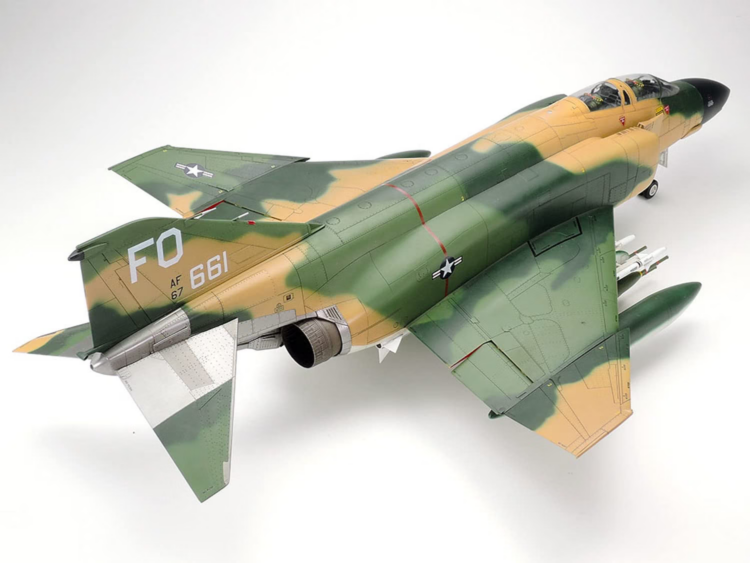
- Want no glue and no paint on day one? A snap-together kit such as Revell’s 24-part 1/72 F-4E Phantom Click System clicks together without cement and doesn’t require painting.
- Want glue and paint in the box? A starter set such as Airfix’s 26-part 1/72 Spitfire Mk.Vc (A55001) bundles them — but you’ll still need cutters and a knife to free the parts safely.
Who it suits: adults and teens new to the hobby, returning builders, and anyone buying a first kit as a gift.
Key qualifications:
- The kit is only part of the bill. A conventional kit also needs cutters, a hobby knife, sanding sticks, cement, paint, and brushes.
- Judge the specific kit and its tooling history, not the logo or the date on the box.
- Save large-scale, high-part-count, and multimedia kits for later.
Read on to see which scale fits your shelf, how to check a mold’s pedigree before you pay, and what a first build really costs — before your first kit becomes the first resident of your Shelf of Doom.
Who This Guide Is For (and Who Should Skip It)
Ideal user profiles
- The true first-timer. You have never built a plastic kit and want your first one finished and on display.
- The returning modeler. You built kits as a kid and are coming back years later. Brand reputations you remember may not describe today’s boxes, so check current instructions and reviews rather than relying on memory.
- The parent or grandparent buying for a young builder. Match complexity to the builder and plan on an adult being involved. Manufacturer age labels are a starting point: Airfix labels its starter Spitfire for ages 8 and up with adult supervision, while Revell labels its Phantom click kit for ages 10 and up. Keep hobby blades out of reach of children.
- The space- or budget-constrained buyer. You live in an apartment, share a workspace, or want a clear picture of the total spend before you commit.
Who should skip this guide
- Radio-control and free-flight buyers: flying models are chosen on entirely different criteria.
- Die-cast collectors: if you want a finished model with no assembly, a ready-made replica is the right purchase.
- Experienced builders shopping for resin kits or aftermarket upgrades: your decisions hinge on compatibility and advanced technique, which this guide touches only in passing.
Scope
This guide covers injection-molded plastic aircraft kits — static models you cut, assemble, and usually paint — sold in the U.S. market. Vacuum-formed, resin, and multimedia kits appear only so you can recognize them and set them aside for later.
How to Choose Aircraft Model Kits: The Buying Criteria That Actually Matter
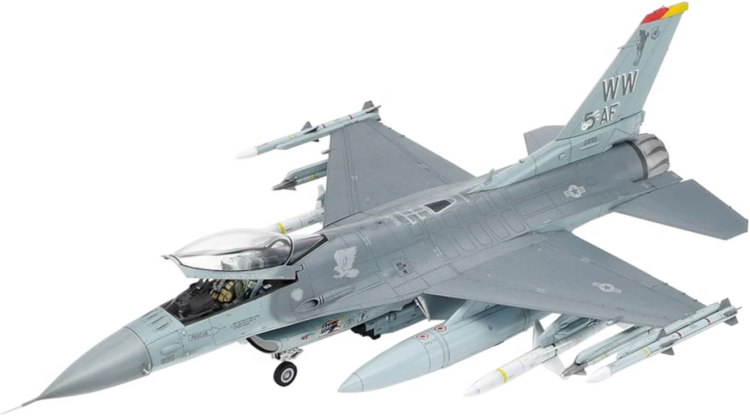
Apply these seven filters in order: subject, complexity, scale, tooling, materials, instructions and markings, and independent evidence. A few terms come up throughout. A sprue (or parts tree) is the plastic frame that holds the parts. A gate is the point where a part joins the sprue. Flash is a thin film of unwanted plastic left over from the molding process.
1. A subject you actually care about
Shortlist aircraft you’d genuinely enjoy seeing on a shelf, then run the remaining filters. Interest won’t guarantee a finished model, but it’s what pulls you back to the bench when a seam needs sanding for the third time. Roscoe Creed’s How to Build Plastic Aircraft Models suggests a straightforward low-wing, single-engine monoplane for a first build — sound advice, as long as you like the subject. Then confirm that the variant, pose, and markings on the box art are actually in the instructions.
2. Complexity and part count
Part count is the manufacturer’s stated number of pieces, which may include optional parts — a useful, if imperfect, guide to effort. Airfix sells two 1/72 Spitfire Mk.Vc kits that make the point: the simplified starter set (A55001) has 26 parts, while the conventional kit (A02108A) has 73. Same aircraft, same scale, very different builds.
A busy cockpit, optional subassemblies, or multicolor camouflage adds operations, too. FineScale’s beginner’s guide to building model airplanes steers first-timers toward all-plastic kits finished in all or mostly one color, which keeps masking to a minimum.
Depending on the kit, a jet may add intake trunks, a biplane rigging, and a multi-engine aircraft repeated assemblies — extra steps, not automatic disqualifiers.
Snap vs. glue: Snap-together kits, which Revell calls Click System kits, use plug-in joints and need no cement. Those joints may be firm, so follow the instruction sequence rather than counting on parts coming apart after a test fit.
Tip: Skill-level ratings aren’t standardized across brands. Airfix rates both its 26-part and 73-part Spitfires at Level 1, while Revell’s product page shows a Level 2 icon for its 24-part click kit, even though Revell’s own level guide reserves Level 1 for glue-free plug-in kits. Treat any rating as a rough guide.
3. Scale: size, detail, and shelf space
Scale is a ratio. At 1/48, one inch on the model represents 48 inches on the real aircraft; at 1/72, one inch represents 72. The smaller the second number, the bigger the model: the same aircraft built in 1/48 is 1.5 times longer and wider than in 1/72. Aircraft type still decides the footprint.
On a shelf, Tamiya lists its 1/48 Spitfire Mk.I (item 61119) at 235 mm (about 9¼ inches) across the wings. Airfix lists its 1/72 starter Spitfire Mk.Vc at 157 mm (about 6¼ inches) and its conventional 1/72 Mk.Vc at 173 mm (about 6¾ inches) — so plan around the stated dimensions for the exact kit.
FineScale’s overview of modeling scales describes 1/48 as a popular home for World War II fighters, 1/72 as practical for collecting a wide variety of aircraft, and 1/144 as common for airliners. One scale keeps a collection in true proportion, but mixing scales is a display preference, not a mistake.
| Scale | Relative size (same aircraft) | Detail potential | Subject choice | Space needed | Beginner fit |
| 1/144 | Smallest | Tiny components | Strong in airliners | Least | Only if you’re comfortable handling very small parts |
| 1/72 | Small | Varies by kit | Broad variety of aircraft | Modest for fighters | Good, if small parts suit you |
| 1/48 | Medium (1.5× 1/72) | More visible surface and cockpit detail | Many WWII fighters | More | Good, if the specific kit is manageable |
| 1/32 | Largest here | High detail and display potential | Check your exact subject | Substantial | Usually a later project |
Measure the shelf’s width, depth, and height clearance against the finished dimensions, leaving room for propellers, landing gear, and any stand.
4. Tooling age: new tool vs. reissue
The date on a box tells you when that boxing was released, not when the mold was designed. A reissue may pair new art and decals with older tooling. Age alone isn’t a verdict, so read reviews of the exact boxing for flash, sink marks (shallow dents where thick plastic shrank as it cooled), or parts that need extra work to fit.
To trace a kit’s pedigree, check:
- Manufacturer announcements. Airfix described A02108 as new 1/72 Spitfire Mk.Vc tooling in a 2020 development report; A02108A is a current boxing.
- Reviews that identify the tooling. FineScale’s 2015 review of Airfix’s 1/48 Spitfire Mk.IXc/XVIc (kit No. 05113) found a boxing that combined earlier parts with newly tooled ones, so “new” on the box doesn’t always mean new throughout.
- Instructions and kit histories. A copyright date dates the paperwork, not necessarily the mold. Match the item number to its documented lineage.
5. Mainstream vs. limited-run and multimedia kits
Limited-run (or short-run) kits are produced in smaller quantities and often cover subjects the big makers skip. Their engineering varies, so read the instructions and a review of the specific kit.
Multimedia kits add resin, photo-etched metal (PE), or white-metal parts to the plastic. Plastic cement works by welding polystyrene, so you can’t assume it will bond metal or resin; in his completed build of Tamiya’s 1/48 Spitfire Mk.I, FineScale Modeler editor Aaron Skinner attached the PE seat belts with super glue. FineScale’s beginner guide is direct: for a first airplane, choose an all-plastic kit. The verdict for your first purchase: not yet.
6. Instructions, decals, and markings
For a beginner, clear, logically sequenced instructions matter more than extra detail. Preview them if you can, checking paint callouts, the decal sheet, and how much masking the scheme demands. Note whether any parts change with the version you build. Airfix’s starter Spitfire offers one scheme and its conventional Mk.Vc two; Tamiya’s 1/48 Mk.I offers three, with alternative canopy parts and option-specific instruction callouts. Skinner found that those choices need planning before assembly, so pick your scheme before gluing. A marking guide isn’t proof of historical authenticity; consult specialized references if accuracy matters to you.
7. Independent reviews exist
Each kind of evidence tells you something different:
- Manufacturer claims (box copy and product pages) describe contents and intent. They don’t prove fit.
- In-box reviews inspect the sprues and show what the parts look like.
- Completed build reviews and builder reports document how the parts actually go together.
For fit, look for a documented build of the same item number. For accuracy of shape or markings, look for primary aircraft evidence or an edited specialist comparison; a single anonymous comment isn’t enough.
Aircraft Model Kit Brands Decoded: Who Makes What, and for Whom
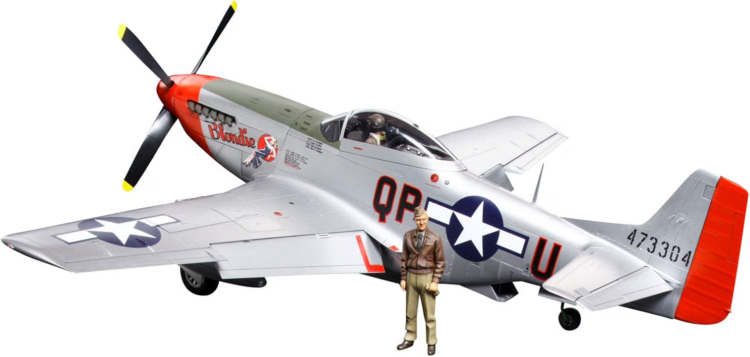
Brand reputations are a starting point, but no maker’s name guarantees an easy build. The same company can offer a simplified starter and a fuller conventional kit of the same aircraft, so the item number tells you more than the logo.
Japanese mainstream makers
Tamiya highlights the engineering of its 1/48 Spitfire Mk.I, and the kit earned a favorable completed-build review from Skinner in 2019. He reported generally smooth construction and praised the kit’s engineering and fine detail. The same review shows why “Tamiya” doesn’t automatically mean “simple”: Skinner counted 157 pieces, including 25 photo-etched parts and six metal stickers, and found that the optional fuselage inserts needed care because “the inserts wanted to bow in slightly as the glue set.”
Hasegawa and Fujimi are established Japanese names to research kit by kit rather than assuming one standard across a range.
Long-established Western brands
Airfix, a Hornby Hobbies brand, sells clearly differentiated products — the 26-part starter Spitfire and 73-part conventional Spitfire are a case in point. In late 2025 the company announced a distributor-led U.S. arrangement through Heartland Hobby Wholesale, Military Model Distributors, and Stevens International. That tells you how kits reach U.S. stores, not whether a particular kit is in stock.
Revell sells snap-together Click System kits alongside conventional kits that need glue and paint, as well as model sets that bundle supplies.
Italeri, the Italian firm, has reboxed plastic originally produced by others. FineScale’s review of an Italeri 1/48 Spitfire Mk.XVIe (kit No. 2646) identified that kit as an Ocidental product. Judge each tooling on its own.
Newer and specialist names
Eduard labels its editions by contents. The Bf 109F-4 1/72 Weekend edition (7478) comes without photo-etch or a paint mask and offers four marking options, while the Bf 109K-4 1/72 ProfiPACK (70166) adds prepainted photo-etch and a painting mask, with six options. Those are different variants, so compare editions of the same aircraft; fewer extras mean fewer tasks on a first build.
Academy, ICM, Trumpeter, and Special Hobby/CMK are other names you’ll meet on the shelf. Their catalogs don’t sort neatly into “beginner” or “advanced” by brand, so apply the same kit-by-kit checks.
Warning: A brand name does not guarantee a good kit. Judge the specific item number, its contents, and its reviews — not just the logo.
What Beginners Should Buy First: Recommendations by Use Case
Confirm availability and the exact item number before you order.
The no-glue starter: snap-together kits
- Best for: a young builder of the labeled age, with supervision, or anyone who wants to try assembly before buying cement and paint.
- Example: Revell’s F-4E Phantom Click System (036519090), a 1/72, 24-part kit for ages 10 and up, with plug-in joints, multicolored parts, and stickers.
- Why it works: it removes the solvent and painting steps (Criterion 2).
- Main limitation: it teaches less cementing, painting, and decal work than a glue kit, and no independent build review of this item turned up. U.S. availability varies by seller.
- What else you’ll need: Revell says no glue or paint is required; check the instructions for whether cutters are needed to free parts.
The best first “real” kit: a simple 1/72 single-engine fighter
- Best for: space-conscious beginners ready to learn cutting, gluing, painting, and decals.
- What to look for: an all-plastic, single-engine fighter with a modest part count and a simple scheme. Airfix’s 26-part starter Spitfire Mk.Vc (A55001) sits at the simple end; Airfix’s separate 73-part Mk.Vc, A02108A, from the tooling Airfix announced as new in 2020, is a fuller build.
- Why it works: small footprint, manageable part count (Criteria 2 and 3).
- Main limitation: small parts are fiddlier for larger hands and older eyes, and the starter kit’s fit hasn’t been documented in an independent build review. Airfix’s own U.S. web store listed A55001 as out of stock as of Sept. 28, 2026; ask a hobby shop supplied by Airfix’s U.S. distributors instead.
- What else you’ll need: the basic tool list below.
The detail-and-handling pick: a 1/48 single-engine fighter
- Best for: beginners who want bigger parts and more visible detail, and who accept extra steps.
- Example (a stretch first kit): Tamiya’s 1/48 Spitfire Mk.I (61119), backed by Skinner’s favorable completed build.
- Why it works: larger parts are easier to handle (Criterion 3), and a documented build review (Criterion 7) shows what to expect.
- Main limitation: 157 pieces by the reviewer’s count, photo-etch, and optional inserts that call for care. For a genuinely low-part-count route, look for an all-plastic 1/48 fighter with a good review instead. U.S. stock varies by retailer.
- What else you’ll need: the basic tool list, plus super glue for the photo-etched belts.
The all-in-one route: starter sets with paint and glue
- Best for: gift buyers and anyone who wants the core supplies in one box.
- Example: Airfix’s Starter Set Spitfire Mk.Vc (A55001) includes acrylic paints, cement, a brush, decals, and a display stand. Airfix’s U.S. starter-set listing describes these sets as carrying the glue, brushes, and paints for one finish.
- Main limitation: don’t assume the box includes cutters, a cutting mat, every detailing color, or a premium brush.
- What else you’ll need: cutters, a hobby knife, sanding sticks, tweezers, and a well-ventilated space for the cement.
Who should postpone buying a kit
- Anyone without a ventilated workspace. If you can’t use solvent cement safely, choose a no-glue kit or wait.
- Anyone not ready to buy basic tools. A conventional kit without cutters and a knife is frustration in a box.
- Anyone set on a large-scale or limited-run dream subject. Keep it on your wish list and build a simpler kit first.
What Aircraft Model Kits Really Cost: Price Tiers and Total Cost of Ownership
The price on the box is rarely the price of your first finished model. Compare the cost of a complete, usable build — kit, missing tools, and supplies, plus shipping and tax — rather than kit prices alone.
Kit price tiers and diminishing returns
Paying more can buy a larger scale, more parts, extra marking options, or extras such as photo-etch and masks. It doesn’t by itself prove a newer mold or better fit. For a first build, extras bring diminishing returns: photo-etched details reward a detail-minded builder, but for a beginner they add tasks and a second adhesive. Ask of every extra: does this improve my first model, or does it just add another step?
The “hidden” first-build shopping list
A plain glue kit generally doesn’t include cement, paint, or brushes; Revell, for one, distinguishes ordinary kits from model sets that bundle supplies. For a conventional kit, plan on:
- Sprue cutters
- A hobby knife with spare No. 11 blades
- A self-healing cutting mat or other stable cutting surface
- Sanding sticks in several grits
- Liquid plastic cement
- Fine-tipped tweezers
- Paints suited to your kit’s scheme
- A couple of good-quality paintbrushes
Nice to have later: primer, putty, decal-setting solutions, hobby masking tape, and an airbrush with a compressor.
Tip: You don’t need an airbrush to start. FineScale’s beginner build uses brushes and hobby spray cans, and its basic tool list has no airbrush. An airbrush is an upgrade, not an entry ticket.
Ongoing costs
After the first build, the tools last; the consumables don’t. Budget for replacement blades, sanding sticks, cement, and paint as you use them. Then there’s the “stash” — kits bought faster than they’re built. It’s a cheerful hobby tradition and a real budget risk, and every kit also needs somewhere to live once it’s finished.
Pitfalls, Limitations, and Buying Mistakes
Each mistake below comes with its consequence and a concrete check.
Choosing too big or too complex, too soon
Extra assemblies, mixed materials, and a large footprint mean more work and more storage than you planned. Check: weigh the part count, finished dimensions, scheme, and a review against your time, space, and patience (Criteria 2 and 3). A committed beginner with room can succeed with a big kit — just choose it deliberately.
Paying new-kit money for an old mold
A fresh box and new decals can wrap older tooling, and it’s easy to mistake updated art for new engineering. Check: trace the item number to its tooling history and a review of that boxing (Criterion 4). Old doesn’t automatically mean bad.
Mistaking a limited-run or multimedia kit for a beginner kit
Resin, photo-etch, and white-metal parts can leave you needing super glue or epoxy — and new skills — mid-build. Check: read the contents list and instruction symbols before you order (Criterion 5).
Buying aftermarket upgrades before the basics
Detail sets consume budget and can have narrow compatibility; Eduard, for instance, labels each accessory set with the specific kit it was designed for. Check: build your first kit as supplied. When you upgrade, match scale, variant, manufacturer, and tooling.
Ignoring shelf space and scale consistency
A model’s span can exceed your shelf, leaving a finished model with nowhere to go. Check: measure first, then compare the maker’s finished dimensions, allowing for a stand or display case (Criterion 3).
Box art vs. box contents
Box paintings and photos of finished models show a result, not the parts — and two kits of the same aircraft in the same scale can differ enormously, as the two Airfix Spitfires show. Check: confirm the item number, read the contents, and look at sprue photos in an independent review. Read the fine print, too: Tamiya’s product page labels its main 61119 image as a painted and assembled kit.
Missing or damaged parts and seller terms
A damaged box, a short-packed sprue, or an incomplete secondhand kit can stop a build cold. Check:
- Inventory the sprues against the instruction sheet on arrival, and keep the box, instructions, and order record.
- Learn the maker’s replacement route. Revell describes a spare-parts service that requires the kit and part numbers. Airfix’s web-store returns policy covers its own store, not third-party U.S. sellers.
- Read the retailer’s return terms for opened kits before you break any seals.
- On marketplaces, vague descriptions, missing sprue photos, and unverified “complete” claims are warning signs to ask about, not proof of fraud.
Safety: Airfix’s product listing for the starter set warns that its Humbrol poly cement contains butyl acetate, may cause drowsiness or dizziness, and should be used outdoors or in a well-ventilated area. Read the label on every cement and paint you use. FineScale warns that sharp No. 11 blades can slip and cut skin, so cut away from your fingers and store blades and chemicals securely, out of children’s reach. Supervise young builders.
Before-You-Buy Checklist
- Is this a subject I genuinely want to build?
- Did I confirm the exact item number and aircraft variant?
- Is the part count manageable, and is the kit all plastic?
- Does the finished model fit my display space?
- Did I check whether this boxing is a new tool or a reissue?
- Did I read at least one independent review of this boxing, ideally with sprue photos or a completed build?
- Have I added up the full checkout cost, including tools, cement, paint, brushes, shipping, and tax?
- Does the marking scheme need colors or supplies I don’t have?
- Do I know the seller’s return terms and the maker’s replacement-parts process?
- Is the builder old enough, and do I have a ventilated space and safe storage for blades and solvents?
The Conclusion: Your Safe Bet
Choosing a first kit comes down to a sequence: pick a subject you care about, keep the build manageable, match the scale to your space and hands, verify the specific kit and its tooling, and then add up the full setup cost.
If you’re still undecided, here’s the safe bet: a documented, all-plastic, single-engine fighter — in 1/72 if space is tight, in 1/48 if you want easier handling — paired with the basic tool list. If you’d rather skip glue and paint entirely, a snap kit is a reasonable trial run.
Finishing your first model matters far more than choosing the perfect one. Build one attainable kit, learn the core techniques, then aim higher. For hands-on advice, IPMS/USA maintains local chapters, and a local hobby shop, if you have one nearby, lets you look inside a box before you buy.
FAQ
Q: What scale of aircraft model kit should I buy first if I’ve never built a model before?
A: The best first scale for an aircraft model kit is usually 1/72 or 1/48, chosen by your display space and how easily you handle small parts.
- Choose 1/72 if shelf space is limited and small parts don’t bother you.
- Choose 1/48 for parts that are easier to see and handle; the same aircraft is 1.5 times larger than in 1/72.
- Scale alone doesn’t make a kit easy, so check the part count and compare the maker’s stated wingspan with your shelf.
Q: Which aircraft model kit brands are the easiest for a complete beginner to build?
A: No aircraft model kit brand is uniformly easiest for a beginner, because the same makers sell both simple and complex kits.
- Airfix sells a 26-part starter Spitfire Mk.Vc and a 73-part conventional one in the same scale.
- Tamiya’s 1/48 Spitfire Mk.I earned praise for its engineering in FineScale’s build review, yet includes photo-etch and optional inserts that need care.
- Choose by item number, contents, and an independent review of that boxing.
Q: What tools and supplies do I need to buy besides the model kit itself for my first build?
A: A first conventional plastic model kit needs cutting, cleanup, gluing, and painting supplies that usually aren’t in the box.
- Sprue cutters
- A hobby knife with spare No. 11 blades and a cutting surface
- Sanding sticks
- Liquid plastic cement
- Fine-tipped tweezers
- Paints for your scheme and a couple of good brushes
Starter sets bundle some paint and glue, so read the contents first. Revell’s Click System Phantom needs no glue or paint.
Q: Do I need an airbrush to build and paint my first plastic model airplane?
A: An airbrush is not required to build and paint a first plastic model airplane.
- FineScale’s beginner build relies on brushes and hobby spray cans, and its basic tool list includes no airbrush.
- Picking a kit finished in all or mostly one color simplifies painting and keeps masking to a minimum.
- Treat an airbrush as a later upgrade.
Q: How can I tell if a model airplane kit is a new tool or an old reissue before I buy it?
A: Telling a new-tool model airplane kit from a reissue means tracing its item number to its tooling history, not trusting the box date.
- Look for a manufacturer’s new-tool announcement for that item, such as Airfix’s 2020 report on its Spitfire Mk.Vc tooling.
- Read independent reviews that describe the sprues; some reissues combine new and older parts.
- Treat an instruction copyright date as a clue about the paperwork, not proof of the mold’s age.
Q: Are snap-together model airplane kits worth buying, or should I start with a glue kit?
A: Snap-together model airplane kits are worth buying if your goal is a quick, glue-free first model; glue kits suit you better if you want to learn cementing, painting, and decals.
- Revell’s 24-part 1/72 F-4E Phantom Click System clicks together without cement and can be left unpainted.
- A conventional glue kit teaches more of the hobby’s core skills but needs more tools and a ventilated space.

Key Takeaways
- Subject and simplicity come first: choose an aircraft you want, in an all-plastic kit with a manageable part count.
- Choose scale by space and handling: 1/72 for tight shelves, 1/48 for larger parts — and check the maker’s stated dimensions.
- The exact kit matters more than the brand: verify the item number, tooling history, and an independent review.
- Budget for the whole build: cutters, a knife, sanding sticks, cement, paint, and brushes complete the bill.
- Postpone photo-etch, resin, and large-scale projects until a few builds are behind you.