

It isn’t because white paint is lighter. A white base can weigh more per gallon than black. From composite heat limits and leak-spotting to a week in the paint hangar, here’s the real science and money behind aviation’s default color.
If you have ever wondered why airplanes are white, the short answer is practical. White isn’t tradition, and no rule requires it. A white or pale finish reflects sunlight and limits how hot the airframe gets on a sunny ramp. That matters more now that widebodies such as the Boeing 787 Dreamliner and Airbus A350 XWB are built largely from carbon-fiber composites. White also sits on top of engineered coating layers that protect those composites from ultraviolet (UV) light. It gives inspectors a light background where dark streaks and stains stand out. And it suits the way the leasing business moves aircraft from one airline to the next.
The most popular explanation, that white paint simply weighs less, is wrong as usually stated. In one major aerospace paint line, the white base is about 1.5 times as dense as the black base, gallon for gallon. Any weight a white livery saves comes from the whole coating system and how much of it goes on the airplane, not from the pigment. The bird-strike and search-and-rescue arguments that circulate online are also weaker than they look.
Here is what to know about the heat, the chemistry, the inspections and the money behind aviation’s most familiar color.
No Rule Requires It, So Why Are Airplanes White Almost Everywhere?
In the U.S., the relevant regulation is 14 CFR § 45.21, and it covers nationality and registration marks, not livery color. Those marks must contrast with their background and be legible, and a paint design may not modify or confuse them unless the FAA authorizes it. White is one possible contrasting background. The rule does not specify it. British reporting points the same way. A Civil Aviation Authority (CAA) spokesperson told Telegraph Travel, in Soo Kim’s report syndicated by Gulf News: “There are no requirements from a safety point of view regarding aircraft paint schemes.”
So the white jet at the gate is the sum of several separate decisions. Designers specify thermal and environmental performance. Operators choose branding and maintain the finish. Lessors and lessees negotiate the condition an aircraft is delivered and returned in. That makes paint a useful lens on how the airline business actually works. Composite aircraft still carry design-specific requirements for protective finishes, but those requirements concern performance, not color.
The table below scores each common explanation against the evidence, and it sets out the order of the rest of this article.
| Reason | What white does | Strength of evidence |
| Ramp heat | A solar-reflective finish limits the sun’s heat load while the aircraft is parked | Strong engineering basis |
| UV durability | Protective finish layers shield composite structure | Strong for engineered protection. No universal advantage for the color white is established |
| Inspection contrast | A pale background shows dark clues such as oxide streaks | Strong for the mechanism. No measured gain in inspection speed |
| Lease and repaint economics | White is a common delivery condition, and repaints cost days of downtime | Strong for the practice. No universal savings figure |
| “Lighter paint” | A tested white base is denser than black from the same product family | Measured for the named products, so the claim is false per gallon for them |
| Fewer bird strikes | Brighter fuselages were associated with fewer strikes on three of seven types | Suggestive only |
| Easier search and rescue | White contrasts with water, but whitecaps reduce that contrast | Depends on the background |
Heat: Why the Real Battle Happens on the Ramp, Not at 35,000 Feet
How Carbon Fiber Raised the Stakes
Carbon-fiber-reinforced polymer (CFRP) embeds strong fibers in a polymer resin. In certification, engineers must show that the material keeps its strength across the combinations of temperature and moisture it will meet in service. The demanding case is known as “hot/wet.” The key limit is the resin’s glass transition temperature (Tg), the range where the resin starts to lose stiffness and turn from glassy toward rubbery. Engineers set operating temperatures comfortably below it.
The modern widebodies depend on this material. Airbus Safety First says CFRP makes up more than half of the A350 XWB structure, including the fuselage and wing skins, and notes that composites typically weigh about 20% less than aluminum for an equivalent function. Boeing puts the 787 at about 50% composites by airframe weight. A materials chart in an EASA research report lists 20% aluminum, 15% titanium and 10% steel, so metals make up 45% of the 787 airframe by weight.
What the FAA and NASA Data Show
- John Hansman is the T. Wilson Professor of Aeronautics and Astronautics at the Massachusetts Institute of Technology (MIT) and director of the MIT International Center for Air Transportation. In comments to Business Insider, cited in Soo Kim’s report syndicated by Gulf News, he explained that white and pale coatings reflect sunlight, which reduces heating and possible solar damage. He named nose cones and some control surfaces as composite parts where that protection matters. The nose cone of an airliner is usually a radome, the protective cover over the weather radar antenna.
NASA Contractor Report 159296 shows the size of the effect. For a black or dark blue finish, it lists a solar absorptivity of 0.80, meaning the surface absorbs about four-fifths of the sunlight that reaches it. It lists a separate emissivity of 0.90. Emissivity measures how well a surface radiates heat away. Because absorptivity and emissivity are separate properties, two paints that look similar can behave differently in the sun.
The FAA has written this physics into policy. A December 21, 2001, small-airplane policy, PS-ACE100-2001-006, set 180°F (about 82°C) as the default critical structural temperature for composites in most paint colors. It treated dark paint and black as exceptions because they can reach higher temperatures. That policy covers small airplanes certified under Part 23 and is cited in FAA AC 43-214A on composite repairs. For composite structure more broadly, AC 20-107B calls on designers to account for environmental effects, including heat and humidity.
One misconception needs correcting. Cruise is not where heat becomes a problem. At 35,000 feet, the NASA Glenn standard-atmosphere model gives an outside air temperature of roughly −66°F (−54°C), and fast airflow carries heat away. The hard case is a parked jet. FAA-sponsored THERMOD research on parked aircraft accounted for direct and reflected sunlight, infrared heat from the surroundings including pavement, wind-driven convection and conduction. More absorbed solar heat means more work for the cabin cooling, supplied by the auxiliary power unit (APU) or ground preconditioned air. However, no independent fleetwide study has put a fuel or dollar figure on what a white finish saves at the gate.
UV: Why White Alone Wasn’t Enough on the 787
 UV light can degrade unprotected composite structure, or the bond between protective layers and the structure beneath. AC 20-107B lists weathering, abrasion, erosion, UV and chemicals such as glycol, fuel, hydraulic fluid and cleaners among the causes of deterioration designers should address. It also treats repairs to protective surface layers as a continued-airworthiness issue. Pigment is only one factor in how long a finish lasts. PPG said in 2009 that clearcoat improves color and gloss retention, and MAAS Aviation said in 2024 that better pretreatments, primers and basecoat/clearcoat systems had improved adhesion and longevity. No like-for-like data shows that white always fades more slowly than saturated colors, or that white alone stretches the time between repaints by a set amount.
The 787 shows why the hidden layers matter. On April 6, 2020, the FAA issued Safety Alert for Operators 20006. It warned that vacuum fall-arrest equipment for maintenance workers, which grips the wing by suction, could be affected by paint peeling on the 787’s upper wing. Boeing attributed the peeling to UV damage between the primer and resin layers. In late 2022, Boeing petitioned the FAA for an exemption covering in-service aircraft and described peeling on wing and horizontal stabilizer surfaces, as AirInsight reported.
Boeing’s fix was a black UV-blocking layer between the primer and the white topcoat, with a higher limit on total finish thickness. Boeing explained that the extra thickness and the black layer had to be checked against the analysis showing lightning could not ignite fuel vapor in the wing tanks. In the meantime, operators covered peeled areas with repeated applications of speed tape, an aluminum repair tape. Boeing acknowledged that passengers might perceive the tape as unsafe. It also reported that extra sanding to remove UV-damaged material increased the risk of damage to the copper foil that protects against lightning and to the CFRP itself, along with more repairs and downtime. On December 19, 2023, the FAA granted Exemption No. 21548 for production 787-8, 787-9 and 787-10 aircraft. The exemption came with conditions and a stated 2028 end date. The outcome of Boeing’s separate in-service petition, and how much of the fleet has been retrofitted, had not been confirmed as of November 2026.
Airbus faced its own paint dispute. Qatar Airways said 21 A350s had been grounded by the time of its January 2022 statement, citing degraded exterior surfaces that exposed or damaged lightning protection. That month, Reuters reported that the airline sought about $618 million in compensation. Qatar described the condition as a safety concern, and Airbus disputed that characterization. The case ended on February 1, 2023, when the two companies announced a settlement: “The details of the settlement are confidential and the parties will now proceed to discontinue their legal claims.” The agreement included no admission of liability by either side, and repair work was under way.
The lesson is that on a composite jet, the paint is not just decoration. It is an engineered barrier against the environment, and it works together with the airframe’s lightning protection.
Spotting Leaks and Cracks: White’s Inspection Advantage
FAA guidance shows what a pale surface helps reveal. Chapter 2 of the Airplane Flying Handbook tells pilots to look for cracked paint around fasteners, black oxide at rivet heads, oil or fuel stains around cowlings, and hydraulic fluid near brakes and landing gear. AC 20-106 explains the black streak behind a “smoking rivet”: an aluminum rivet working loose in its hole forms black oxide that stains the surrounding skin. The handbook also gives an example where a white exhaust stain is the clue, a reminder that the color of the mark matters as much as the color of the paint.
These documents are written for general aviation. Airline crews and mechanics work to aircraft-specific and operator-specific procedures. However, the principle carries over, because dark fluids and oxide streaks stand out against a light background. The clue is usually a streak, stain or broken finish rather than a visible crack in the structure itself, and the manufacturer’s instructions determine what happens next. No airline-scale trial has measured whether white liveries actually make inspections faster or more accurate.
Follow the Lease: How “Eurowhite” Saves Airlines Time and Money
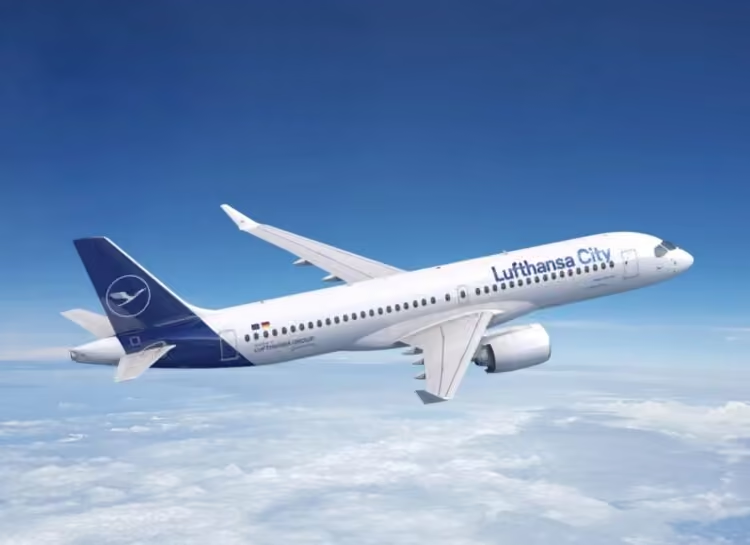 Leasing explains much of the white fleet. IATA found that 58% of the world fleet was leased at the end of 2023, with North America at about 40%. On paint, the association’s Guidance Material and Best Practices for Aircraft Leases is direct: “In most cases the aircraft is delivered with a freshly painted white fuselage.” The paint scheme is still negotiable. An aircraft can arrive already in the lessee’s colors, with compensation or commitments about its condition at return, to save downtime.
That is the logic behind “Eurowhite.” The fuselage stays mostly white, and the brand sits on the tail, engine cowlings, titles and logos. When the aircraft changes operator, rebranding can be a much smaller job, provided the lease terms and the condition of the existing paint allow it to stay.
Downtime is where repaints get expensive. “The aircraft painting process is variable based on aircraft type and specification,” Jan van Engelen, CEO of MAAS Aviation, told AIR International in February 2024. He estimated seven to eight days for a standard commercial strip and repaint, depending partly on whether the wings are included. Repeat fleet programs can bring that down to five to six days per aircraft, while unique, highly complex designs can take 14 days or more. MAAS spent 15 days of around-the-clock shifts in Maastricht on Embraer’s E195-E2 “Tech Eagle” demonstrator ahead of the 2023 Dubai Airshow. Emirates reported 15 days for the complete strip and repaint of an A380 it called Echo Delta Delta, involving 34 staff and about 6,000 labor-hours, with the painting itself taking seven days.
What does that time cost? In a March 2009 PPG release, Alan Schoeder, PPG Aerospace commercial coatings global segment manager, estimated that airlines could lose $50,000 to $150,000 in revenue for each day an aircraft was out for repainting. As an illustration only, a seven- to eight-day visit at those 2009 rates implies about $350,000 to $1.2 million in potential lost revenue. That is a hypothetical figure built on a 2009 vendor estimate, not an audited cost or a shop invoice.
Timing changes the math. If the paint work fits inside a maintenance visit that was already scheduled, the extra downtime depends on whether painting extends the visit. Faster materials help here too. PPG said its 2009 basecoat/clearcoat system cut color-coat drying to about two hours, compared with five to seven hours for the traditional approach, and saved about a day over the full painting cycle.
The Weight Myth: White Paint Is Heavier Per Gallon
The white pigment titanium dioxide (TiO₂) is dense. Sherwin-Williams’ safety data sheet for Jet Glo Express Matterhorn White (CM0840103) lists 1.52 g/cm³. The same family’s Polyester Black Base (CM0840015) is about 1.00 g/cm³. That works out to roughly 12.7 lb per gallon for the white against 8.35 lb for the black, or about 1.5 times as heavy by volume. A Boeing Distribution listing puts Matterhorn White at 12.77 lb per gallon, near the top of the 8.3–13.1 lb range that SkyGeek lists for the family’s bases. These figures compare two liquid bases before mixing and curing, not every white and black paint on the market.
So where does the weight on the aircraft come from? It depends on how many color layers are needed to cover, how much they overlap, how thick each film is, how much material remains after curing, and how much area is painted. The figures below are measured on different bases, so they should not be compared directly.
| Aircraft | Scheme | Paint weight | Basis |
| Airbus A380 | Exterior paint, topcoat plus primer | About 1,171 lb (531 kg) | Airbus A380 Facts & Figures |
| Emirates A380 (Echo Delta Delta) | Seven coats over 3,076 m² (about 33,100 sq ft) | 1,100 kg (about 2,425 lb) applied | Emirates project release |
| easyJet narrowbodies | Lightweight system vs a conventional livery | About 60 lb (27 kg) lighter per aircraft | easyJet launch release, January 2025 |
Modern coatings narrow the gap between liveries. In 2009, PPG predicted that its basecoat/clearcoat system would weigh 15% to 35% less than its traditional system at the same cured thickness, depending on color. AkzoNobel product manager Robert van Kooperen said the company’s Aviox Finish 77702 thin-film topcoat is typically about 15% lighter than the earlier products he described, with most colors performing best in two coats. “The weight of coatings can, and does, make a measurable difference in this respect,” he told Paint & Coatings Industry. KLM reported using 15% less paint on its then-new 787-9, according to the same magazine. That figure measures paint used, not total aircraft weight.
easyJet offers a current example. The airline uses a lower-weight system from Mankiewicz Aviation Coatings, applied by MAAS in Maastricht, and describes it in its FY2025 annual report. At launch in January 2025, 38 aircraft wore it, and easyJet projected savings of up to 1,296 metric tons of fuel and 4,095 metric tons of CO₂e a year once the rollout is complete by 2030. Those are company forecasts, not realized savings. easyJet’s launch release put the saving at about 27 kg (60 lb) per aircraft, which the airline itself called a relatively modest impact per plane.
Bird Strikes and Search-and-Rescue: Where the Evidence Runs Thin
What the 2011 Purdue–USDA Study Actually Found
The study usually cited is “Bird Strikes and Aircraft Fuselage Color: A Correlational Study.” It was written by Esteban Fernández-Juricic, Jimmy Gaffney, Bradley F. Blackwell and Patrice Baumhardt and published in Human–Wildlife Interactions in fall 2011. The authors were from Purdue University and the U.S. Department of Agriculture’s National Wildlife Research Center. They used FAA National Wildlife Strike Database records from 1990 to 2009, chose seven aircraft types, and compared strike rates between airlines flying the same type. Fuselage brightness was estimated from photographs.
The results were mixed. The Boeing 737, McDonnell Douglas DC-9 and Embraer ERJ-145 showed significant differences between carriers, with brighter aircraft linked to lower strike rates. The Airbus A319, A320, Boeing 727 and 757 showed none. On the 737, only rear-fuselage brightness correlated with fewer strikes (r = −0.75). The front fuselage did not. The authors themselves called the results “not conclusive.” The study compared liveries that already existed. It did not randomly assign paint colors, so it shows an association, not a cause. Purdue later shifted toward aircraft lighting tuned to bird vision, and a 2025 paper tested how Canada geese detect and escape from a drone fitted with such lights. For now, we’d file the bird-strike benefit of white under interesting but unproven.
Why White Isn’t Automatically the Best Search-and-Rescue Color
 Visibility depends on contrast with the background. The U.S. National Search and Rescue Supplement lists white, yellow, red, and orange as colors that generally contrast well with water. It then notes that whitecaps can hide white and yellow targets, making red and orange easier to see. In its discussion of visual search at sea, it says fluorescent colors such as International Orange are typically sighted at greater distances than flat or dyed colors. The manual also stresses factors other than color, including target size and shape, viewing geometry, lighting, and how long a searcher can see the target.
Why Some Airliners Break the Rule
Why American Airlines Gave Up Bare Metal
Massimo Vignelli’s American Airlines identity dates to 1967, according to the Chicago Design Archive, and polished aluminum became its signature look. Boeing’s analysis, as quoted by Gulf News, found that the fuel a lighter polished airplane saves is more than offset by the higher cost of washing, polishing and repainting it over its service life. A RAND report, which cites Dan Hansen’s Boeing AERO article on painting versus polishing, reached a similar conclusion, pointing to American’s move from polished to painted aircraft. On January 17, 2013, in Fort Worth, Texas, American unveiled a new livery in silver mica paint. The airline explained that it was preparing to receive hundreds of new aircraft with composite materials that must be painted, so “the polished metal look was no longer an option.” The rollout aircraft was a 777-300ER that had already been delivered. American retired its MD-80 fleet from revenue service on September 4, 2019.
Air New Zealand’s All-Black Flagships, and a Paint Inspired by an Eggplant
Air New Zealand was already flying all-black aircraft by late 2011. Australian Aviation reported a black 777-300ER rollout in December 2011 and said the airline planned six all-black aircraft by mid-2012, including two Airbus A320s and three Beech 1900D turboprops. In April 2014, Boeing and the airline unveiled 787-9 ZK-NZE at Everett, Washington, in the black version of the new-look livery with the white New Zealand Fern Mark. Boeing said at the time that most of the airline’s aircraft would wear the white version and only a subset would be black.
A separate technology makes dark finishes more practical. PPG Aerospace uses infrared-transparent pigments that let near-infrared solar energy pass through a dark topcoat to a white layer below, which reflects it back out. PPG compares this to an eggplant, which looks dark but stays cool. In a 2015 release, the company claimed exterior skin temperatures up to 25°F lower and cabin temperatures 5 to 7 degrees cooler. These are PPG’s own figures, and none of them is attributed to any particular airline’s aircraft.
| Finish | How it handles sunlight | Trade-off |
| Standard light finish | Reflects part of the sunlight at the surface | UV protection still depends on the layers beneath |
| Conventional dark finish | The NASA dark example absorbs 0.80 of incoming sunlight | Emissivity is a separate property, so color alone does not tell the whole story |
| Infrared-transparent dark finish | A dark top layer passes near-infrared energy to a reflective white layer | A specialized system, with performance figures reported by the vendor |
Supersonic Proof: Why Blue Slowed Concorde While Black Cooled the SR-71
In 1996, Air France Concorde F-BTSD flew a dark-blue Pepsi promotional livery. General Aviation News reported that time at Mach 2 or faster was limited to 20 minutes, while speeds below Mach 1.7 were unrestricted. The Blackbird family faced the opposite problem. NASA’s design history explains that a specially chosen high-emissivity black finish helped the Mach 3-class airframe radiate away heat and reduced thermal stress. Concorde’s blue paint absorbed more heat than its usual white. The Blackbird’s black paint was chosen to shed heat its airframe generated at speed. These were different thermal problems, so they called for different finishes.
Flying Billboards: Southwest, Spirit, KLM and Condor
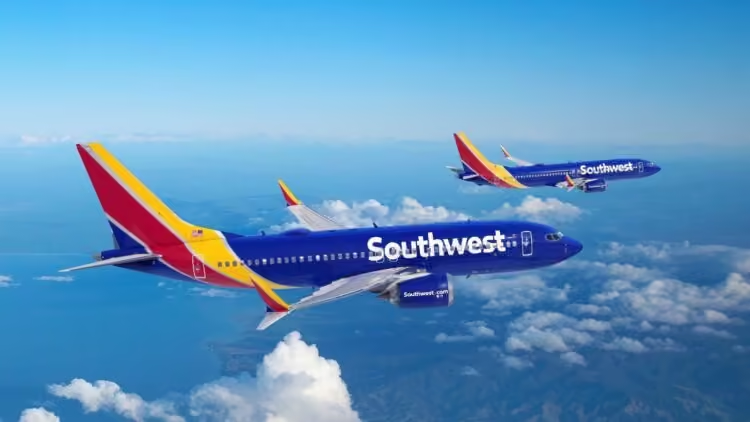
Some carriers paint the whole aircraft as a brand. Examples include Southwest’s 2014 Heart livery in Bold Blue, Warm Red, Sunrise Yellow and Summit Silver, Spirit’s bright yellow scheme from the same year, KLM’s blue 787-9, and Condor’s striped identity from 2022. MAAS notes that custom masking and complex designs lengthen a shop visit. Newer coating systems shrink part of that penalty.
Will Airplanes Stay White?
The incentives that made white the default have not gone away. Lessors still commonly deliver white fuselages, a full repaint still takes the better part of a week, and composite airframes still need heat and UV protection. What has changed is where engineers can solve those problems. The 787 hides its UV-blocking layer under white paint. PPG’s infrared-transparent pigments move solar reflection beneath a dark surface. Lighter coating systems, such as easyJet’s, reduce the weight cost of whatever color goes on top. American kept its silver identity by switching from polished metal to paint, and Air New Zealand runs white and black versions of the same brand side by side. The result is not a forecast. It is a wider set of options, with a reusable white baseline still the easiest choice when an aircraft may change hands.

Key Takeaways
- No regulation requires white. Ramp heat, protective coatings, inspection contrast, and leasing explain the choice.
- In one tested paint family, the white base weighs about 1.5 times as much per gallon as black. Installed weight depends on the whole coating system.
- On composite jets such as the 787 and A350, paint is an engineered barrier. Boeing added a black UV-blocking layer under the 787’s white topcoat.
- The bird-strike benefit is only suggestive, and search visibility depends on the background.
- American’s silver mica and Air New Zealand’s black jets are deliberate branding trade-offs.