


A 1935 desert crash, a comrade down in the Andes and a mail pilot who turned flying into literature. Here’s who should own Saint-Exupéry’s Wind, Sand and Stars—and who should reach for another book.
Before You Turn the First Page
In 1926 a young Frenchman named Antoine de Saint-Exupéry joined the Latécoère company and began learning the mail routes that linked Toulouse with Casablanca and Dakar. Thirteen years later he published what the line had taught him—about the craft, about the men who flew beside him and about the Caudron Simoun he crashed in the Libyan Desert in late December 1935. The book appeared in France as Terre des hommes and, a few months later in 1939, in the United States as Wind, Sand and Stars.
Its central value is plain enough: this is a working line pilot’s own account of the pioneer airmail era, written by a man far more interested in what flying means than in how airplanes work. For pilots, for readers drawn to interwar aviation and for anyone shopping for an aviator with a taste for good writing, that makes it a book worth serious consideration.
The essential qualification belongs up front. Wind, Sand and Stars is autobiographical, reflective and episodic—not a chronological operational history of Aéropostale. Even critics who admire it, among them Walter J. Boyne writing in Aviation History, have found its lyricism excessive in places. Readers who want engines, airframes and route statistics should know that before they buy.
What follows covers what the book contains, how to identify the 1992 Harcourt Brace Jovanovich hardcover, whom the book suits, where it falls short and what to check before ordering a copy.
‘Wind, Sand and Stars’ at a Glance: Inside the Covers
| Item | Detail |
| Title / author | Wind, Sand and Stars, Antoine de Saint-Exupéry |
| Translator | Lewis Galantière |
| Promoted edition | Harcourt Brace Jovanovich, New York, 1992 (HBJ modern classic series) |
| Format | Hardcover |
| ISBN | 978-0151970872 (ISBN-10: 0151970874) |
| Length | 229 pages; 22 cm |
| First published | France, February 1939 (Terre des hommes); U.S., June 1939 (Reynal & Hitchcock) |
| Recognition | Grand Prix du Roman, Académie française (1939); National Book Award |
Subject and purpose. The book draws on Saint-Exupéry’s years flying the mail—first on the French and African routes, later in South America—and turns them into a sequence of reflections on duty, comradeship and what flight reveals about the planet and the people on it. Two of his comrades, Jean Mermoz and Henri Guillaumet, stand at its center alongside the author himself.
Why the translation matters. The American text is not simply Terre des hommes in English. It includes an added chapter, “The Elements,” written at the request of Galantière and the American publishers; the author chose not to include it in the French edition. Galantière also chose the English title, with the author’s authorization. Readers comparing editions should therefore look at the translator’s name first: a different translation is a different reading experience.
Structure. The Galantière text, as reprinted in the Airman’s Odyssey omnibus, runs from “The Craft,” “The Men” and “The Tool” through “The Elements,” “The Plane and the Planet,” “Oasis” and “Men of the Desert” to “Prisoner of the Sand,” “Barcelona and Madrid (1936)” and a Conclusion. In practice that means three movements: the apprentice line pilot and his comrades; the desert, its weather and its people; and a closing turn toward the Spanish Civil War and broader reflection.
What reading it requires. Temperament matters more than training. The book asks for patience with lyrical, digressive prose, and its desert chapters reflect their era—reviewer Christopher Robbins notes, for instance, that slavery figures in that material.
What you are buying. The 1992 hardcover is a reissue of a 1939 work, not a revised edition, and copies offered today may come from various sellers in varying condition. Before ordering, confirm the ISBN, the translator credit, the seller and any jacket or wear notes on the listing.
If that profile fits, you can check the current listing for the 1992 hardcover of Wind, Sand and Stars on Amazon and review the seller’s condition notes before deciding.
What This Book Gives You
- A line pilot’s view of the pioneer airmail era. Saint-Exupéry recalls his apprenticeship on the Latécoère routes from the cockpit, not from the archive.
- One of aviation literature’s great survival narratives. The late-December 1935 desert crash and the Bedouin rescue that ended it form the book’s emotional center.
- A portrait of professional loyalty. The chapters on Mermoz and Guillaumet explore what pilots owe the line and each other.
- Literary writing about flight. For readers who value it, the prose offers language for night, weather, terrain and solitude aloft—an appeal that is real but not universal.
The one qualification that governs all four: expect reflection and imagery, not aircraft specifications or a complete history of Aéropostale.
Who Should Read It—or Give It
The deciding factor is reading taste, not pilot status. A logbook full of hours does not guarantee someone will enjoy lyrical prose, and a reader who has never flown may love it. The profiles below are editorial judgments, not survey results.
Best suited for
- Pilots who think about their work. Anyone who remembers a first solo cross-country or a first assignment on the line will find familiar ground in “The Craft.”
- Interwar aviation readers. Those drawn to pioneer airmail and to figures such as Mermoz and Guillaumet get those men through the eyes of a colleague.
- Readers of literary nonfiction about flight. This is the book’s natural constituency.
- Admirers of The Little Prince. Boyne links the desert chapter to the later story; readers curious about that connection can judge it for themselves.
- Military aviation enthusiasts—with a caveat. Saint-Exupéry later flew wartime reconnaissance, but this book predates his 1940 campaign experience.
A strong gift for
A recipient who already enjoys reflective writing about flight—perhaps a newly certificated pilot, a retiring aviator or a flight instructor marking a milestone. The occasion alone does not make it the right gift; the recipient’s taste does. Gift buyers should check whether the person already owns a copy, confirm the translator and read the seller’s condition and jacket notes before ordering.
Who may prefer another book or edition
- Technical and operational history readers. The book’s episodic, reflective form will frustrate anyone looking for design, performance or route data.
- Readers wanting World War II flying. Flight to Arras, the English version of Pilote de guerre, reflects the author’s wartime reconnaissance experience and appeared in English in 1942.
- Readers who prefer fiction. Night Flight is the English title of the novel Vol de nuit, which won the 1931 Prix Femina; the English version appeared in 1932.
- Paperback and digital readers. The Mariner Books Classics paperback (ISBN 978-0156027496) credits the same Galantière translation and runs 240 pages. A publisher-distributed ebook (eISBN 978-0547546728) also credits Galantière, though any specific Kindle listing should be checked for its translator.
- Readers seeking a different translation. The Penguin Modern Classics paperback (ISBN 978-0141183190), published in the United Kingdom, is translated with an introduction by William Rees.
- Omnibus seekers. Airman’s Odyssey combines Wind, Sand and Stars, Night Flight and Flight to Arras in one volume.
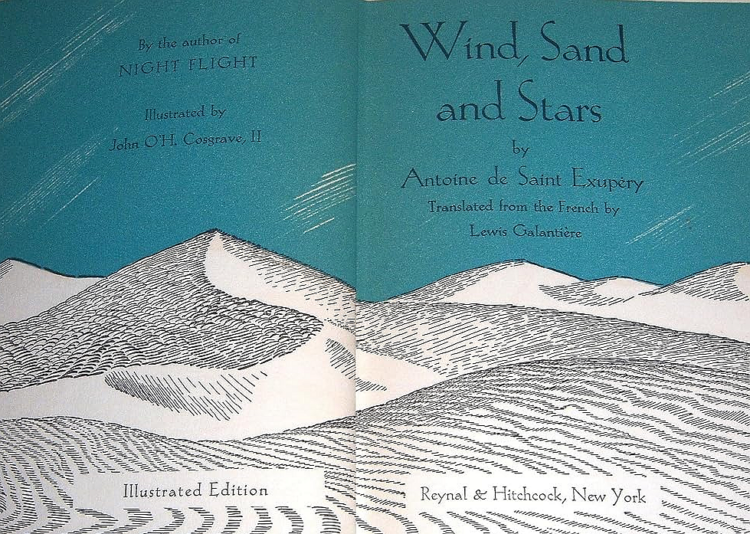
- Collectors. The 1939 Reynal & Hitchcock edition, with decorations by John O’H. Cosgrave II, is a separate historical edition and a different purchase altogether.
- Readers impatient with digression. Boyne found the book uneven in cohesion and the Spanish Civil War material an awkward fit with the rest.
- Owners of a satisfactory copy. If an existing edition already serves your reading purpose, the hardcover format alone is no reason to replace it.
Why ‘Wind, Sand and Stars’ Deserves a Place on Your Bookshelf
Most aviation libraries are built on histories, biographies and technical studies. Wind, Sand and Stars fills a different shelf: it records what the pioneer line felt like to one of the men who flew it. That value is specific and bounded, and it rests on several concrete qualities.
A pilot’s-eye view of the Latécoère line
“The Craft” opens with Saint-Exupéry’s recruitment in 1926 and his preparation for his first mail flights. Its most memorable scene is a briefing: before the novice’s first assignment, Guillaumet goes over the route with him on a map, sharing his local knowledge of the line. The early flying the author describes is unforgiving—open aircraft, unreliable engines, few good places for an emergency landing and, on the assignment he recounts, no radio.
The value for a modern reader lies in that apprenticeship. Professional preparation and the gap between a novice’s doubts and a veteran’s calm are recognizable to anyone who has trained for a cockpit. The limitation is equally clear: Saint-Exupéry describes his own operations, not a fleet-wide history, and he rarely lingers over aircraft types. He is writing about the job, not the machinery.
Comradeship under pressure: Mermoz and Guillaumet
The book treats Jean Mermoz and Henri Guillaumet as the line’s exemplars, and the author keeps their feats distinct from his own. Guillaumet’s story carries particular weight. On June 13, 1930, his Potez 25 overturned near Laguna Diamante in the Andes, on the route between Santiago and Mendoza, and Saint-Exupéry joined the search for his friend. He later dedicated Terre des hommes to Guillaumet.
The portrait of Guillaumet as a mentor is distilled in one line from the Galantière translation: “Guillaumet exuded confidence the way a lamp gives off light.” In other words, the steadiness of an experienced colleague can be the most valuable equipment a new pilot carries. Crews, squadron veterans and instructors may find that theme familiar; it is a reflection on duty and loyalty, not a leadership manual.
“Prisoner of the Sand”: a desert ordeal and a literary echo
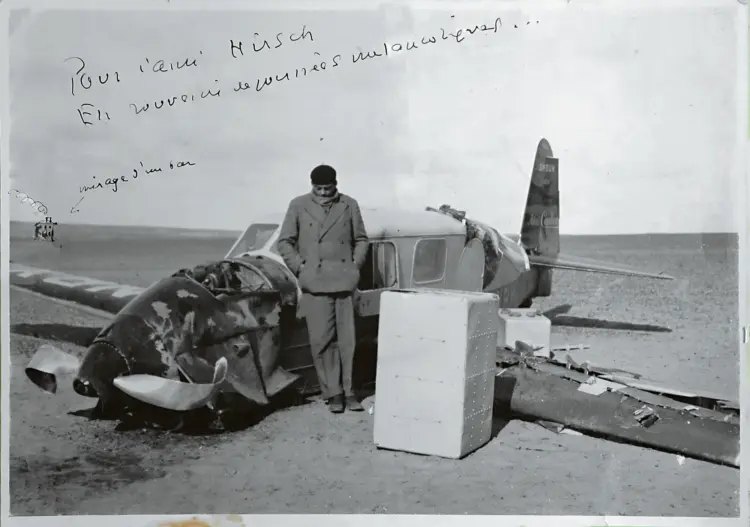
On December 29, 1935, Saint-Exupéry and his mechanic, André Prévot, departed Le Bourget in the Caudron C.630 Simoun F-ANRY in an attempt to fly from Paris to Saigon. The flight ended in the Libyan Desert in late December, and the two men were rescued by a Bedouin after several days.
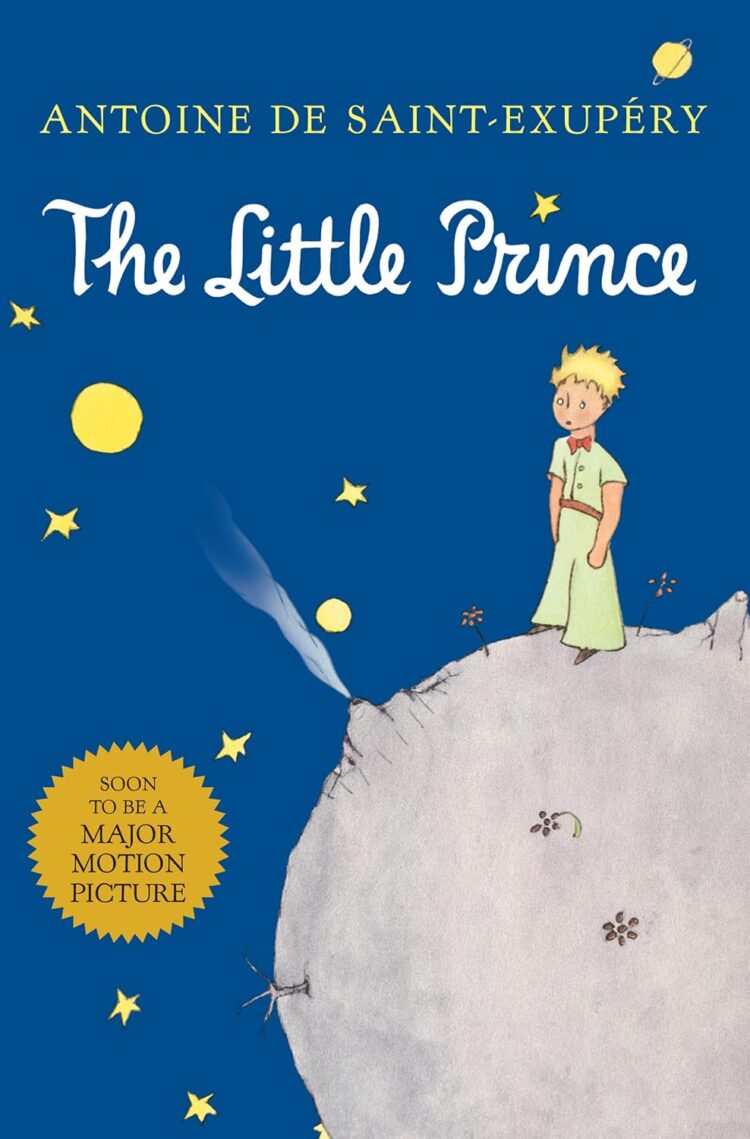
That ordeal, and the rescue that ended it, is the book’s emotional center. It is also where the famous connection arises: Boyne reads the desert chapter as linked to The Little Prince, though that remains a critic’s interpretation rather than a documented single origin of the novella. One further note: “Prisoner of the Sand” is survival literature, not survival instruction. Readers should take it as a story of endurance, not a guide to desert procedure.
 Prose that names what pilots feel
The book’s reputation rests above all on its writing, and the strongest testimony comes from readers who did not accept it uncritically. Boyne, rereading it for Aviation History, praised its literary qualities while faulting its excessive lyricism, uneven cohesion and the fit of the Spanish material. Christopher Robbins, author of Air America and The Ravens, wrote in Slightly Foxed that he was initially disappointed by the book’s datedness, structure and highly poetic prose—then came to appreciate it anew on rereading.
That pattern is instructive. Readers who want reflective aviation writing may find passages that put words to experiences they have struggled to describe. Readers impatient with digression may not, and no amount of patience guarantees enjoyment. The lyricism that makes the book beloved is precisely what some aviation readers find too much.
Credentials that date to 1939
Terre des hommes received the Académie française’s Grand Prix du Roman in 1939, and the English-language Wind, Sand and Stars won a National Book Award. The prize category does not make the book a novel—it remains a memoir—and recognition offers context rather than proof that any given reader will enjoy it. What the awards do establish is that the book was recognized as literature on both sides of the Atlantic.
Why this hardcover edition
The 1992 Harcourt Brace Jovanovich hardcover carries the Galantière translation in a 229-page volume from the publisher’s modern classic series. Its case for purchase is a matter of format preference: readers who want a hardbound copy for a permanent aviation library, or a hardcover to give, will find it a natural choice. The binding is not proof of superior durability or presentation, and because this is a 1992 printing, the actual copy’s condition depends entirely on the seller. Readers to whom format matters less can find the same translator credited on the paperback.
Wind, Sand and Stars Antoine de Saint-Exupéry · Translated by Lewis Galantière Harcourt Brace Jovanovich hardcover, 1992 · ISBN 978-0151970872 · 229 pages
A pilot’s memoir of the pioneer airmail era, the Andes and the 1935 desert crash. Check the seller, condition and current offer before you buy.
View Wind, Sand and Stars on Amazon
Add It to Your Aviation Library
The decision rule is simple. If you want to understand how the pioneer line pilots thought about their work—and you are comfortable with lyrical rather than technical writing—Wind, Sand and Stars belongs beside your aviation histories. If you need specifications, operational history or World War II combat flying, the alternatives named above will serve you better.
The link takes you to Amazon, where you can check the current price, format, seller, condition and delivery terms before completing a purchase. Confirm that the listing shows ISBN 978-0151970872 and credits Lewis Galantière. If you are buying for an occasion, read the condition and jacket notes with the recipient in mind and allow time for delivery.
See the 1992 hardcover of Wind, Sand and Stars on Amazon
FAQ
Q: Is ‘Wind, Sand and Stars’ worth reading if I’m a pilot looking for technical aviation history?
A: Choose it for reflective, literary aviation writing rather than technical history. The book is episodic and autobiographical, and it rarely dwells on aircraft details. It complements an operational history of the airmail era; it does not replace one.
Q: Is the 1992 Harcourt hardcover the same translation as the paperback and Kindle editions?
A: The 1992 hardcover, the Mariner Books Classics paperback and the publisher-distributed ebook all credit Lewis Galantière; check any specific Kindle listing for its translator. The Penguin Modern Classics paperback uses a different translation, by William Rees. Whatever the format, confirm the translator named on the exact edition offered.
Q: Does ‘Wind, Sand and Stars’ cover Saint-Exupéry’s World War II flying?
A: No—it was published in 1939, before his 1940 campaign experience. His wartime reconnaissance flying informs Flight to Arras, which appeared in English in 1942. Saint-Exupéry disappeared on a reconnaissance mission on July 31, 1944.
Q: Is ‘Wind, Sand and Stars’ a good gift for a new pilot?
A: It can be a good choice for a new pilot who enjoys reflective writing about flight. Pilot status alone does not guarantee the book will land well, so consider the recipient’s reading taste. Before ordering, check whether they already own a copy and read the seller’s condition notes.
Q: How is ‘Wind, Sand and Stars’ connected to The Little Prince?
A: Critic Walter J. Boyne links the book’s desert chapter, “Prisoner of the Sand,” to The Little Prince. The chapter recounts Saint-Exupéry’s 1935 crash in the Libyan Desert and his rescue by a Bedouin. The link is an interpretation, not a documented single origin of the novella.
Q: Do I need to read Saint-Exupéry’s other books first?
A: No required reading order exists; start with the book that matches your interests. Readers who prefer fiction may begin with Night Flight, while those who want several works in one volume can turn to Airman’s Odyssey, which collects Wind, Sand and Stars, Night Flight and Flight to Arras.

Key Takeaways
- Wind, Sand and Stars is Saint-Exupéry’s 1939 memoir of the pioneer airmail era, offered here as the 1992 Harcourt Brace Jovanovich hardcover in Lewis Galantière’s translation.
- Its strengths are a line pilot’s apprenticeship, the Mermoz and Guillaumet chapters and the 1935 desert ordeal.
- Expect lyrical, episodic reflection, not technical or operational history; critics have faulted its lyricism and cohesion.
- It best suits readers—and gift recipients—who enjoy reflective writing about flight.
- Before buying, confirm the ISBN, translator, seller and copy condition on the Amazon listing.